The archaeological excavation at the historic town of Lakkundi in Gadag district has entered its ninth day, with fresh discoveries further underlining the site’s immense historical and cultural significance. What began as a routine excavation has now turned into a major archaeological event, as rare sculptures, stone artefacts and temple remnants continue to surface from beneath the earth, drawing attention from historians, archaeologists and heritage enthusiasts across the state.
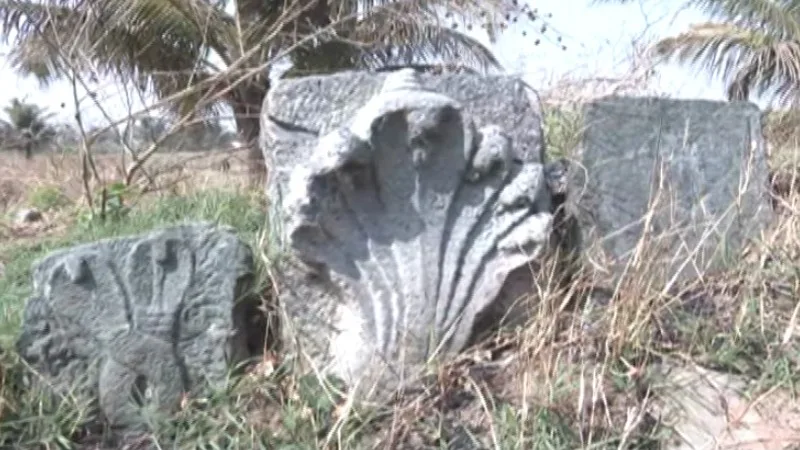
Among the most striking discoveries made on Saturday is a rare seven-hooded Naga stone idol unearthed from agricultural land belonging to Shanmukhapparavadi, a resident of Lakkundi village. Experts involved in the excavation believe the intricately carved serpent stone dates back to the Vijayanagara period. The sculpture, adorned with fine relief work and ornamental detailing, is considered a rare find and holds considerable religious and historical value.
Serpent stones, or Naga stones, were traditionally installed near temples, water bodies and sacred groves, symbolising fertility, protection and prosperity. According to popular belief, such stones were also regarded as guardians of buried wealth or sacred spaces. In addition to the main seven-hooded Naga sculpture, archaeologists have also identified several other serpent stones in the vicinity, including multiple two-hooded Naga carvings arranged around the larger idol. Many of these stones were found partially buried, indicating prolonged neglect or natural burial over centuries.
The discovery has intensified curiosity about what else might lie hidden beneath Lakkundi’s soil. Once a prominent centre during the reigns of the Western Chalukyas, Rashtrakutas and later the Vijayanagara rulers, Lakkundi is renowned for its temples, stepped wells and sophisticated stone architecture. The current excavation, taking place within and around the temple complex, has already yielded numerous artefacts over the past eight days, making each new day significant.
Adding to the excitement, excavation teams have also uncovered ancient stone slabs embedded within the walls of a well located in a nearby garden house. The well, believed to be around a hundred years old, contains sculpted stones that appear to have been reused during later construction. Archaeologists have identified donation stones, Dwarapalaka (gatekeeper) sculptures and Bodige stones plastered between ordinary stones in the well’s structure.
Landowner Kallaiah, whose property houses the well, said the house and well were built by his ancestors nearly a century ago. Speaking to the media, he explained that after nearby temples fell into disuse or collapsed over time, the remaining stones were reused for building homes and wells. “Our elders constructed this well and house using stones available at that time. They never realised these were remnants of ancient temples,” he said.
Excavation officials say similar reuse of temple stones can be seen across Lakkundi, particularly in old houses, garden walls and boundary structures. During the ongoing survey, experts have noticed stone fragments from the Chalukya and Rashtrakuta periods embedded in several private properties. These findings provide valuable clues about how ancient structures were dismantled or repurposed during later periods, offering insights into changing settlement patterns and architectural practices.
With each discovery, Lakkundi is steadily reclaiming its place as one of Karnataka’s most important archaeological landscapes. Historians point out that the town once served as a thriving hub of religion, trade and art, reflected in its finely carved temples and sophisticated urban planning. The ongoing excavation is expected to help document and preserve this heritage more systematically.
As the dig progresses, officials say further scientific study and conservation measures will be required to protect the unearthed artefacts. For now, the continuous discoveries have sparked widespread interest, turning Lakkundi into a focal point of historical curiosity. Residents and visitors alike are hopeful that the excavation will not only uncover more remnants of the past but also lead to greater recognition and preservation of this ancient town’s rich legacy.