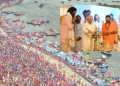
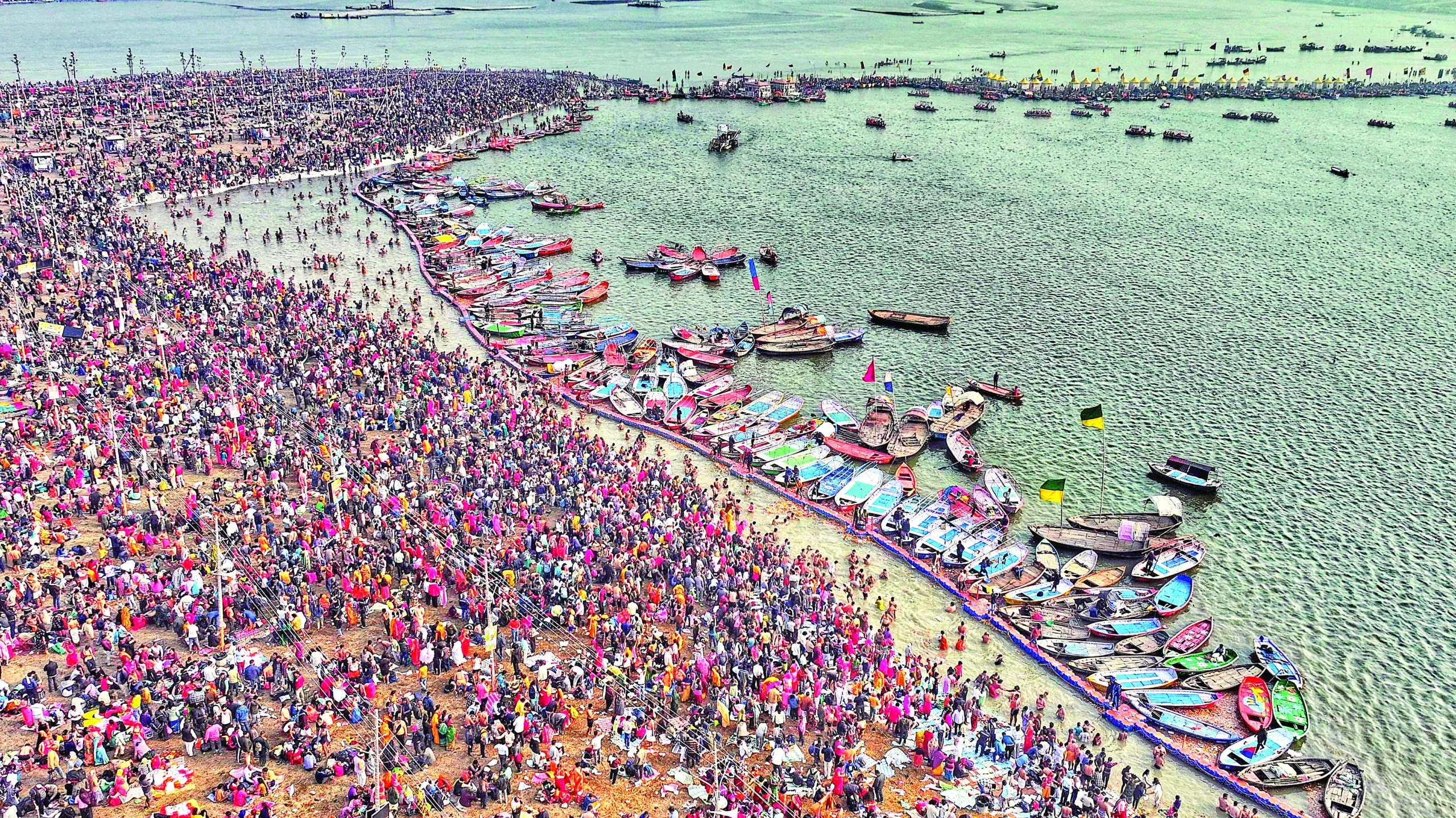
Maha Kumbh Mela held in Prayagraj in 2025 was attended by crores of devotees. Lakhs of Keralites had attended the holy Mela. Keralites, who participated in the holy dip in Triveni Sangamam, wished that Kerala too such a organised programme. Even those Keralites who could not attend it had shared this wish among themselves and their well-wishers. The wish had been the topic of devotees from the entire Dakshin Bharat. They have been nurturing it since the last more than a year. But they were not aware that Kerala had a similar Mela centuries earlier. But it ceased to exist a couple of centuries ago, and later it faded from people’s memories.
For Keralites Mamankam Ulsav is a familiar term for the Keralites. A band of dynamic people who take pride in the tradition and heredity had traced the roots of this noble Ulsav, which had discontinued in 1766. Since 2016, those blessed souls had made serious attempts to revive it. Now it has completed ten years.
Celebrated historians like Ilamkulam Kunjan Pillai and A.V. Sreekanta Poduval, have recorded information and historical facts in connection with the Ulsav.
While speaking to Tirur Dinesh, a leading figure who took the initiative to revive the Ulsav, told Organiser that the legend and the history of the Bharathappuzha Ulsav are amazing. Bharatapuzha Ulsav, also known as Mamankam, is the oldest river festival in Dakshin Bharat. The ulsav called Mamankam is Makhamagha Maholsav or Makha Ulsav. Its history dates back to the epics and the Tretayuga.
History of Mamankam
Yaga was performed by Brahmadeva and marked the beginning of Bharatappuzha. Legend says that Parashurama requested Brahma to carry out a Yaga for the prosperity of Kerala. It was decided to conduct the Yaga in Anamala, Tamil Nadu. Devi Saraswati was assigned the role of Yajamana Patni (Master’s wife) as per tradition. But Devi did not arrive on time. So, Gayatri Devi, who was already in the Yagshala, was assigned as the Yajamana Patni. By that time, Devi Saraswati arrived. Naturally, she got angry and felt humiliated. She cursed Gayatri to be a river. The curse made Gayatri Devi angry, too. She cursed Saraswati to be a river too. The ‘curse spree’ disrupted the Yaga. Gods and Maharishis prayed before both Devis to reduce the gravity of the curses. Both agreed to flow their divine molecules in the rivers.
It was decided to carry out the Yaga, which was disrupted in Anamala, at Govardhanapura. The ancient Govardhanapura was spread from Poonnani Port to Guruvayoor. Perar flows on the northern border of this village. Its bank was full of thick forests. The place was also known as Tapassannoor (today’s Tavannoor), where Maharishis and monks used to meditate. The Yaga was carried out in Tapasannoor. Yaga used to take 28 days of Maghamasa (Makara). The 28th day falls on Magha star in the Malayalam calendar. Parashurama realised that Saptha Rivers (7 rivers), including the Ganga, were pleased with the Yaga and made their presence in Perar. Saptha Rivers will be present in Perar for 28 days of the Magha month. Therefore, Parashurama called on to celebrate the 28 days of the Magha month since no other river can claim such a divine peculiarity. And, the river got the name Bharatappuzha. The place where Yaga was carried out was called Taplassannoor. The idol of the Tavannoor Brahmadev temple has four heads. It is depicted as the God performing Yaga. The temple is situated in the Yaga land.
Parashurama’s call for the river festival bears a noble message. That is, ‘Love and worship nature’. Nature is Parashakthi and the mother. Due to the presence of the temples of Brahma, Siva, and Vishnu in a triangular formation, this place is called Dakshin Kashi and Trimoorthy Snan Ghat.
Conduct of the Ulsav
The conduct of the Ulsav assumed a methodology in BC 113. “Vellamana” in Tavanoor was assigned the task of selecting an Adhikari (master). The selected person was called “Val Thampi. The selection was carried out on the sand hill of Tirunnavaya, on the banks of the Bharatappuzha River, during the Makha month. The place is still called Valpparambu. In the early days, Val Thampi served for three years. Later on, it was extended to five years. During the selection year, Val Thampi conducted the Ulsav. People used to come spontaneously and conduct the River Ulsav.
Kochi Rama Varma shouldered the assignment of Perumal for 24 years. Later on, he embraced the spiritual life and became a monk known as Sundaramoorthi Swami. Later on Valluvakkonathiri took over the power. Valluvakkonatiri conducted the Festival eight times in 100 years. By this time, the Govardhanpuram king learned that Valluvakkonatiri had plotted to attack his kingdom. The king begged for the protection of Samootiri. Samootiri’s army came during the days of Mamankam. Samootiri requested that Tirumanasseri give him the authority to conduct the Ulsav. Consequently, Tirumanasserry’s army killed Valluvakkonatiri and gave the power to conduct the Ulsav to Samootiri.
Revival of the lost tradition
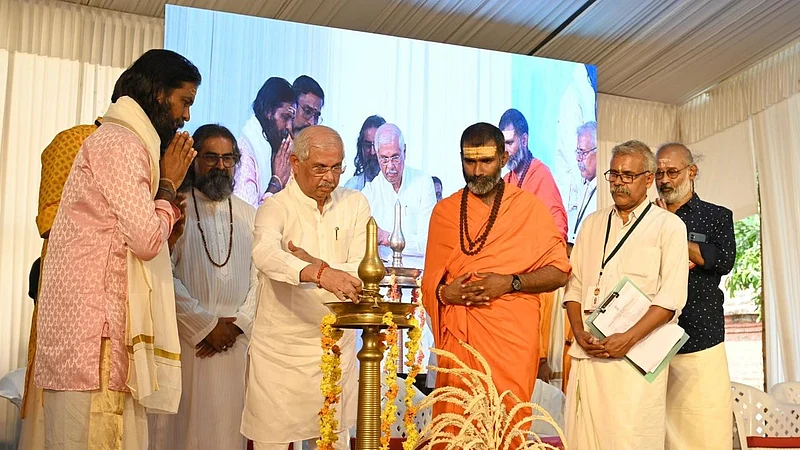
Revival of the Bharatappuzha River Festival is an excellent milestone for Dakshin Bharat. Oral History Research Foundation revived the festival in 2016. Later on in 2018, Sadguru Matha Amruthanandamayi Devi’s attention was drawn to the festival. With Amma’s blessings, the festival has been held on both sides of the river every year. This year’s festival runs from January 19 to February 3. Cultural programmes are part and parcel of the festival. Kolloor Shree Mookambika temple tanthri Dr Nityananda Adiga leads the rituals.
Reports from Tirunnavaya suggest that lakhs of worshippers are expected to participate in the Kumbh Mela. Elaborate arrangements are taking place there. Despite various obstacles brought by the authorities, the festival is going to be a grand and divine success.