“Where the mind is without fear and the head is held high.”
These are not just the most quoted lines of Rabindranath Tagore, but they are perhaps the most relevant.
What if I told you that the very land which gave Bharat these words today lives in fear? We are not saying this because of what television debates claim. We are not saying this because of what opposition parties allege. We are saying this because we saw it, heard it, and felt it on the streets of West Bengal, while reporting on the Special Intensive Revision (SIR) of electoral rolls.
We had reached Bengal to cover SIR, a technical-sounding administrative process meant to clean up voter lists by removing illegal, duplicate and fraudulent entries. But before we could even begin formal reporting, Bengal had already begun telling us its story, not through slogans or protests, but through silence.
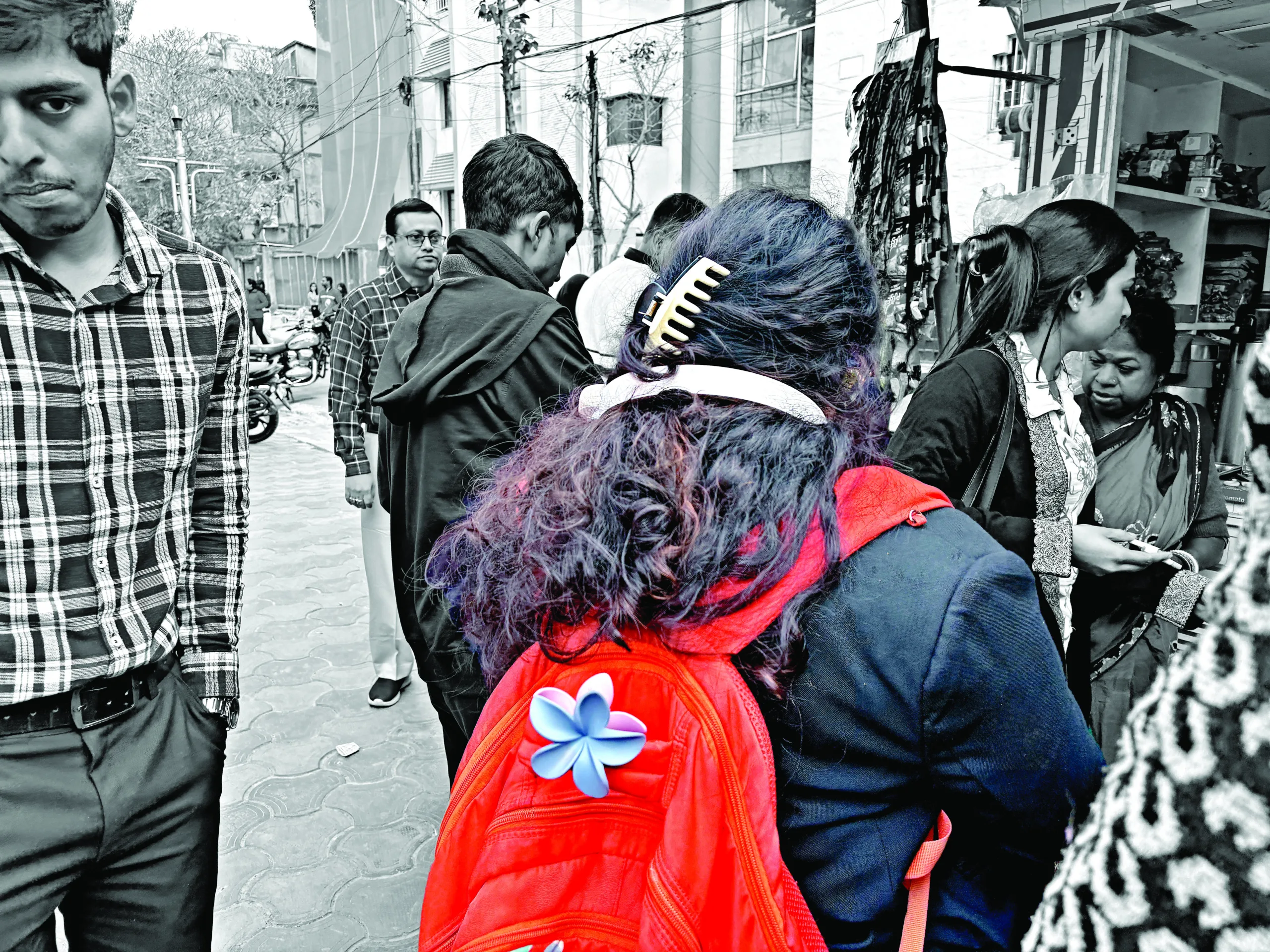
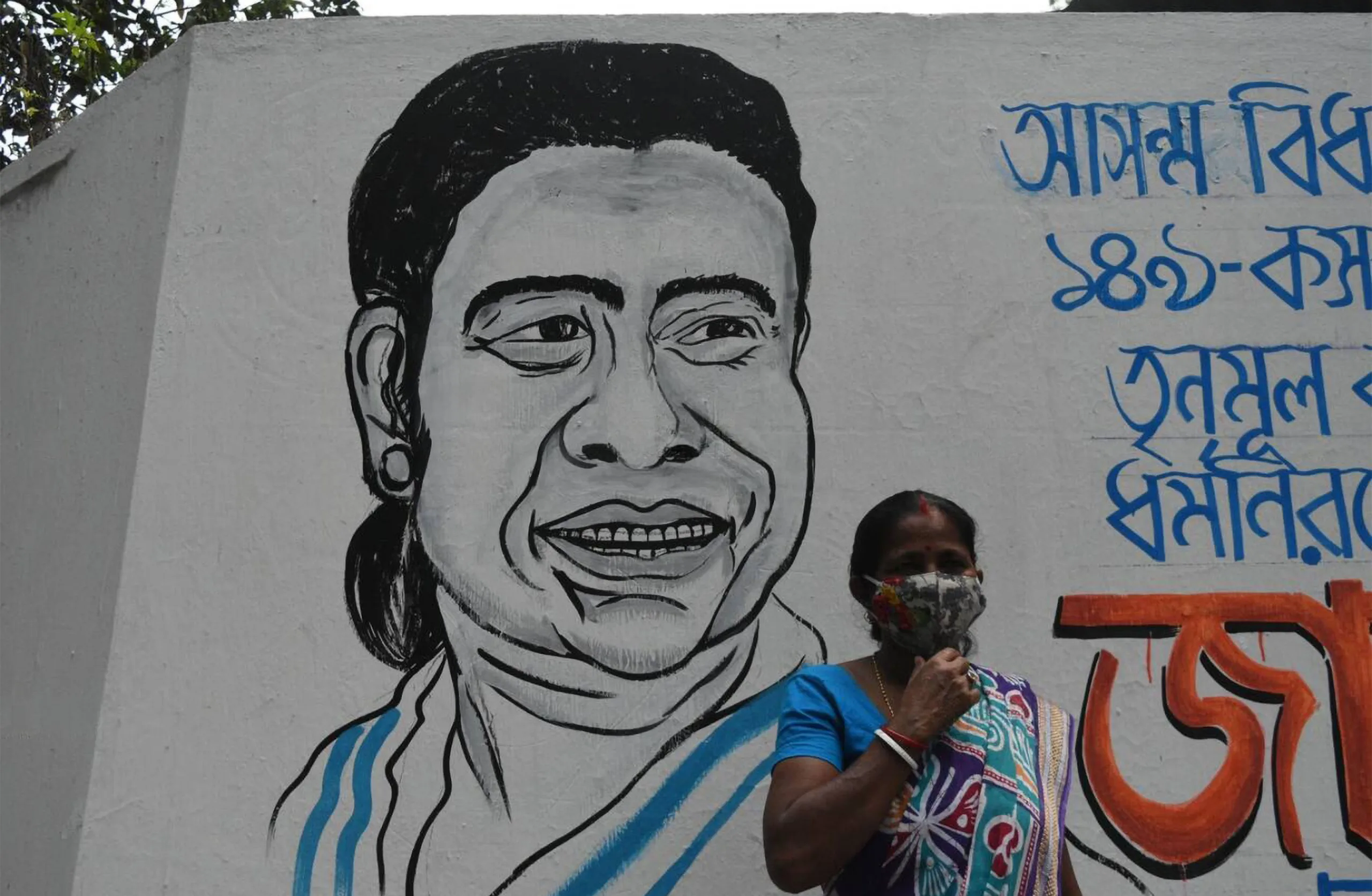
As we moved through Kolkata in taxis, speaking to drivers, the pattern was impossible to ignore. Every conversation returned to the same theme – the unspoken rules of survival under Mamata Banerjee’s rule.
“You won’t find anyone willing to talk,” one driver told us flatly when we mentioned SIR. “Why?” we asked. “Because Mamata Banerjee has created fear. People know Bangladeshis live here. People know fake Aadhaar and voter IDs are made easily. But nobody will say it on camera.” Then came a sentence that stayed with me: “The infiltrators have been moved out of West Bengal now because of SIR. They have been sent to other States.”
Another driver, who had barely gone beyond basic schooling, spoke with startling clarity about governance and lawlessness. He was furious at Mamata. “How can she tell women not to go out?” he asked, referring to her statement after the RG Kar incident. “Instead of fixing law and order, she tells girls to stay inside.”
The more we travelled, the more one truth became unavoidable: West Bengal was not calm, it was quiet out of fear.
“This is Bengal, bro… they will rape me if I speak”
On the second day, we finally stepped into the field. We were standing at a tea stall, planning which university to approach when a young woman, a student, was sipping tea with her friend nearby.
We struck up a casual conversation. Nothing political at first. Just Bengal, life, college. Then we asked her gently about SIR. Her reaction was immediate and chilling. “Dude, this is Bengal. Do you want me to get raped or what? They will come to my house. They will drag me out. Don’t make me speak about Mamata.”
She was not joking. She was not exaggerating. She was terrified. Off-camera, she spoke freely. On-camera, she refused. She said SIR was absolutely necessary because Bangladeshi settlements are real.
As per the official draft voter list published by the Election Commission, around 58 lakh voters have been omitted so far under the SIR in West Bengal. Thousands of illegal Bangladeshi immigrants are leaving Bharat through various border checkposts in West Bengal since the SIR exercise started. Border Security Force is handing over Bangladeshi nationals to the Border Guard Bangladesh after taking biometrics and completing necessary documentation work.
But what shook us was what she said next: “Everyone who studies, everyone who becomes educated, wants to leave Bengal. Even Gurgaon feels safer than Kolkata now.” Then she told us something we had not expected. A word that sounded almost forgotten elsewhere in Bharat. “Chhapa.”
In Bengal, she explained, voting theft is not historical memory – it is present reality. “You go to vote, and they tell you – your vote is already cast. Someone has already voted in your name.”
This was not a party worker. This was a young, educated student. Booth capture, proxy voting, electoral theft, practices that disappeared in most of Bharat decades ago, still live in Bengal under a softer, more insidious name. Chhapa.
Keeping lips sealed
We spent the entire day walking. From one street to another. From tea stalls to shop fronts. From the ghats of the Hooghly to Bara Bazaar, from Bara Bazaar to Park Street. Kolkata unfolded in all its metropolitan splendour, high-rise buildings, shopping arcades, busy crossings, old colonial facades, yet something essential was missing voices.
Because we wanted to record every opinion, our instinct was to find people willing to speak on camera. What we encountered instead was something far more revealing: universal agreement in private, universal silence in public. Almost everyone told us the same story, word for word.
To reach Sandeshkhali, we crossed a river by boat – a physical passage that felt disturbingly symbolic. Women spoke to us in fragments at first – hesitant, watchful, frightened.
Yes, Bangladeshi infiltrators live here. Yes, they have colonies. Yes, they have bought land. Yes, they have Aadhaar cards and voter IDs. Yes, Mamata Banerjee protects them.
But nobody, not one Bengali, would say this on camera.
We barely managed to record two or three people. They even asked for their faces to be blurred. One shopkeeper on Park Street looked at our microphone, then at his shop, then back at us. “You’ll blur me, right?” That one sentence told us everything about Bengal in 2026.
We have reported from Jharkhand, from Bihar, from places with Maoist history, from areas with intense political rivalry. People everywhere complain. People everywhere criticise. People everywhere talk.
But here, in Kolkata, Bharat’s intellectual capital, the land of Tagore and Vidyasagar, fear ruled the streets. Not villages. Not border hamlets. But malls, metros and market lanes.
By the end of our second day in Kolkata, one word had lodged itself in our minds. Chhapa.
The more we listened, the clearer the pattern became. What Bengal faces is not just electoral malpractice – it is a system. First, you cannot vote freely. Second, if you try to resist, your vote is stolen.Third, if the ruling party wins, post-poll violence begins. And finally, fear becomes permanent.
Sandeshkhali: The Anatomy of Fear in Bengal
After Kolkata, we decided to go to Sandeshkhali. What we were seeing now felt disturbingly familiar. Sandeshkhali in 2024 had shown us exactly how this fear is instilled with state machinery. In January 2024, the Enforcement Directorate went to raid the house of Sheikh Shahjahan, a powerful Trinamool Congress leader, in connection with alleged land grabs and financial irregularities. ED officers were attacked, their vehicles vandalised, and they were forced to flee the area. But something far bigger happened after that raid. Once the shield of political power cracked, women in Sandeshkhali began coming out of their homes. They narrated stories that had remained buried for years – of systematic sexual exploitation, gang rapes, forced confinement and intimidation by Shahjahan and his associates. That is why Sandeshkhali was not just a past episode for us. It was a mirror of what Bengal is living through today.
To reach Sandeshkhali, we crossed a river by boat – a physical passage that felt disturbingly symbolic. Women spoke to us in fragments at first – hesitant, watchful, frightened. But once they realised we were not from the State machinery, the stories began to pour out.
Every account pointed to the same truth: Chhapa in elections. Fear after results. And sexual violence as a political weapon. Women told us how they were summoned to local party offices at night. How refusal was not allowed. How excuses about children or illness were met with threats. “They say they will take our children. They say they will kill them.”
Men were beaten for suspected disloyalty. Families were punished if they were believed to have voted for the BJP.
Several women told us something else that cut deeply: Bangladeshi infiltrators were involved in the violence, protected by local strongmen. Mandirs were broken. Hindu households were targeted. Not because of politics alone. But because they were Hindu women without protection.
And through it all, silence ruled. Women knew everything. Villages knew everything. The police knew everything. But nobody dared to say it out loud.
The Woman Who Refused to Disappear
We wanted to speak to Rekha Patra, the only woman from Sandeshkhali who had refused to withdraw her complaint against Sheikh Shahjahan. When we reached Sandeshkhali, we got to know that Rekha no longer lives there due to fear. Getting to her was itself a lesson in how Bengal now works. Her husband first picked up our call and then went silent. When we finally managed to reach Rekha on her own number, she was hesitant.
Rekha told us she could not talk unless the people who had given her protection and housing knew who we were and why we wanted to meet her. We contacted the political workers who were coordinating her safety. Only after their clearance were we allowed to visit. When we reached her location, there ws the police were stationed outside. Our names were noted. Only then were we let in.
In the two-room house. there categorically comfort. Just survival.
Rekha herself made tea for us. “You have waited all day,” she said quietly. “Let me make tea.” Then her voice broke. Her younger daughter stood beside her. Her elder daughter now lives in a hostel because Rekha cannot keep her family in one place. “I can’t even send my children to school properly,” she said. “We keep changing houses.” And then she began to speak. About being raped by Sheikh Shahjahan and his men.
When she first protested, she was not alone. Other women stood with her. But over time, one by one, they returned to the ruling party. Out of fear. Out of exhaustion. Out of survival.Rekha did not blame them. “How can a woman fight men with guns and political power alone?” she asked.
Eventually, Rekha joined the BJP. Even now, TMC supporters in the area threaten her. They tell her to leave and disappear. Her life today is a prison without bars. And when we asked her what she wanted, she said only one thing: “Sheikh Shahjahan should be hanged. Only then will we get peace.”
Murshidabad: When the Fear Crosses the River
From Sandeshkhali, we travelled north to Murshidabad. The name itself still carries the weight of what happened there last year – when, under the cover of “Waqf protests”, Islamist mobs stormed Hindu localities, burning homes, smashing mandirs, and breaking idols.
We went to Dhulian. The first thing we saw was the mandir. It was being rebuilt. The mandir awaits new murtis of Shiva and Parvati, because the originals had been burned. Shiva’s face on the earlier idol had been completely blackened by fire. The structure that once sheltered it had been reduced to ash.
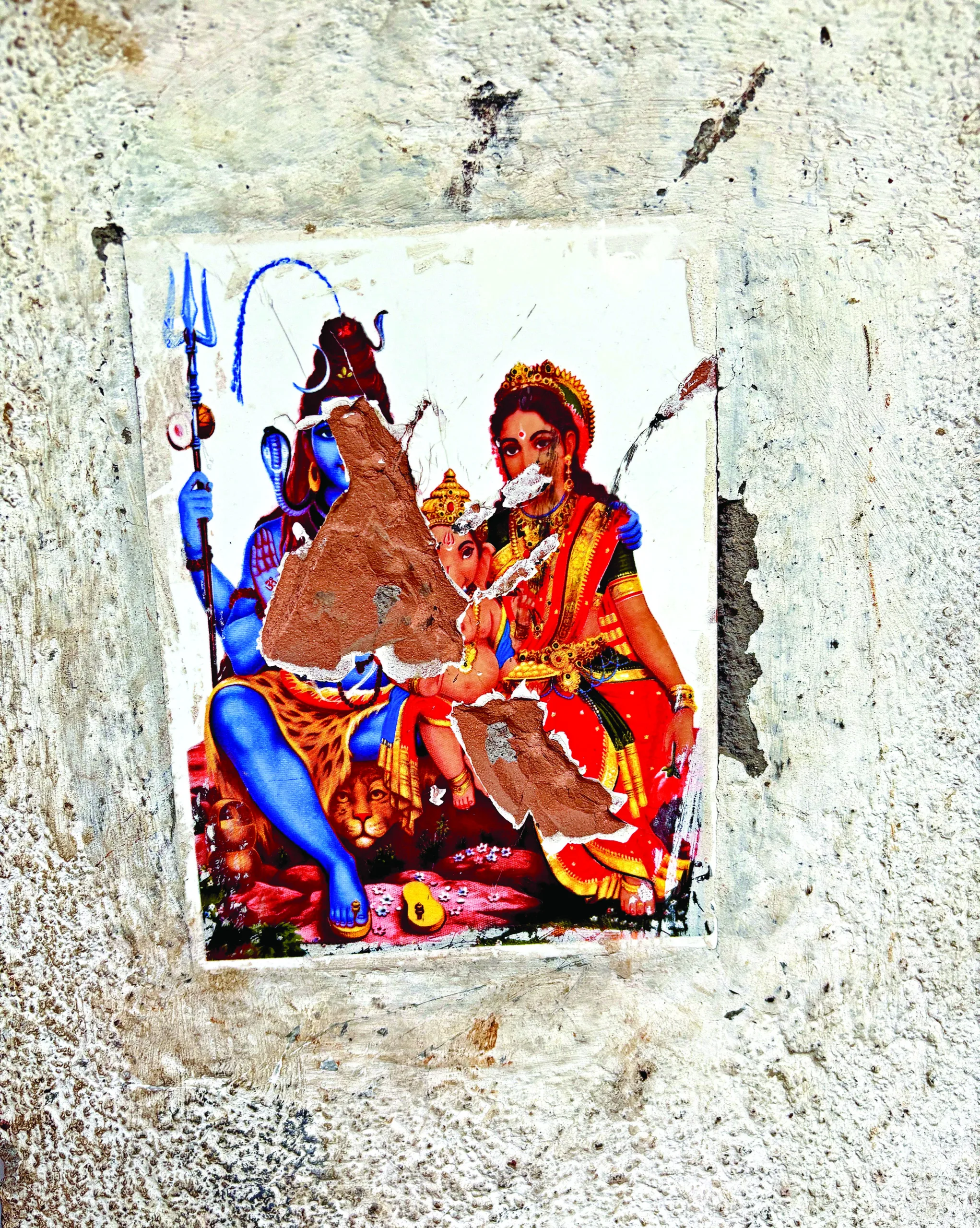
When we asked the caretaker when the mandir would be inaugurated, he panicked. “Please don’t ask me here,” he whispered. “Some Muslim men are watching. They know you are from the media. I will get into trouble.”
So we stopped asking. We went into the lanes. There, women began to speak. One young mother took us into her half-rebuilt home. She held her seven-month-old daughter in her arms. “I was pregnant when they attacked,” she said. “I locked myself inside. I had to save my baby.”
Her husband runs a small business. Their losses ran into several lakhs. What they received from the State Government was Rs 1.2 lakh. We asked about security. They laughed bitterly. “We don’t need State Police. We need Central Forces here. Only the BSF can save us.”
The threat they face is constant. “Jab tak tumhara baap yahan hai, tab tak tum theek ho. Tumhara baap kab tak rahega?” Baap – father – is what the mobs call the Central forces.We went from one house to another. Everywhere, the story was the same. Walls blackened by fire. Bicycles twisted by heat. Shops reduced to skeletal frames. One man finally broke the pattern of fear. “Now we are not afraid. Now we will die if we must. How long can we keep running? This time we will face them.” It was not bravado. This was not resistance. This was a person who knew he had nowhere left to go.
And through it all ran one unbearable irony: The people being erased here are Bengali Hindus.
Singur: When Even Muslim Bengalis Want SIR
On the road to Murshidabad, our driver said something that stayed with us. “Madam, even Muslim Bengalis say SIR should happen. They know Bangladeshis have come. They know their jobs are being taken.”
We didn’t fully believe him. But near Singur, while reporting on the Tata Nano site and its lost promise of industrial jobs, something unexpected happened. One of the men we started speaking to, a Muslim, suddenly brought up SIR himself.
“SIR hona chahiye. Bangladeshi ghuspaithiyon ko bahar nikalna chahiye.”
We were stunned. So we stayed. We walked through nearby villages. We kept asking. And again and again, Muslim men told us the same thing – openly, without hesitation. One elderly man, well into his sixties, said something that cut through every political slogan: “Hum jaise gaddaron ki wajah se hi Bangladeshi yahan aaye hain. Pehle gaddaron ko maarna chahiye.”
Another man was even more direct: “Aapko pata hi hai kaise kabza hota hai. Aadhaar ban jata hai, sab ho jata hai. SIR hoga tabhi kuch hoga. Warna yeh aayenge, abadi badhayenge, aur humari naukriyaan khaayenge.”
These were not BJP supporters. These were ordinary Bengalis Muslims. What they were saying quietly in Singur is what no one dares to say loudly in Kolkata: Illegal immigration is not a Hindu-Muslim issue. It is a citizen vs infiltrator issue.
By the end of our journey, a strange pattern had emerged.Two groups of people were not afraid.
Everyone else was.
The Border Hindus
We reached the Bangladesh border through Basirhat. The villages there are small, poor, deeply Hindu – Radha-Krishna pictures on walls, Tulsi plants in courtyards, cows tied near the doors, women offering bhog in the morning. One elderly man welcomed us with prasad after puja.
Then he told us what life here is actually like. “Every night, 200–300 Bangladeshis used to cross. Local Muslims help them. They know every route.” He owns seven acres of land. Four acres will go into border fencing, if it is ever completed. “Let it go. We want security.” We asked him why he was not afraid to speak. He pointed towards the road.“ After the coup in Bangladesh, BSF has come. Now we feel protected. Now we can speak.”
Before that, even festivals were celebrated quietly. Now, with Central Forces present, Radha-Krishna murtis are every where. Fear disappears when the State cannot punish you.
The Babri Masjid Crowd
The second group without fear was very different. In Murshidabad, a new structure is coming up – a so-called Babri Masjid, whose foundation stone was laid on December 6, 2025, deliberately chosen to mirror the demolition of the original Babri structure in Ayodhya.
Central probe into Bengal corruption: A decade long trail
West Bengal has seen a chain of major corruption cases, from the Rs 2,500-crore Saradha scam and Rs 15,000-crore Rose Valley fraud to the Narada sting (2016), coal smuggling (from 2020), cattle smuggling (from 2021) and the SSC recruitment scam (from 2022), with ED and CBI probes repeatedly alleging political protection under the Trinamool Congress.
- Saradha and Rose Valley scams devastated lakhs of small investors, led to arrests and naming of TMC leaders including MP Kunal Ghosh, and prompted the Supreme Court in 2014 to hand probes to the CBI citing lack of faith in the state investigation, yet no accountability was fixed at the top even a decade later.
- Narada sting released in March 2016 showed senior TMC ministers and MPs allegedly accepting cash on camera, triggering CBI and ED cases, but the state stalled action as CM Mamata Banerjee called the sting ‘fabricated’ and stood by the accused.
- The coal smuggling case, under ED probe since 2020, led to arrests and questioning of TMC-linked figures, with agencies alleging organised illegal mining and transport in collusion with police and political actors.
- In the cattle smuggling case, the 2022 arrest of TMC strongman and Birbhum district president Anubrata Mondal exposed an alleged cross-border network operating with political patronage.
- The SSC school recruitment scam that surfaced in 2022 became the most socially volatile case, with ED arresting former education minister Partha Chatterjee, seizing crores in cash, attaching assets worth over Rs 160 crore.
- In August 2025, the arrest of sitting TMC MLA Jiban Krishna Saha in recruitment-related cases showed corruption had spread beyond isolated individuals.
- On January 8-9, 2026, ED raids at I-PAC-linked locations in Kolkata in a coal money-laundering probe involving an alleged Rs 20-crore hawala trail escalated after CM Mamata Banerjee intervened and removed devices.
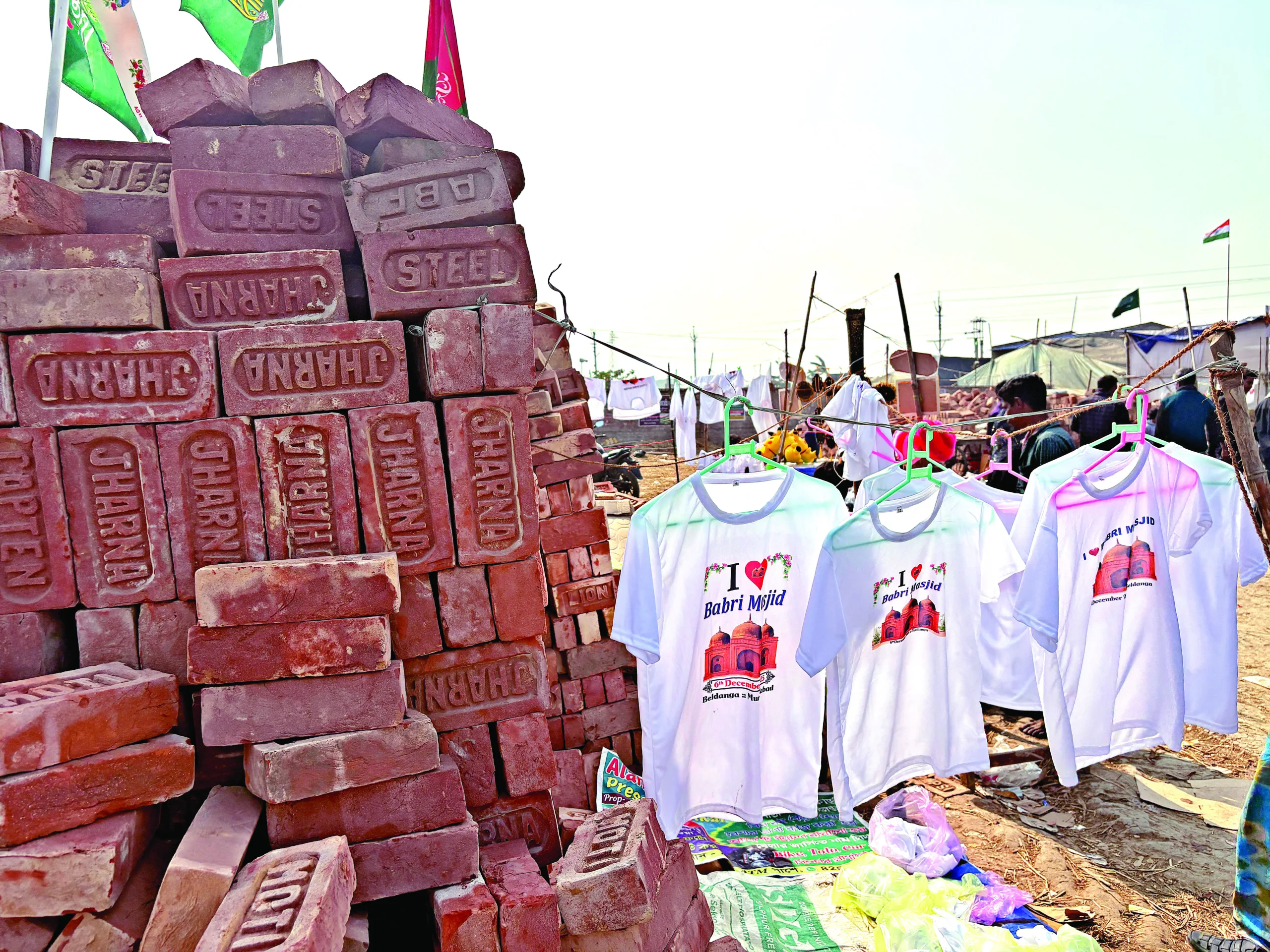
We went there and saw people were flaunting “I Love Babri Masjid” T-shirts. Visitors carried bricks as offerings.
When we asked who Babur was, one man smiled: “Babur was a gentleman. A great king.” The same Babur who destroyed countless mandirs. When we asked further questions, the mood turned hostile. One man tried to grab the camera. Others began surrounding us. The Police stood nearby, watching, doing nothing.
Finally, someone from the mosque committee intervened and told us to stop recording. These men were not afraid of law. They were not afraid of cameras. They were not afraid of consequences.They were at home. By now the pattern was unmistakable.
Hindu villagers, students, women, shopkeepers–all whisper. Islamist mobs and their enablers–speak freely. Border Hindus speak only when BSF stands behind them. This is the Bengal Mamata Banerjee has built.
A State That Whispers Its Truth
This is Mamata Banerjee’s West Bengal – throughout our reporting, we protected the identities of those who spoke to us not out of journalistic habit, but out of necessity. And this fear did not begin yesterday. Bengal has not suddenly changed in the last five years – it has merely stopped hiding. Political violence, booth capturing, intimidation and post-poll retribution have existed here for decades, but they exploded into national view after the 2021 Assembly elections, when post-poll violence turned into a wave of terror.
Sandeshkhali, Murshidabad are not isolated tragedies. They are extensions of the same system. What happens next, in this election and after it, will decide whether Bengal remains a democracy or becomes a permanently managed silence. And in the land that once gave Bharat the dream of a fearless mind, fear now governs the vote.