Why Bengal is no longer fitting old political templates
June 16, 2026
  • Read Ecopy
  • Circulation
  • Advertise
  • Careers
  • About Us
  • Contact Us
Android AppiPhone AppArattai
Organiser
  • ‌
  • Bharat
    • Assam
    • Bihar
    • Chhattisgarh
    • Jharkhand
    • Maharashtra
    • View All States
  • World
    • Asia
    • Europe
    • North America
    • South America
    • Africa
    • Australia
  • Editorial
  • International
  • Opinion
  • RSS @ 100
  • More
    • Op Sindoor
    • Analysis
    • Sports
    • Defence
    • Politics
    • Business
    • Economy
    • Culture
    • Special Report
    • Sci & Tech
    • Entertainment
    • G20
    • Azadi Ka Amrit Mahotsav
    • Vocal4Local
    • Web Stories
    • Education
    • Employment
    • Books
    • Interviews
    • Travel
    • Law
    • Health
    • Obituary
  • Subscribe
    • Subscribe Print Edition
    • Subscribe Ecopy
    • Read Ecopy
  • ‌
  • Bharat
    • Assam
    • Bihar
    • Chhattisgarh
    • Jharkhand
    • Maharashtra
    • View All States
  • World
    • Asia
    • Europe
    • North America
    • South America
    • Africa
    • Australia
  • Editorial
  • International
  • Opinion
  • RSS @ 100
  • More
    • Op Sindoor
    • Analysis
    • Sports
    • Defence
    • Politics
    • Business
    • Economy
    • Culture
    • Special Report
    • Sci & Tech
    • Entertainment
    • G20
    • Azadi Ka Amrit Mahotsav
    • Vocal4Local
    • Web Stories
    • Education
    • Employment
    • Books
    • Interviews
    • Travel
    • Law
    • Health
    • Obituary
  • Subscribe
    • Subscribe Print Edition
    • Subscribe Ecopy
    • Read Ecopy
Organiser
  • Home
  • Bharat
  • World
  • Operation Sindoor
  • Editorial
  • Analysis
  • Opinion
  • Culture
  • Defence
  • International Edition
  • RSS @ 100
  • Magazine
  • Read Ecopy
Home Politics

Why Bengal is no longer fitting old political templates

Much of the international commentary surrounding Bengal — particularly from sections of the Western media — appears shaped less by the complexities of the state’s social realities and more by an older ideological imagination that struggles to accommodate Bengal’s changing political mood

Debika DuttaDebika Dutta
May 24, 2026, 04:00 pm IST
in Politics, Bharat, Opinion, West Bengal
Follow on Google News
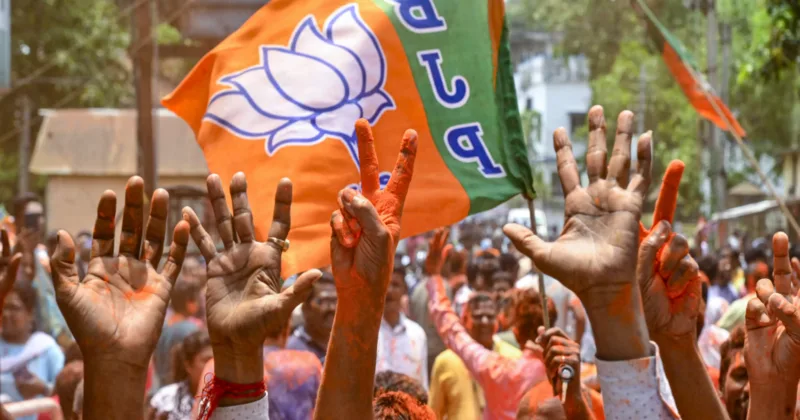
Victory celebrations after West Bengal assembly Elections 2026 were declared

Victory celebrations after West Bengal assembly Elections 2026 were declared

FacebookTwitterWhatsAppTelegramEmail

When sections of the Western media discuss West Bengal today, they often appear less interested in understanding the state than in defending an older political imagination of it. The recent criticism by BBC of the growing influence of the Rashtriya Swayamsevak Sangh in Bengal fits neatly into that pattern.

The underlying suggestion is familiar: the rise of Hindu social and political assertion in Bengal represents a dangerous ideological departure from the state’s supposedly liberal and secular character. Such arguments may satisfy editorial instincts abroad, but they reveal only a partial understanding of Bengal’s political transformation.

The problem is not criticism itself. Democracies thrive on scrutiny. The problem is the selective lens through which Bengal is increasingly being interpreted.

To many foreign commentators, Bengal continues to exist as a romantic political abstraction — the land of Tagore, Left intellectualism, coffee-house debates and cultural cosmopolitanism. It is an image cultivated over decades and repeated so frequently that it has acquired the status of unquestioned truth. Yet beneath that carefully preserved image lies another Bengal: one shaped by Partition trauma, refugee displacement, border anxieties, demographic shifts and an entrenched culture of political violence.

These realities rarely receive proportionate attention in global reporting.

Read More:Cockroach Janta Party: A bid to indoctrinate Gen Z against the government

The Partition of 1947 fundamentally altered Bengal’s social fabric. Successive waves of migration from East Pakistan and later Bangladesh reshaped districts, economies and political anxieties across the state. Millions arrived carrying memories of persecution, displacement and insecurity. For large sections of Bengali Hindu society, questions of identity and demographic change were never theoretical political constructs. They were lived experiences.

Yet much of the international commentary on Bengal continues to reduce its politics to simplistic binaries — secularism versus nationalism, liberalism versus majoritarianism — as though the state’s social complexities can be explained through imported ideological templates.

Equally underplayed is Bengal’s long history of organised political violence.

From the turbulent Naxalite years to decades of cadre domination during the Left Front era and later the violent confrontations accompanying the rise of the All India Trinamool Congress, violence has remained deeply embedded within Bengal’s political culture. Post-poll clashes, intimidation and targeted attacks have repeatedly surfaced across electoral cycles.

The violence following the 2021 Assembly election was serious enough for the National Human Rights Commission, in its observations before the Calcutta High Court, to describe conditions amounting to grave democratic concern in several areas. Reports of attacks on opposition workers, displacement of families and political intimidation emerged from multiple districts. Sandeshkhali later exposed disturbing allegations of coercion, exploitation and localised impunity operating under political protection.

One would expect these developments to dominate international concern about democratic decline in Bengal.

Instead, much of the anxiety appears reserved for the growth of the RSS.

This asymmetry cannot simply be dismissed as coincidence.

When Ram Navami processions in Bengal repeatedly become sites of confrontation, sections of the global media instinctively frame the issue through the language of “Hindu aggression,” often paying far less attention to the local tensions, administrative failures or targeted attacks that preceded the clashes. Violence linked to ideological opponents is frequently contextualised sociologically; Hindu mobilisation, however, is almost automatically interpreted as evidence of majoritarian radicalism.

The inconsistency is too visible to ignore.

Why does organised cadre violence often receive muted contextualisation while Hindu social assertion immediately attracts alarmist vocabulary? Why are certain forms of identity politics explained as resistance, while others are treated as presumptive extremism?

The answer lies less in Bengal itself and more in the intellectual assumptions through which India is still viewed in many Western editorial circles.

There remains a persistent tendency to approach Indian politics through postcolonial frameworks where expressions of Hindu political consciousness are instinctively treated with suspicion. This framework leaves little room for the possibility that cultural nationalism in Bengal may have emerged from genuine social anxieties, historical memory and democratic mobilisation rather than manipulation alone.

The rise of the RSS in Bengal did not occur in isolation from local realities. It emerged gradually through years of grassroots work, organisational persistence and social outreach in areas where many citizens increasingly felt politically unheard. Relief activities during floods and cyclones, educational initiatives, tribal outreach and local service networks contributed to this expansion long before electoral gains became visible.

During Cyclone Amphan, volunteers associated with RSS-linked organisations participated extensively in relief operations across affected districts. Such work seldom receives equivalent international attention because it complicates the preferred narrative of the organisation as merely an ideological instrument of polarisation.

What unsettles sections of the Western media is not simply the presence of the RSS in Bengal. It is the collapse of an older assumption — that Hindu civilisational language would remain permanently marginal within Bengal’s political life.

That assumption ignored Bengal’s own intellectual inheritance.

This is the land of Bankim Chandra Chattopadhyay, whose Vande Mataram became inseparable from India’s nationalist movement; of Swami Vivekananda, who infused Hindu thought with civilisational confidence; and of Syama Prasad Mukherjee, whose political legacy continues to shape debates on national unity and identity.

To portray cultural nationalism as alien to Bengal is therefore historically unsustainable.

None of this places the RSS or any ideological formation beyond criticism. Democratic accountability must apply to all organised power. But criticism rooted in ideological reflex rather than empirical seriousness ultimately weakens public discourse.

Bengal is changing. Its political vocabulary is changing with it. Large sections of its people are reassessing older ideological certainties and articulating anxieties that elite interpreters long preferred to ignore.

The deeper discomfort in sections of the global commentariat is not merely the rise of the RSS in Bengal.

It is the gradual loss of their monopoly over how Bengal is supposed to think, speak and politically imagine itself.
Topics: TMCBJPRSSWest BengalRam Navami processionsLeft governmentSandeshkhali
ShareTweetSendShareSend
✮ Subscribe Organiser YouTube Channel. ✮
✮ Join Organiser's WhatsApp channel for Nationalist views beyond the news. ✮
Previous News

Delhi police move to revoke passports of 25 top gangsters hiding abroad, 28 identified for extradition

Next News

UP Love Jihad: Nurse Anjali Sharma strangled to death by colleague Sufiyan after pressure to convert and marry him

Related News

Representative Imaeg

The Fifty-Year Sabotage: How politicians are making delimitation meaningless

Addressing the second day of Vijnana Bharati’s 7th National Convention at BHU, RSS Sah Sarkaryavah Dr Krishna Gopal

Vijnana Bharati’s 7th National Convention | Scientists must work to harmonise spirituality & science: Dr Krishna Gopal

(Left) BJP leaders R Ashok (Right) BY Vijayendra

Karnataka: Guarantee schemes revision exposes Congress failure; BJP alleges secret plan to slash beneficiaries

Senior functionaries of RSS at Karyakarta Vikas Varg–Pratham of the Uttar-Purva Kshetra

Hindutva’s worldview can provide foundation for global peace in a world troubled by capitalism & terrorism: Alok Kumar

RSS Sarsanghchalak Dr Mohan Bhagwat addressing the gathering in Keralam on the occasion of lecture series on 100 years of RSS

Journey of RSS in 100 Years | Hindu means cultural heritage of Bharat; none is outsider to Sangh: Dr Bhagwat in Keralam

Representative Image

Panch Parivartan and its relevance in social work education

Load More

Latest News

Islamists who raped the Hindu woman in Nagpur arrested

Jihadi Mindset Surfaces in Nagpur: Ayyaz Taj, Hazrat Maulana from MP & Amin Shaikh, raped Hindu woman

UPSC Prelims 2026 result declared

UPSC CSE Prelims Result 2026 Declared: 13,343 candidates qualify for mains exam; Download result PDF here

VHP International Working President Alok Kumar addressing the media

Shree Ram Janmaboomi Teerth Kshetra takes responsibility for every rupee, will fully cooperate with SIT: Alok Kumar

India-Slovakia heralds new era of partnership: Seal MoUs in defence, digital tech, counter-terrorism & labour mobility

Telangana: LRPF Seeks NHRC Probe into Agape Over HIV Orphans’ Privacy, Child Safety and Regulatory Concerns

US protests against India’s FCRA amendments; Transparency norms rattle foreign funded missionary networks

PoJK Protests: 2 JAAC activists killed, 8 injured in Rawalakot; Pakistani security forces crackdown on civilians

Singapen Special Task Force (SSTF) unit in Tamil Nadu

Singapen, all-women police unit, force launched by TVK, but crimes against women remain a growing concern in Tamil Nadu

The National Democratic Alliance (NDA) on June 10 passed a resolution marking 12 years of the Narendra Modi-led Government, describing it as a defining phase of "people-centric development, participative democracy and performance-oriented governance"

12 years of Modi government:  Restoration of self-belief

More than a cultural gathering, the event reflected a collective resolve to protect indigenous traditions, strengthen community bonds and celebrate Bharat's enduring unity in diversity.

Janajati Samagam 2026: The indigenous quest to protect culture, tradition and the soul of Bharat

Load More
  • Privacy
  • Terms
  • Cookie Policy
  • Refund and Cancellation
  • Delivery and Shipping

© Bharat Prakashan (Delhi) Limited.
Tech-enabled by Ananthapuri Technologies

  • Home
  • Search Organiser
  • Bharat
    • Assam
    • Bihar
    • Chhattisgarh
    • Jharkhand
    • Maharashtra
    • View All States
  • World
    • Asia
    • Africa
    • North America
    • South America
    • Europe
    • Australia
  • Editorial
  • Operation Sindoor
  • Opinion
  • Analysis
  • Defence
  • Culture
  • Sports
  • Business
  • RSS @ 100
  • Entertainment
  • More ..
    • Sci & Tech
    • Vocal4Local
    • Special Report
    • Education
    • Employment
    • Books
    • Interviews
    • Travel
    • Health
    • Politics
    • Law
    • Economy
    • Obituary
  • Subscribe Magazine
  • Read Ecopy
  • Advertise
  • Circulation
  • Careers
  • About Us
  • Contact Us
  • Policies & Terms
    • Privacy Policy
    • Cookie Policy
    • Refund and Cancellation
    • Terms of Use

© Bharat Prakashan (Delhi) Limited.
Tech-enabled by Ananthapuri Technologies