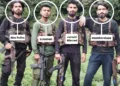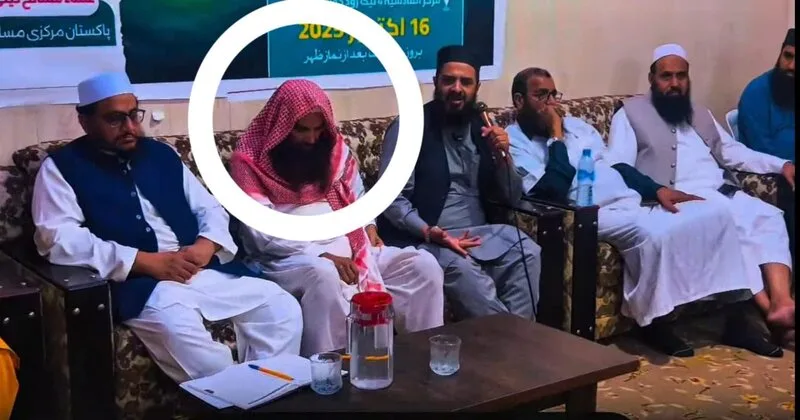
Islamabad: A senior Lashkar-e-Taiba commander, Abdul Gaffar, has died under mysterious circumstances in Pakistan, adding to the growing list of terrorists meeting unexplained ends on Pakistani soil. Gaffar was reportedly returning after attending a wedding ceremony of his relatives when the incident occurred. The circumstances surrounding his death remain unclear, fuelling speculation across security and intelligence circles.
BIG BREAKING NEWS 🚨 Top Lashkar commander Abdul Gaffar has died under MYSTERIOUS circumstances in Pakistan.
Reasons unknown !! As per reports, he was returning after attending a wedding ceremony of his relatives.
He was earlier seen in a photo with Hafiz Saeed’s son.
Hafiz… pic.twitter.com/GRhTsxxvDO
— News Algebra (@NewsAlgebraIND) January 18, 2026
Abdul Gaffar was considered a key figure within Lashkar-e-Taiba and was known for his proximity to the organisation’s top leadership. He had earlier been seen in a photograph alongside the son of Hafiz Saeed, the globally designated terrorist and founder of Lashkar-e-Taiba. The image had drawn attention to Gaffar’s influence within the terror network and his access to its inner circle.
Following news of Gaffar’s death, sources indicate that the Lashkar leadership has been shaken, with Hafiz Saeed said to be in complete shock. The sudden elimination of another senior operative has intensified fears within the terror ecosystem that Pakistan has long nurtured.
Gaffar’s death fits into a clear and expanding pattern. According to a detailed report published in Organiser in June 2025, at least 32 terrorists have been killed by unknown gunmen between 2022 and 2025, many of them inside Pakistan. These include high-value operatives from Lashkar-e-Taiba, Jaish-e-Mohammad, and other Pakistan-backed terror outfits responsible for violence in India.
Among those who have met violent ends in these incidents were:
Saifullah Khalid, a top Lashkar-e-Taiba terrorist killed in Sindh, was accused of masterminding attacks, including the IISc Bengaluru shooting and the Rampur CRPF camp strike.
Abu Qatal, a key aide of Hafiz Saeed, was shot dead in Jhelum.
Mufti Shah Mir, a religious figure linked to Pakistan’s ISI and accused in the Kulbhushan Jadhav abduction case, was gunned down in Balochistan.
Maulana Kashif Ali, head of Lashkar’s political front and Saeed’s brother-in-law, was killed by unknown assailants.
Mufti Fayyaz, a Jaish-e-Mohammed recruiter, was killed by unknown attackers.
Abdullah Shaheen, Lashkar’s senior trainer, died in a mysterious road accident.
Haji Ulmar Gul, a Lashkar financier, was shot dead along with associates.
Habibullah, a notorious Lashkar recruiter, was gunned down by unidentified gunmen.
Adnan Ahmed, the mastermind of the 2016 Pampore CRPF massacre, was killed in Karachi.
Younus Khan, a Jaish-e-Mohammed recruiter, was shot dead in Bajaur.
Md. Muzamil and Naeemur Rahman, Lashkar cadres, were shot dead in Sialkot.
Maulana Raheem Ullah Tariq, a Jaish-e-Mohammed figure, was eliminated in Karachi.
Akram Khan alias Akram Ghazi, former Lashkar recruitment head, was killed in Bajaur.
Khwaja Shahid, linked to the Sunjwan attack, was found beheaded near the Line of Control.
Amir Sarfaraz Tamba, associated with the murder of Sarabjit Singh, was killed in Lahore.
Asim Jameel, the radical preacher’s son, was killed in Khanewal.
Dawood Malik, aide of Maulana Masood Azhar, was shot dead in North Waziristan.
Several other terrorists, including those involved in the IC-814 hijacking, Hizbul Mujahideen logistics, and extremist cells operating out of Pakistan, met similar fates at the hands of unidentified assailants.
These killings have exposed the fragile underbelly of Pakistan’s terror infrastructure. For decades, terrorist leaders operated with impunity under state protection, only to now face violent ends that Pakistan neither explains nor investigates transparently. Road accidents, sudden shootings, and mysterious attacks have become a recurring theme.
The death of Abdul Gaffar reinforces the perception that Pakistan is increasingly losing control over the very forces it once created and sheltered. Whether due to internal rivalries, power struggles, or silent clean-up operations, the outcome remains the same: senior terrorists are being eliminated one by one.
As the list of dead extremists continues to grow, the message is unmistakable. The ecosystem of terror that thrived under Pakistan’s patronage is now turning inward, leaving its own commanders vulnerable and exposed, with Abdul Gaffar the latest name added to that list.