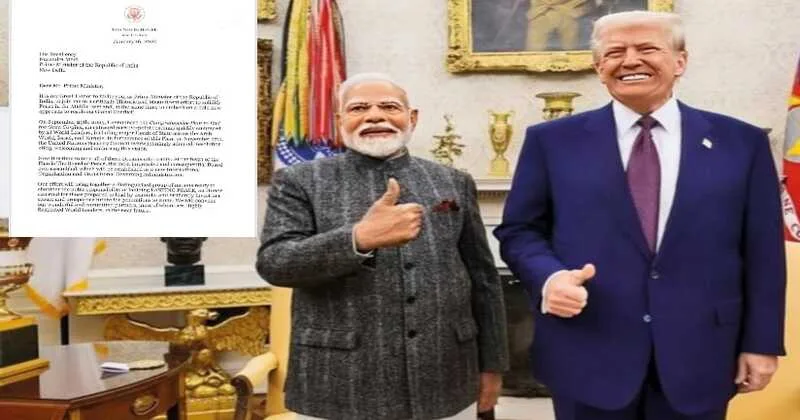
Washington: US President Donald Trump has invited India to join what he has described as a “Board of Peace”, a new body intended to oversee governance and reconstruction in post-war Gaza. The White House said the proposed framework would consist of three layers: a main board chaired by Trump himself; a Palestinian committee of technocrats meant to administer the war-ravaged territory; and a second “executive board” that appears designed to play a more advisory role.
India is seen as a country acceptable to both Israel and Palestine because of its historic ties with both sides. New Delhi enjoys a strategic partnership with Israel while also maintaining longstanding support for the Palestinian cause, including regular humanitarian aid and assistance. India was among the first countries to send humanitarian relief to Gaza through Egypt after the latest conflict erupted. Its balanced diplomatic posture has often allowed it to engage with both parties at times of heightened tension in the region. Israel’s envoy to India, Reuven Azar, had also indicated that Pakistan would be unacceptable to Israel for any future role in Gaza. His remarks underlined Israel’s preference for partners it views as neutral or broadly aligned with its security concerns.
The “Board of Peace” was formed on January 15 as part of Trump’s 20-point peace plan for Gaza and is being projected as a potential broader mechanism to address other global conflicts in the future. Governments, however, reacted cautiously to Trump’s invitation to join the initiative, which is aimed at resolving conflicts globally. Diplomats said the plan could undermine or complicate the existing work of the United Nations. Only Hungary, whose leader is a close ally of Trump, gave an unequivocal acceptance in response to the invitations, which have been sent to around 60 nations and began arriving in European capitals on Saturday, according to diplomats.
Other governments appeared reluctant to make public statements, leaving officials to express concerns anonymously about the potential impact on the UN’s role in conflict resolution, media reported.
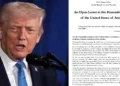
#BREAKING: US President Donald Trump’s letter to Prime Minister @narendramodi inviting him to be part of The Board of Peace for Gaza and future conflicts. @NDTV had earlier reported invitation to India by President Trump. pic.twitter.com/EwSnJKwsES
— Aditya Raj Kaul (@AdityaRajKaul) January 18, 2026
The White House did not spell out the specific responsibilities of each member of the proposed board. It said more members would be announced over the coming weeks as the structure of the initiative is finalised. A separate 11-member “Gaza Executive Board” would include Turkish Foreign Minister Hakan Fidan, UN Middle East peace coordinator Sigrid Kaag, United Arab Emirates International Cooperation Minister Reem Al-Hashimy, Israeli-Cypriot billionaire Yakir Gabay, and officials from Qatar and the United Arab Emirates. Israeli Prime Minister Benjamin Netanyahu’s office said the composition of this executive board had not been coordinated with Israel and contradicted its policy, possibly a reference to Fidan’s inclusion, as Israel objects to Turkish involvement. Israel’s government also has a tense relationship with Qatar, adding to its unease over the proposed lineup. The mixed international response suggests that while Trump’s “Board of Peace” is being pitched as an ambitious new forum for global conflict management, its legitimacy, scope and relationship with existing multilateral institutions remain uncertain.