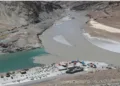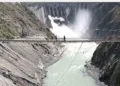
JAMMU: The Union Territory (UT) of J&K is caught in the severest of cold these days, with night temperatures in all 20 districts usually around zero, or even below it, at the freezing point. With reduced flow in the Jhelum River, which flows east to west across the Valley, hydropower generation is at its lowest. In fact, the decline dips to between 15 and 20 per cent of what it is during summer months and monsoons.
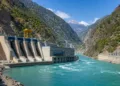
There is very little power generated by most hydropower projects in the Kashmir valley, particularly the 480-MW Uri I project and the Kishenganga Hydropower Project, both located on the Jhelum. In the Jammu region, power production from all hydropower stations on the Chenab has plummeted to a very low level. Be it Salal, Baglihar or Dul Hasti, all these power projects are operating well below par.
Amid all this, prolonged power cuts are affecting the entire Union Territory (UT) of J&K, leading to a clamour for additional power. Needed by residents both for lighting and for keeping themselves warm. However, the state government, headed by Chief Minister Omar Abdullah, just doesn’t have enough money to buy from the Northern Grid. Thereby, mitigate the problems people are facing on account of power playing truancy.
Who To Blame?
Who is to blame for this state of affairs? If truth be told, our western neighbour, Pakistan, is largely responsible for stalling hydropower stations in the UT. Since 1960, when the Indus Waters Treaty (IWT) was signed, in Karachi, it has adopted a dog in the manger policy towards all hydropower plants planned on the western rivers flowing through J&K. Over four decades ago, it had objected tothe Wullar navigation project, which would have improved power production in the downstream Uri I hydel project.
Later, it objected to the Uri I, Stage II, hydel project with a capacity of 240 MW, framing it as a violation of the IWT. This put spokes in the Central government’s plans to add this power plant, which would have been a great relief for the people of J&K. It was in July 2014, just after assuming charge, that Prime Minister Narendra Modi laid the foundation stone of the 240 MW Uri II project. But this project has not started production till date because of Pakistan’s stubborn behaviour.
Plans for the construction of Uri II were announced in 1998, and the foundation stone was laid in 2014. However, the tender for this project could be floated only in 2025, more than a decade after the inaugural stone was laid by PM Modi on July 4, 2014. Incidentally, the Power Minister of the UT is not asking the Finance Minister of the UT to allocate more funds for buying power from external sources. Why?
Well, besides being CM of the state, Omar is holding the portfolios of power and finance in J&K. As such, he knows very well that the government’s coffers are empty, and he cannot afford to mitigate the people’s suffering by buying more power.
Mehbooba Misleads
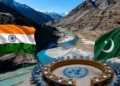
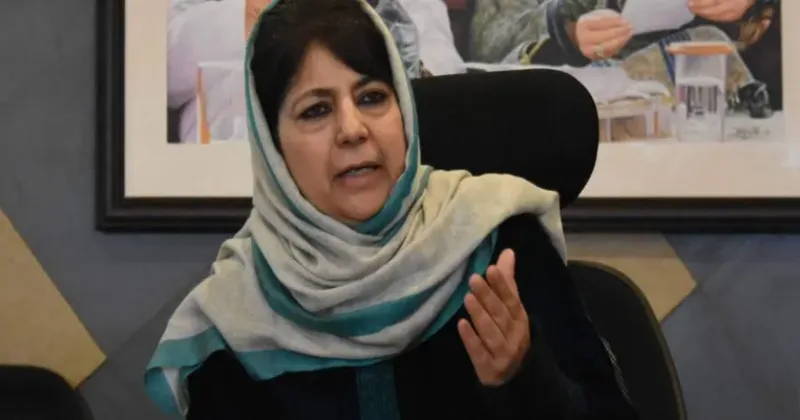
A couple of days ago, Peoples Democratic Party (PDP) chief Mehbooba Mufti spoke about the Indus Waters Treaty (IWT), which has been in abeyance since April 23, 2025. Most of the time, she spoke against the Central government’s stance on the issue, and its plans to use more water from the Western Rivers (Chenab, Jhelum and Indus). Her statement was clearly pro-Pakistan, though she made a miserable attempt to frame it as a humanitarian issue.
She had also said that the National Conference (NC) government headed by CM Omar was siding with the Central government in its plans to take water away from Pakistan. Instead of lauding Abdullah’s pro-India, nationalist stance to be on the same page as the Central government, she sought to portray it as negative. It must be said that Omar has been very forthright in denouncing IWT as heavily tilted in favour of our western neighbour, Pakistan.
She accused the CM’s father, Dr Farooq Abdullah, of bartering away the hydropower units of the then state of J&K to NHPC. She said that Dr Abdullah gave all power stations away for very cheaply during 1997 and later during his tenure as CM. Does the accusation have some truth in it, or was it false?
Paddling Falsehoods
Looking back and digging into the records shows us that Mehbooba was lying blatantly, as the state government headed by Dr Abdullah had done nothing of the sort. Bartering away the interests of J&K, as she alleged a couple of days ago. The fact of the matter is that the state government headed by Dr Abdullah had no money to either construct different hydropower projects or run them. As such, he requested the NHPC management to do the needful regarding these hydropower stations.
Besides, Mehbooba Mufti may be speaking in a way that undermines and disowns some of the efforts her late father, Mufti Mohammad Sayeed, made regarding these hydropower projects. The late leader served as Union Tourism Minister under Rajiv Gandhi for a brief period, starting in 1986, but resigned in 1987. At that time, Vasant Sathe was the Union Power Minister.
Records show that Mufti Mohammad Sayeed had then taken up the issue of the construction of Uri I with the Central government. He was unhappy with the limited power availability across J&K. As such, he wanted the Central government to expedite the construction of the Uri I project on the Jhelum. At that time, the total requirement of the entire state, including Ladakh, which is now a separate UT since November 2019, was only 300 MW.
Power Potential
Some years later, Mufti Mohammad Sayeed became the Union Home Minister under PM Vishwanath Pratap Singh. In August 1989, a question regarding “Setting up of Hydel Power Station in Jammu & Kashir’’ was asked in Parliament. The question was about the power potential of the Jhelum and Indus rivers, excluding the Chenab, which flows in the Jammu region.
It asked the ministry of power as to (a) whether hydro-electric power potential in the basins of the rivers Jhelum and Indus has been identified for setting up power stations in Jammu and Kashmir State; (b) jf so, the plan and the details of tht:l projects; (c) the estimated total cost and the approximate time by which these would be ready; and (d) the States likely to be benefited by the power thus generated?
These questions were then answered by Kalpnath Rai, who was Minister of State in the Power Ministry. He said that the power potential of the Jhelum was estimated at 1l,205 MW and that of Indus at 1,625 MW. Power Minister Vasant Sathe then said that the total capacity, once Chenab is also taken into account, will be around 1,500 MW. He even named the Chimaera hydropower project in neighbouring Himachal Pradesh, from which J&K stood to gain.
Many of these projects were stalled basically because Pakistan raised objections under the IWT against them. Mehbooba Mufti is clearly sidestepping the negative role played by Pakistan to harm the people of J&K decades ago and what it has been doing till date.