SC Ruling: Reserved category candidates eligible for open seats
July 14, 2026
  • Read Ecopy
  • Circulation
  • Advertise
  • Careers
  • About Us
  • Contact Us
Android AppiPhone AppArattai
Organiser
  • ‌
  • Bharat
    • Assam
    • Bihar
    • Chhattisgarh
    • Jharkhand
    • Maharashtra
    • View All States
  • World
    • Asia
    • Europe
    • North America
    • South America
    • Africa
    • Australia
  • Editorial
  • International
  • Opinion
  • RSS @ 100
  • More
    • Op Sindoor
    • Analysis
    • Sports
    • Defence
    • Politics
    • Business
    • Economy
    • Culture
    • Special Report
    • Sci & Tech
    • Entertainment
    • G20
    • Azadi Ka Amrit Mahotsav
    • Vocal4Local
    • Web Stories
    • Education
    • Employment
    • Books
    • Interviews
    • Travel
    • Law
    • Health
    • Obituary
  • Subscribe
    • Subscribe Print Edition
    • Subscribe Ecopy
    • Read Ecopy
  • ‌
  • Bharat
    • Assam
    • Bihar
    • Chhattisgarh
    • Jharkhand
    • Maharashtra
    • View All States
  • World
    • Asia
    • Europe
    • North America
    • South America
    • Africa
    • Australia
  • Editorial
  • International
  • Opinion
  • RSS @ 100
  • More
    • Op Sindoor
    • Analysis
    • Sports
    • Defence
    • Politics
    • Business
    • Economy
    • Culture
    • Special Report
    • Sci & Tech
    • Entertainment
    • G20
    • Azadi Ka Amrit Mahotsav
    • Vocal4Local
    • Web Stories
    • Education
    • Employment
    • Books
    • Interviews
    • Travel
    • Law
    • Health
    • Obituary
  • Subscribe
    • Subscribe Print Edition
    • Subscribe Ecopy
    • Read Ecopy
Organiser
  • Home
  • Bharat
  • World
  • Operation Sindoor
  • Editorial
  • Analysis
  • Opinion
  • Culture
  • Defence
  • International Edition
  • RSS @ 100
  • Magazine
  • Read Ecopy
Home Bharat

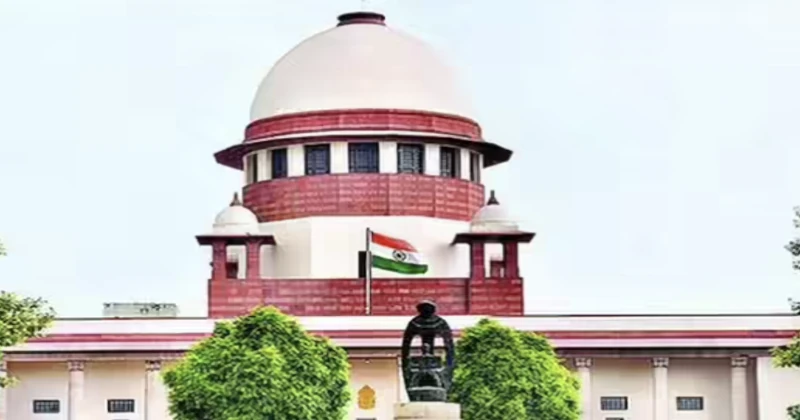
Supreme Court ruling on Reservation: SC/ST/OBC Candidates can claim open category seats on merit with conditions

The Supreme Court has ruled that SC/ST/OBC candidates can claim Open category seats purely on merit if they score above the general cut-off, provided they haven’t used reservation benefits like age relaxation or extra attempts. The Court clarified that the Open category is based on merit, not caste, bringing nationwide clarity to recruitment and admission policies.

WEBDESKWEBDESK
Jan 7, 2026, 05:00 pm IST
in Bharat, Delhi
Follow on Google News
FacebookTwitterWhatsAppTelegramEmail

NEW DELHI: In a significant and far-reaching judgment, the Supreme Court of India has ruled that candidates belonging to Scheduled Castes (SC), Scheduled Tribes (ST), and Other Backward Classes (OBC) can be selected for Open or General category seats purely on merit, provided they meet one important condition – they must not have availed any reservation-related relaxations such as age concessions, additional attempts, or fee reductions.

The verdict, hailed as a landmark decision in India’s reservation jurisprudence, seeks to balance the principles of social justice and meritocracy, while ending the confusion that has persisted for years in recruitment and admission processes across the country.

Delivering the judgment, the apex court made it clear that the Open or General category is not a caste-based category, but a merit-based field open to all. This means that any candidate regardless of caste or community can secure a seat in the open category if their marks are equal to or higher than the general cut-off.

🚨HUGE. Supreme Court rules that SC/ST/OBC candidates can claim OPEN Category seats if they score above the general cut-off purely on merit 🤯
— But there’s a condition: They must not have used reservation benefits like age relaxation or extra attempts.

Court underlined that… pic.twitter.com/jsnSD6BDx2

— The Analyzer (News Updates🗞️) (@Indian_Analyzer) January 6, 2026

The bench observed that “the General category belongs to merit, not caste”, emphasizing that the open category represents a space of fair competition accessible to all. However, it cautioned that if a candidate from a reserved category has used benefits intended exclusively for SC/ST/OBC groups such as relaxed eligibility criteria, age relaxation, or extra attempts, then they cannot claim an open category seat, since their path of qualification was not identical to that of a general candidate.

The decision was prompted by years of confusion and inconsistent interpretations by recruitment boards, educational institutions, and even lower courts. In many competitive examinations, candidates from reserved categories who scored above the general cut-off marks faced uncertainty, should they be counted in the open category or under their reserved quota

Some institutions treated them as part of the open category to ensure fairness, while others continued to count them within their reserved quota, reducing opportunities for other eligible candidates. This inconsistency often led to litigation and disputes over seat allocation and final merit lists.

By issuing this ruling, the Supreme Court has now provided uniform clarity across India, ensuring that merit-based selection will be recognized beyond caste boundaries, while still protecting the original intent of reservations, to uplift and empower disadvantaged communities.

The ruling was delivered in January 2026, following a case concerning recruitment practices in government services. The Court’s decision will now apply to all public examinations, recruitments, and admissions across the country, including:

  • Union and State Public Service Commissions (UPSC and State PSCs)
  • Staff Selection Commission (SSC) and Railway recruitments
  • Public Sector Undertakings (PSUs)
  • Universities and colleges following reservation guidelines

Recruiting bodies will now have to ensure that open category selections are strictly merit-based and that only those who competed under the same conditions as general candidates are counted in that category.

The Supreme Court reaffirmed that merit is the ultimate test of selection and must not be diluted by caste-based distinctions in open competition. The judgment strengthens the idea that India’s reservation system is not meant to replace merit, but to ensure fair opportunity for those who start from unequal social positions.
The Court stated that equality means “equal conditions of competition”, not identical outcomes.
This means a candidate who competes under the same eligibility rules as others and secures higher marks must be judged purely on performance, not on caste identity.

Major Takeaways

  • General Category = Merit Category: It is open to all, irrespective of caste.
  • Condition for Reserved Category Candidates: They must not have used reservation benefits like age relaxation or extra attempts.
  • Uniform Implementation: Applies to all exams, recruitments, and admissions across India.
    Encourages Equal Competition: Recognizes excellence among all communities.
  • Reduces Legal Disputes: Brings clarity to the interpretation of open and reserved seats.

This ruling is expected to have a profound impact on India’s recruitment and education systems. It will help create transparent merit lists, reduce overlapping category confusion, and ensure that deserving candidates are placed appropriately. Experts say the decision also reaffirms the delicate balance between merit and affirmative action, allowing both to coexist without conflict. It rewards hard work and achievement while preserving reservations for those who truly rely on them for equal opportunity.


Topics: Supreme CourtreservationGeneral categoryOpen category seats
ShareTweetSendShareSend
✮ Subscribe Organiser YouTube Channel. ✮
✮ Join Organiser's WhatsApp channel for Nationalist views beyond the news. ✮
Previous News

WB: ISIS-style ‘beheading’ threats target BJP’s Tarun Mandal as Mamata govt issues chilling warning to Suvendu Adhikari

Next News

Assam: Bangladeshi origin Muslims evicted from 6200 bighas of forest land encroached under Congress regime

Related News

Tamil Nadu: Supreme Court stays Madras HC order directing state govt to ensure no cow slaughter

Supreme Court (Left), Ayodhya Ram Mandir (Right)

Ayodhya Ram Mandir Donation Row: Union, UP, Temple trust get notice as SC seeks SIT status report

Karur Stampede Case: Supreme Court refuses DMK plea, says court not forum for political disputes

Raja Raghuvanshi Murder Case: Supreme Court refuses to stay bail granted to Sonam Raghuvanshi

Akhil Bharatiya Adhivakta Parishad explores India’s early constitutional battles over free speech and judicial review

The First Amendment at 75: Revisiting Organiser’s historic free speech battle against the Nehru government

Tamil Nadu govt challenges High Court cow slaughter ban in Supreme Court; BJP slams CM Joseph Vijay

Load More

Latest News

Tamil Nadu: Supreme Court stays Madras HC order directing state govt to ensure no cow slaughter

Pahalgam Terror Attack: NIA Court Issues Non-Bailable Warrant Against LeT Chief Hafiz Saeed

Pahalgam Terror attack: NIA court issues non-bailable warrant against LeT chief Hafiz Saeed, who resides in Pakistan

Akhil Bharatiya Karyakarini Sadasya Bhaiyyaji Joshi addressing the gathering

Pride of being a Hindu represents a life based on peace, truth and justice: Bhaiyyaji Joshi

India’s Minerva Academy wins Helsinki Cup in Finland

India’s Minerva Academy scripts history, beats defending champions HJK to win Helsinki Cup in Finland

Hindu leader Sagar Beg (Left), Pakistan-based gangster Shahzad Bhatti (Right)

Maharashtra: Pakistan based terror gangster syndicate publicly marks Hindu leader Sagar Beg for assassination

Indian Women Cricket Team beat England in test match at Lords

India scripts history at Lord’s, crushes England by 270 runs in first Women’s Test

PIB clarifies PM Modi said "wheat producer," not "beef producer"

Fact Check: Viral clip falsely claims PM Modi called India Beef producer; in original speech he said wheat producer

Tamil Nadu: Hindu Munnani seeks probe by HC judge-led panel in 3,084-acre Karur temple land row

(Source: PIB)

India commissions indigenous warships, strengthens multi-layered maritime defence under Aatmanirbhar Bharat

PM Modi gifts Aipan folk art from Uttarakhand to Indonesian President Prabowo Subianto

PM Modi’s gift of Uttarakhand Aipan art to Indonesian President reflects India’s rich spiritual and artistic heritage

Load More
  • Privacy
  • Terms
  • Cookie Policy
  • Refund and Cancellation
  • Delivery and Shipping

© Bharat Prakashan (Delhi) Limited.
Tech-enabled by Ananthapuri Technologies

  • Home
  • Search Organiser
  • Bharat
    • Assam
    • Bihar
    • Chhattisgarh
    • Jharkhand
    • Maharashtra
    • View All States
  • World
    • Asia
    • Africa
    • North America
    • South America
    • Europe
    • Australia
  • Editorial
  • Operation Sindoor
  • Opinion
  • Analysis
  • Defence
  • Culture
  • Sports
  • Business
  • RSS @ 100
  • Entertainment
  • More ..
    • Sci & Tech
    • Vocal4Local
    • Special Report
    • Education
    • Employment
    • Books
    • Interviews
    • Travel
    • Health
    • Politics
    • Law
    • Economy
    • Obituary
  • Subscribe Magazine
  • Read Ecopy
  • Advertise
  • Circulation
  • Careers
  • About Us
  • Contact Us
  • Policies & Terms
    • Privacy Policy
    • Cookie Policy
    • Refund and Cancellation
    • Terms of Use

© Bharat Prakashan (Delhi) Limited.
Tech-enabled by Ananthapuri Technologies