SC Ruling: Reserved category candidates eligible for open seats
June 23, 2026
  • Read Ecopy
  • Circulation
  • Advertise
  • Careers
  • About Us
  • Contact Us
Android AppiPhone AppArattai
Organiser
  • ‌
  • Bharat
    • Assam
    • Bihar
    • Chhattisgarh
    • Jharkhand
    • Maharashtra
    • View All States
  • World
    • Asia
    • Europe
    • North America
    • South America
    • Africa
    • Australia
  • Editorial
  • International
  • Opinion
  • RSS @ 100
  • More
    • Op Sindoor
    • Analysis
    • Sports
    • Defence
    • Politics
    • Business
    • Economy
    • Culture
    • Special Report
    • Sci & Tech
    • Entertainment
    • G20
    • Azadi Ka Amrit Mahotsav
    • Vocal4Local
    • Web Stories
    • Education
    • Employment
    • Books
    • Interviews
    • Travel
    • Law
    • Health
    • Obituary
  • Subscribe
    • Subscribe Print Edition
    • Subscribe Ecopy
    • Read Ecopy
  • ‌
  • Bharat
    • Assam
    • Bihar
    • Chhattisgarh
    • Jharkhand
    • Maharashtra
    • View All States
  • World
    • Asia
    • Europe
    • North America
    • South America
    • Africa
    • Australia
  • Editorial
  • International
  • Opinion
  • RSS @ 100
  • More
    • Op Sindoor
    • Analysis
    • Sports
    • Defence
    • Politics
    • Business
    • Economy
    • Culture
    • Special Report
    • Sci & Tech
    • Entertainment
    • G20
    • Azadi Ka Amrit Mahotsav
    • Vocal4Local
    • Web Stories
    • Education
    • Employment
    • Books
    • Interviews
    • Travel
    • Law
    • Health
    • Obituary
  • Subscribe
    • Subscribe Print Edition
    • Subscribe Ecopy
    • Read Ecopy
Organiser
  • Home
  • Bharat
  • World
  • Operation Sindoor
  • Editorial
  • Analysis
  • Opinion
  • Culture
  • Defence
  • International Edition
  • RSS @ 100
  • Magazine
  • Read Ecopy
Home Bharat

Supreme Court ruling on Reservation: SC/ST/OBC Candidates can claim open category seats on merit with conditions

The Supreme Court has ruled that SC/ST/OBC candidates can claim Open category seats purely on merit if they score above the general cut-off, provided they haven’t used reservation benefits like age relaxation or extra attempts. The Court clarified that the Open category is based on merit, not caste, bringing nationwide clarity to recruitment and admission policies.

WEBDESKWEBDESK
Jan 7, 2026, 05:00 pm IST
in Bharat, Delhi
Follow on Google News
FacebookTwitterWhatsAppTelegramEmail

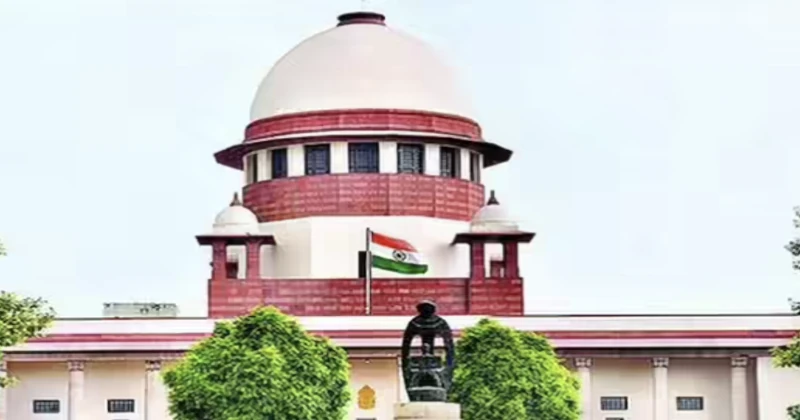
NEW DELHI: In a significant and far-reaching judgment, the Supreme Court of India has ruled that candidates belonging to Scheduled Castes (SC), Scheduled Tribes (ST), and Other Backward Classes (OBC) can be selected for Open or General category seats purely on merit, provided they meet one important condition – they must not have availed any reservation-related relaxations such as age concessions, additional attempts, or fee reductions.

The verdict, hailed as a landmark decision in India’s reservation jurisprudence, seeks to balance the principles of social justice and meritocracy, while ending the confusion that has persisted for years in recruitment and admission processes across the country.

Delivering the judgment, the apex court made it clear that the Open or General category is not a caste-based category, but a merit-based field open to all. This means that any candidate regardless of caste or community can secure a seat in the open category if their marks are equal to or higher than the general cut-off.

🚨HUGE. Supreme Court rules that SC/ST/OBC candidates can claim OPEN Category seats if they score above the general cut-off purely on merit 🤯
— But there’s a condition: They must not have used reservation benefits like age relaxation or extra attempts.

Court underlined that… pic.twitter.com/jsnSD6BDx2

— The Analyzer (News Updates🗞️) (@Indian_Analyzer) January 6, 2026

The bench observed that “the General category belongs to merit, not caste”, emphasizing that the open category represents a space of fair competition accessible to all. However, it cautioned that if a candidate from a reserved category has used benefits intended exclusively for SC/ST/OBC groups such as relaxed eligibility criteria, age relaxation, or extra attempts, then they cannot claim an open category seat, since their path of qualification was not identical to that of a general candidate.

The decision was prompted by years of confusion and inconsistent interpretations by recruitment boards, educational institutions, and even lower courts. In many competitive examinations, candidates from reserved categories who scored above the general cut-off marks faced uncertainty, should they be counted in the open category or under their reserved quota

Some institutions treated them as part of the open category to ensure fairness, while others continued to count them within their reserved quota, reducing opportunities for other eligible candidates. This inconsistency often led to litigation and disputes over seat allocation and final merit lists.

By issuing this ruling, the Supreme Court has now provided uniform clarity across India, ensuring that merit-based selection will be recognized beyond caste boundaries, while still protecting the original intent of reservations, to uplift and empower disadvantaged communities.

The ruling was delivered in January 2026, following a case concerning recruitment practices in government services. The Court’s decision will now apply to all public examinations, recruitments, and admissions across the country, including:

  • Union and State Public Service Commissions (UPSC and State PSCs)
  • Staff Selection Commission (SSC) and Railway recruitments
  • Public Sector Undertakings (PSUs)
  • Universities and colleges following reservation guidelines

Recruiting bodies will now have to ensure that open category selections are strictly merit-based and that only those who competed under the same conditions as general candidates are counted in that category.

The Supreme Court reaffirmed that merit is the ultimate test of selection and must not be diluted by caste-based distinctions in open competition. The judgment strengthens the idea that India’s reservation system is not meant to replace merit, but to ensure fair opportunity for those who start from unequal social positions.
The Court stated that equality means “equal conditions of competition”, not identical outcomes.
This means a candidate who competes under the same eligibility rules as others and secures higher marks must be judged purely on performance, not on caste identity.

Major Takeaways

  • General Category = Merit Category: It is open to all, irrespective of caste.
  • Condition for Reserved Category Candidates: They must not have used reservation benefits like age relaxation or extra attempts.
  • Uniform Implementation: Applies to all exams, recruitments, and admissions across India.
    Encourages Equal Competition: Recognizes excellence among all communities.
  • Reduces Legal Disputes: Brings clarity to the interpretation of open and reserved seats.

This ruling is expected to have a profound impact on India’s recruitment and education systems. It will help create transparent merit lists, reduce overlapping category confusion, and ensure that deserving candidates are placed appropriately. Experts say the decision also reaffirms the delicate balance between merit and affirmative action, allowing both to coexist without conflict. It rewards hard work and achievement while preserving reservations for those who truly rely on them for equal opportunity.


Topics: Supreme CourtreservationGeneral categoryOpen category seats
ShareTweetSendShareSend
✮ Subscribe Organiser YouTube Channel. ✮
✮ Join Organiser's WhatsApp channel for Nationalist views beyond the news. ✮
Previous News

WB: ISIS-style ‘beheading’ threats target BJP’s Tarun Mandal as Mamata govt issues chilling warning to Suvendu Adhikari

Next News

Assam: Bangladeshi origin Muslims evicted from 6200 bighas of forest land encroached under Congress regime

Related News

Supreme Court of India

‘RTI activism has become business’: SC denies anticipatory bail, questions activist’s authority to monitor road project

The AMU Judgment: Why the Supreme Court must revisit Article 30

Tamil Nadu Assembly (File Photo)

Tamil Nadu speaker drops action against 21 rebel AIADMK MLAs after EPS withdrawal, targets 4 who joined TVK

PoJK revolts against Pakistan: Warns massive strike against reservation of legislative seats for Pakistani refugees

Supreme Court remarks have revived the UAPA bail debate, with supporters citing national security concerns

UAPA Bail Debate: Striking a delicate balance between individual liberty and national security

Supreme Court invokes Article 142, issues strict timelines to curb delay in High Court judgments

Supreme Court invokes Article 142, orders strict timelines for High Court judgments to end delays in justice delivery

Load More

Latest News

Tamil Nadu: Assembly Speaker directs all bureaucrats to strictly follow warrant of precedence after Mayor-MLA row

Kamakhya Mandir

Kamakhya Mandir’s Ambubachi Mela: The ancient tradition that honours the menstruation of mother Earth

Amazon in dock for mocking Hindu Gods

Amazon File: From Ganesha to Aryabhata-Has Amazon India become a platform for Anti-Hindu narratives?

The West Bengal Budget 2026–27 aims to drive growth through infrastructure, industry, innovation and welfare

Reimagining Bengal: How the West Bengal Budget 2026–27 seeks to balance growth, welfare & economic transformation

Pratiraksha is Gujarat Police's Aadhaar-based verification platform designed to identify illegal workers and prevent identity fraud in industrial sectors

Pratiraksha: How Gujarat police uses Aadhaar verification to secure industrial workforce against identity fraud

Israel-Iran crisis has highlighted not only shifting dynamics of West Asia but also growing confidence of India's foreign policy

India, Israel and the rise of strategic autonomy in an era of global geopolitical realignment

Saleem and Jaleel arrested in forced religious conversion case

Karnataka Conversion Case: Forced conversion of Hindu woman and minor son sparks outrage; Saleem and Jaleel arrested

Bareilly Cantonment Emerges as Model for Sustainable Urban Development in India (Image Source X)

Uttar Pradesh: Bareilly Cantonment becomes India’s first carbon-negative cantonment

CM Yogi Adityanath making industry, investment and the connectivity revolution in Eastern Uttar Pradesh

The Purvanchal Growth Story: How industry, infrastructure, tourism & exports are fueling development in eastern UP

(Left) Fire at the coaching centre in Lucknow (Right) Members of ABVP extending all possible help

Lucknow Coaching Centre Fire tragedy is heartbreaking and deeply unfortunate: ABVP seeks action against culprits

Load More
  • Privacy
  • Terms
  • Cookie Policy
  • Refund and Cancellation
  • Delivery and Shipping

© Bharat Prakashan (Delhi) Limited.
Tech-enabled by Ananthapuri Technologies

  • Home
  • Search Organiser
  • Bharat
    • Assam
    • Bihar
    • Chhattisgarh
    • Jharkhand
    • Maharashtra
    • View All States
  • World
    • Asia
    • Africa
    • North America
    • South America
    • Europe
    • Australia
  • Editorial
  • Operation Sindoor
  • Opinion
  • Analysis
  • Defence
  • Culture
  • Sports
  • Business
  • RSS @ 100
  • Entertainment
  • More ..
    • Sci & Tech
    • Vocal4Local
    • Special Report
    • Education
    • Employment
    • Books
    • Interviews
    • Travel
    • Health
    • Politics
    • Law
    • Economy
    • Obituary
  • Subscribe Magazine
  • Read Ecopy
  • Advertise
  • Circulation
  • Careers
  • About Us
  • Contact Us
  • Policies & Terms
    • Privacy Policy
    • Cookie Policy
    • Refund and Cancellation
    • Terms of Use

© Bharat Prakashan (Delhi) Limited.
Tech-enabled by Ananthapuri Technologies