

“They have dramatically changed the world’s perception of Indians, and hence of India. They have provoked a new appreciation of this land, which has produced and exported so many achievers. They have built bridges of understanding between the international community and India.
The benchmarks for success, which the Pravasi community has set, are a challenge for us in India. They make us examine why the Indian is so much more innovative, productive and successful abroad than in his own country. They prod us to create a business, investment and economic climate, which is as conducive to success as anywhere else in the world.” –Bharat Ratna Atal Bihari Vajpayee on January 9, 2003, while inaugurating the first Pravasi Bharatiya Divas
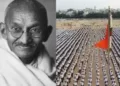
Since 2003, when the Atal Bihari Vajpayee Government introduced Pravasi Bharatiya Divas (PBD) to commemorate Gandhiji’s return from South Africa on January 9, 1915, the role of the diaspora in Bharat’s global landscape has acquired different dimensions. Earlier, the annual event has now become a biennial celebration of people with roots in Bharat. Vishwa Sangh Shibir, a gathering of Hindu communities working across the globe with the values of Sanskar and Sewa, also embodies the same spirit. Beyond symbolism, the roles of different diasporic categories need to be viewed through a different prism, recognising them as ambassadors of Dharmic values.
Though the Bharatiya diaspora is often considered a monolith, it comprises distinct categories with unique historical roots and connections to Bharat. As seafarers, our ancestors travelled to distant lands as monks, healers, architects and traders, taking along with them the Bharatiya values and worldview. They were never considered colonisers but rather contributors to local cultures. During the colonial period, indentured labourers were sent to various parts of the British Empire to work on sugar, tea and rubber plantations with their toil, sweat, tears and blood. These people were forced to sign bonds to work on lands as far apart as Fiji and Mauritius, Suriname, Trinidad, Guyana and Malaysia. Besides the spirit of the freedom struggle, the Girmitias – as they were called in colloquial terms to express their agreement/bond with the Government – carried cultural values and scriptures such as Ramcharitamanas and the Bhagavad Gita. It was a symbol of resistance, courage and commitment to the roots.
After the Independence, we experienced two waves of Bharatiyas exploring opportunities abroad. In the 1950s and 60s, entrepreneurs and researchers who could not secure space or were constrained by the country’s socialist system opted to seek opportunities abroad, particularly in Europe and the US. They had the enterprising skills and character. They have a deeply emotional, nostalgic bond with Bharat, which they have sought to maintain through annual visits to their hometown and temple activities and festival celebrations with local communities abroad. The fourth category comprises young IT and medical professionals who seized opportunities opened up with liberalisation and globalisation and carved out a unique space in the Western world. The period since the 1990s has also seen an upsurge of skilled and semi-skilled workers demonstrating their mettle in West Asia, particularly in the infrastructure and energy sectors. Both these groups carried the brand Bharat through aspirations and hard work.
All these groups have different trajectories and stories to tell; still, they share one thing in common – the indomitable spirit of being Bharatiya. And that spirit is Dharma – the values that sustained the Bharatiya civilisation for thousands of years while maintaining the balance between spiritual and material progress. Due to these Dharmic values, which see all religious paths as true and respected, the people of Bharatiya origin are ideal citizens in their host countries while preserving and celebrating their heritage. When Bharat successfully conducted nuclear tests in Pokhran, these Pravasi Bharatiyas rejoiced, not because they were war-mongers, but because they believed in a just position for Bharat in world politics. When the severe sanctions were imposed, they reposed faith in resilient Bharat by investing in ‘Resurgent India Bonds’ in 1998, which helped in raising over 4 billion dollars.
Unfortunately, there is another group of Bharat-dweshis (haters) who hail from Bharat but feed divisive and destructive issues demeaning everything Bharatiya for petty political and financial interests. They are dangerous for both the host and the originating counties. Critical and constructive suggestions are welcome, but standing for something disastrous for the ideological agenda would diminish the credibility of immigrants. Such agenda driven academics and media activism should be exposed in the human interest.
When Bharat has been a shining star amid global uncertainties, both in economic and cultural terms, the role of Bharatvanshis becomes all the more important. While remaining loyal citizens of their host countries, they need to be messengers of spiritual democracy and familial values to the world. When the Western bias, designed by colonial intent, misrepresents the ground reality of Bharat through academia and the media, Pravasi Bharatiyas can play an essential role in exposing the anti-Bharat propaganda.
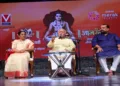
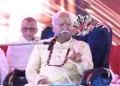
The five-day Vishwa Sangh Shibir, organised by Shri Vishwa Niketan at Kanha Shanti Vanam, near Hyderabad (Bhagya Nagar), in the last week of December, should be seen in this light. With the motto of establishing Dharma everywhere, the Bharatiya values of spiritual democracy, based on Sanskar, Sewa and Sangathan, were nurtured and celebrated, with participation from more than 1600 delegates from 71 countries. Members and families associated with organisations such as Hindu Swayamsevak Sangh, Sanatana Dharma Swayamsevak Sangh, Hindu Seva Sangh, Sewa International, Samskrita Bharati, and Vishwa Hindu Parishad from different parts of the world facilitated interaction and dialogue for Vasudhaiva Kutumbakam. While exchanging experiences and engaging in mutual learning, these groups build organisations and serve people through temples and other community activities; they ideally represent the symbiotic relationship between adopted citizenship and original identity.
When the world is grappling with trade wars, hyper-technological interventions, regional and religious conflicts, and economic uncertainties, the Dharmic values of Bharat can be a guiding force for humanity. The Bharatvanshis can be real ambassadors of Dharma – to spread the message of spiritual democracy and familial globalisation.