Islamabad: The Pakistani government on December 27 publicly acknowledged the impact of India’s strategic and precision strikes on its military installations during Operation Sindoor, marking a rare official admission months after the anti-terror operation carried out by Indian armed forces in May. The operation was launched by India following the April terror attack in Pahalgam, J&K, which claimed the lives of 26 civilians.
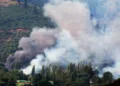
Pakistan’s Deputy Prime Minister and Foreign Minister Ishaq Dar, while addressing a year-end press briefing, confirmed that Indian strikes had targeted the Nur Khan Air Base located in Rawalpindi’s Chaklala area. He acknowledged that the attack caused damage to military infrastructure and resulted in injuries to personnel stationed at the base. Providing details of the Indian offensive, Dar said that India had deployed a large number of drones into Pakistani airspace over a short period. According to his account, nearly 80 drones entered Pakistani territory within a 36-hour window. Pakistani air defence systems were able to intercept 79 of these drones, while one drone evaded interception and struck a military installation at the Nur Khan Air Base, causing damage and injuries to personnel. “They (India) send drones towards Pakistan. In 36 hours, at least 80 drones were sent. We were able to intercept 79 drones out of 80, and only one drone damaged a military installation and personnel were also injured in the attack,” Dar said.
Dar further outlined developments in the immediate aftermath of Operation Sindoor, stating that Pakistan’s civil and military leadership convened an emergency meeting on the night of May 9 under the leadership of Prime Minister Shehbaz Sharif. During this meeting, decisions were authorised in response to what Islamabad described as a rapidly evolving security situation. He also alleged that India escalated the conflict by targeting the Nur Khan Air Base in the early hours of May 10, describing the strike as a “serious miscalculation”. The Nur Khan facility, one of Pakistan’s most critical air force bases, is strategically located near Islamabad and houses key logistical and operational assets of the Pakistan Air Force. Nur Khan Air Base was among at least 11 Pakistani air force installations struck by Indian forces during Operation Sindoor. Other sites targeted included air bases in Sargodha, Rafiqui, Jacobabad, Muridke, and additional locations across Pakistan and Pakistan-administered Kashmir. Indian officials have maintained that the strikes were precise, calibrated, and limited to military infrastructure linked to terror operations.
With Dar’s remarks, Pakistan has now formally acknowledged India’s military actions on its air bases, which followed India’s earlier strikes on nine terror camps located in Pakistan and Pakistan-administered Kashmir as part of Operation Sindoor. Responding to Dar’s characterisation of the damage as limited, Indian Army veteran KJS Dhillon strongly disputed the claim. Dhillon accused the Pakistani leadership of downplaying the extent of losses suffered during the operation. He pointed out that Pakistan’s own media outlet, Samaa TV, had published a list of 138 gallantry award recipients on August 14, Pakistan’s Independence Day, who were posthumously honoured for actions during Operation Sindoor. Dhillon argued that if 138 personnel were awarded gallantry honours posthumously, the actual number of fatalities during the operation would likely be significantly higher. He stated that visual evidence released by Pakistani civilians themselves showed the Nur Khan Air Base engulfed in flames and that all 11 targeted air bases had sustained substantial damage. According to him, satellite imagery and independent visual documentation corroborated the scale of destruction caused by Indian strikes.
India’s strike on the Nur Khan Air Base had earlier been confirmed by Prime Minister Shehbaz Sharif himself, days after Operation Sindoor. Sharif had disclosed that Pakistan Army Chief General Asim Munir personally contacted him at around 2:30 am on the intervening night of May 9 and 10 to inform him about the missile strike on the base. Further confirmation emerged in July when Sharif’s advisor Rana Sanaullah revealed that Pakistan had only 30 to 45 seconds to assess whether the BrahMos cruise missile launched by India toward the Nur Khan Air Base carried a nuclear warhead, highlighting the gravity of the situation and the narrow response window available to Islamabad.
Operation Sindoor was launched by the Indian Armed Forces in the early hours of May 7 as a direct retaliatory response to the April 22 terror attack in Pahalgam. Indian officials have described the operation as a decisive strike against terror infrastructure while avoiding civilian targets. Satellite imagery reportedly captured by Maxar Technologies on May 13 showed extensive damage to multiple Pakistani air bases. The images revealed clear structural damage at Nur Khan Air Base in Rawalpindi, PAF Base Mushaf in Sargodha, Bholari Air Base, and PAF Base Shahbaz in Jacobabad. Comparative satellite images taken on April 25 and May 10 showed significant deterioration of airbase facilities, further confirming the impact of Indian strikes.
Pakistan had initially acknowledged on May 10 that three of its air bases were targeted by Indian missiles and drones. At a hastily convened press conference in Islamabad around 4 am, Pakistan military spokesperson Lt Gen Ahmad Sharif Chaudhry stated that Nur Khan in Rawalpindi, Muridke in Chakwal, and Rafiqui in Shorkot, Jhang district, were among the bases targeted. Saturday’s admission by Pakistan’s foreign minister now reinforces earlier confirmations by the country’s political and military leadership, underscoring the scale and effectiveness of India’s military actions during Operation Sindoor.