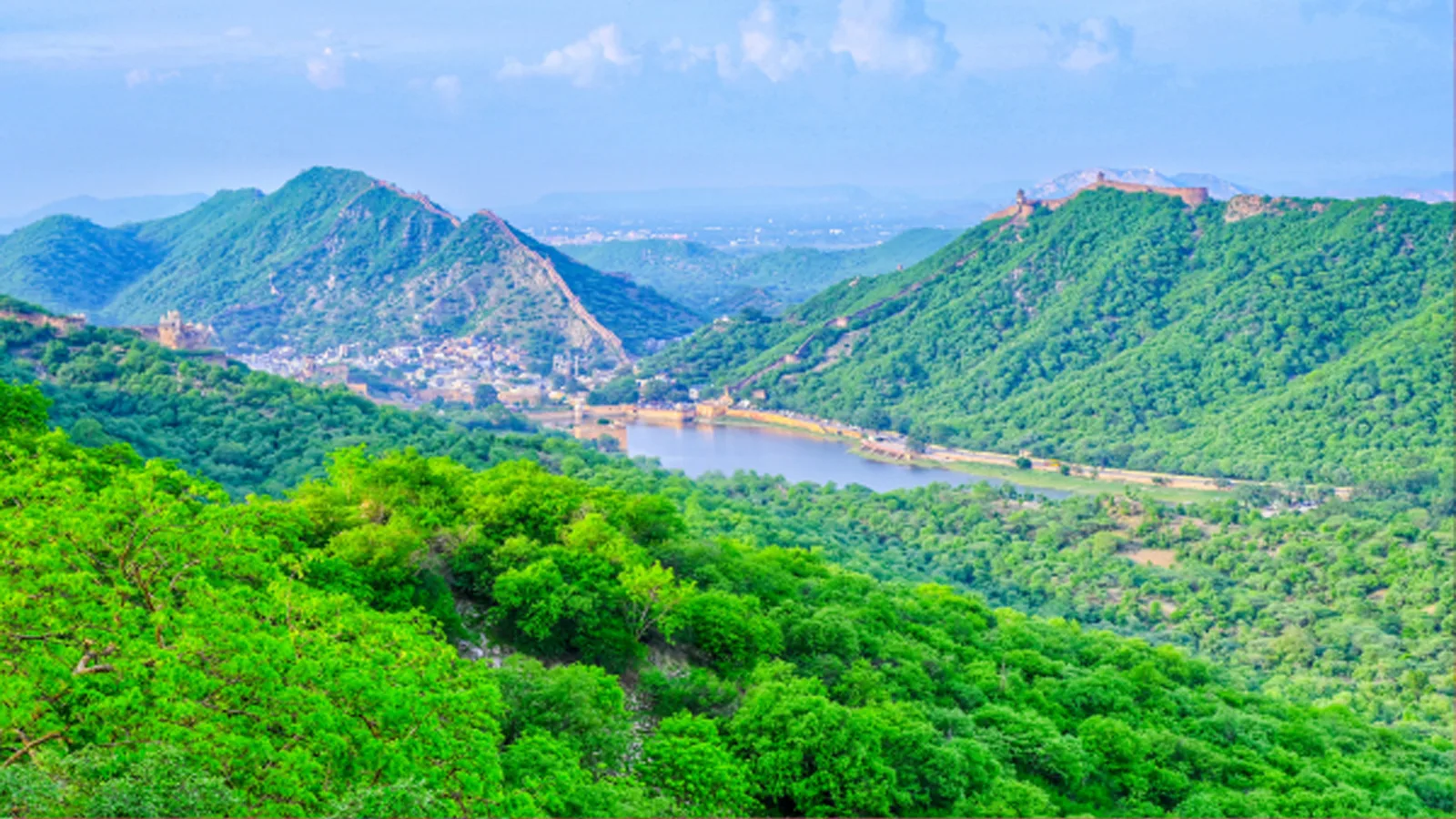
The Supreme Court is set to hear on December 29 a suo motu case concerning the contentious redefinition of the Aravalli hills and ranges, a move that has triggered widespread concern among environmentalists, former forest officials, and civil society groups.
The matter, titled “In Re: Definition of Aravalli Hills and Ranges and Ancillary Issues”, will be taken up by a three-judge bench headed by Chief Justice of India Surya Kant, along with Justice JK Maheshwari and Justice Augustine George Masih.
The court’s decision to step in on its own motion signals the seriousness of the ecological and legal questions raised by the revised definition, which critics argue could fundamentally alter the protection regime governing one of north India’s most critical natural barriers.
The current dispute traces its roots to a November 20 judgment delivered by a different bench of the apex court, which accepted a standardised definition proposed by the Ministry of Environment, Forest and Climate Change. Under this framework, a landform qualifies as an “Aravalli Hill” only if it rises 100 metres or more above the surrounding local relief.
The definition further stipulates that an “Aravalli Range” exists only when at least two such hills are located within 500 metres of each other. The stated objective behind the standardisation was to bring administrative clarity and uniformity across states where the Aravallis extend, including Rajasthan, Haryana, Delhi, and Gujarat.
Data from the Forest Survey of India indicates that of more than 12,000 hill formations identified across the Aravalli landscape, only about 8.7 percent meet the 100-metre threshold. Critics argue that this effectively removes legal protection from over 90 percent of the Aravallis, particularly in Haryana and the Delhi-NCR region, where the hills are lower, fragmented, and heavily degraded but ecologically crucial.
Stretching over 800 kilometres, the Aravalli range functions as a vital ecological corridor and a natural “green wall” that prevents the eastward spread of the Thar Desert into the fertile plains of north India. The hills play a critical role in regulating local climate, trapping dust, and facilitating groundwater recharge in water-stressed regions of Rajasthan and Haryana.
In urban and peri-urban zones of Delhi-NCR, the Aravallis also act as a buffer against air pollution and extreme weather, making their conservation central to environmental sustainability and public health.
The Supreme Court’s decision to re-examine the issue suo motu suggests that the bench may revisit whether the earlier ruling adequately applied the precautionary principle, a cornerstone of Indian environmental jurisprudence that mandates preventive action in the face of ecological risk.
While the November judgment emphasised the need for regulatory clarity and spoke of balancing environmental concerns with “sustainable mining”, critics contend that it prioritised extractive considerations over landscape-level conservation of a continuous ecological system.
During the hearing, the court is expected to examine whether a rigid height-based marker is scientifically and legally tenable for defining the Aravallis. The bench may explore alternative criteria such as geological continuity, slope, ridgelines, and ecological function, which recognise the Aravallis as an integrated system irrespective of elevation.