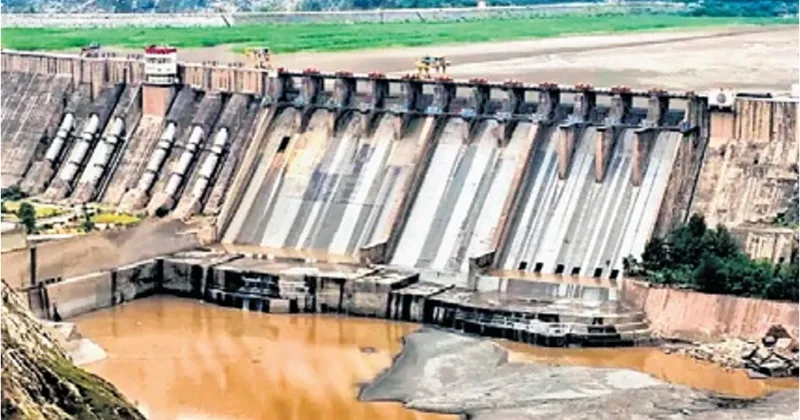
JAMMU: The Environmental Appraisal Committee (EAC) under the Union Ministry of Environment, Forest and Climate Change (MoEFCC) has approved the Dulhasti Stage-II hydroelectric project (260 MW) in the Kishtwar district of Jammu and Kashmir, with a project cost of Rs 3,277.45 crore. The clearance was granted on December 19, a week earlier, and the proposed project has been defined as an extension of the 390 MW operational Dul Hasti I. The first stage of the project was commissioned in the year 2007 and has been operating successfully since then.
The National Hydroelectric Power Corporation (NHPC) had entered into a Memorandum of Understanding (MoU) with the government of the Union Territory (UT) of Jammu & Kashmir on January 3, 2021, almost four years ago, for the execution of the Dul Hasti Stage II hydroelectric project on Build Own Operate Transfer (BOOT) basis for a period of 40 years.
This project will utilise water from the Chenab River, part of the Indus Water Basin. The EAC noted that the project’s parameters have been planned in compliance with the provisions of the Indus Water Treaty (IWT) of 1960. However, the Treaty was put in abeyance on April 23 this year after the Pahalgam terrorist attack.
The new project will draw water from the Dulhasti Power Station (Stage I) through a separate 3,685-meter-long tunnel with a diameter of 8.5 meters, leading to the construction of a horseshoe pondage for Stage II. In addition to constructing the pondage, the project will include a surge shaft, a pressure shaft, and an underground powerhouse equipped with two 130 MW units, for a total installed capacity of 260 MW and annual energy generation.
The total land requirement for the project is estimated at 60.3 hectares. This project will require 8.27 hectares of private land from two villages, Benzwar and Palmar, in the Kishtwar district. The land acquired earlier for stage I of the project will also be used for setting up of the second stage.
At the time of granting environmental clearance, the EAC directed that a study be undertaken five years after the project’s commissioning to assess its environmental impact. “After five years of commissioning of the project, a study shall be undertaken regarding the impact of the project on the environment. An independent agency shall undertake the study,” the official meeting held on Friday last noted.
The ministry has also directed NHPC and Chenab Valley Power Projects Limited (CVPPL) to undertake a study, in collaboration with a reputable government research institute, to formulate a strategy for sustainable environmental management of the Chenab River basin. The study will cover aspects such as scientifically robust environmental flow regimes, restoration and maintenance of channel morphology and sediment processes. It has also directed them to protect and conserve aquatic and riparian biodiversity, address livelihood and community concerns, and integrate the Marusudar tributary of the Chenab within the Chenab basin cascade framework.
The Dul Hasti reservoir receives an average of 24 million tons of sediment per year, mostly from May to September, when water flow is high. Flushing and sluicing methods are used to manage sediment and maintain reservoir capacity.
This project is expected to be completed within 44 months (under four years) of contract award, but the actual timeline may vary, officials said. At present, due to the tendering process, which started in mid-2025 and the environmental clearance, it is likely to be completed by mid to late 2029. Incidentally, there is no forest land involved in the project and as such no clearances from the forest department is needed for land acquisition. As an extension of the existing NHPC project, it will use the already constructed dam and intake structure thereby avoiding the need for a new impounding structure..