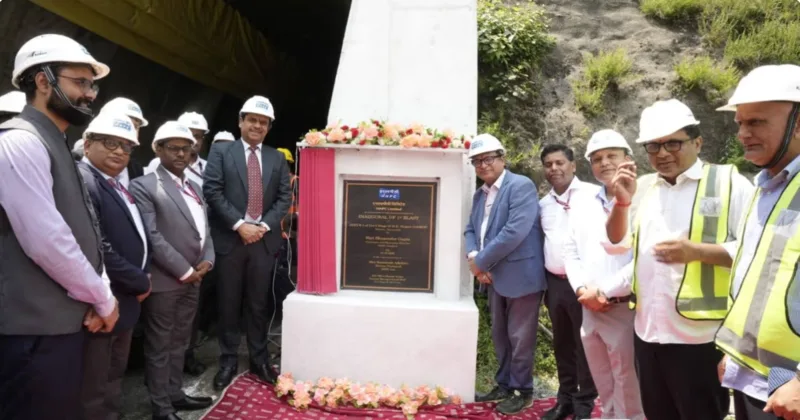
JAMMU: Construction work on the 240 MW Uri-I Stage-II Hydroelectric Project has formally commenced with the successful execution of the first blast at Adit-3 in Mohura area of Uri in Baramulla district of Union Territory (UT) of J&K. It started literally with a big bang, a controlled blast carried out by NHPC experts regarding which the locals had been intimated in advance so as to not cause panic.
The inaugural blast was carried out in the presence of the Chairman and Managing Director of NHPC Bhupender Gupta, who officially launched the construction phase of the project. Senior NHPC officials based in Jammu, including Executive Director Anis Gouraha, were present on the occasion.
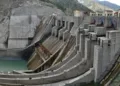
Being developed by NHPC on the Jhelum River, the Uri-I Stage-II project is an extension of the existing Uri-I Hydroelectric Project and is aimed at enhancing power generation capacity. This second unit, when operational, will help improve the power supply situation, particularly during winter months of lean flows in Jhelum.
Officials said the first blast marks the beginning of major underground works under the project, which is expected to significantly augment electricity generation and strengthen energy security in the region. At present, during the winter months, power needs to be purchased from the Northern Grid and this puts a burden on the exchequer.
Harnessing Power Potential of Jhelum River
The project will comprise two generating units of 120 MW each and is projected to generate nearly 932 million units of clean energy annually through an underground powerhouse. According to officials, the project forms part of wider efforts to harness J&K’s hydropower potential and reduce reliance on external sources of electricity. They said the commencement of construction marks a crucial milestone in the execution of the project, which is expected to make a substantial contribution towards meeting the region’s future power requirements.
Officials added that the Uri-I Stage-II Hydroelectric Project is also expected to bolster the Union Territory’s energy infrastructure and support sustainable power generation in the years ahead.
The project’s civil works were tendered in June last year. These works comprise the headrace tunnel, including adits, surge shaft, pressure shaft/penstock, besides such others. The construction of civil works is expected to be completed within four years, and the commercial production of power may start in 2030.
This project is located downstream of NHPC’s existing 480 MW Uri-I run-of-river station. It will make use of Uri-I’s existing structures, such as the barrage, head regulator, and desilting arrangements. Uri-I Stage-II will include a 10.47 km long, 6.5 metre diameter headrace tunnel, a 42.8 metre high underground powerhouse and tailrace tunnel.
Dul Hasti Stage II Makes Progress
Incidentally, the tender for Dul Hasti, Stage II, project of 260 MW, located on the Chenab in Kishtwar district, was also issued in June last year. It needs to be emphasized here that these two projects were conceived and designed at a time when Indus Waters Treaty (IWT) 1960 was in force. Even when IWT was put in abeyance in April 2025, no changes in design etc were brought in.
The largest beneficiary, measured by any yardstick, of the IWT in abeyance so far has been the UT of J&K as many power projects have been fast tracked. Due to this, in the coming years, as early as 24 months or so, J&K may become a power surplus area of the country. This is likely to happen as 1,000 MW Pakal Dul project and 624 MW Kiru hydropower projects are racing towards completion.
Incidentally, J&K stands to gain a lot from these projects because NHPC follows a method in which allocates 13 (12+1) per cent free power to the state/UT wherein it sets up any power project. As such, J&K may get over 211 MW of free power once Pakal Dul and Kiru are completed.
Besides bringing in clean power, these projects also create a major revenue stream for J&K as it gets crores in water usage charges. Free power, coupled with money from NHPC on water usage charges, will help J&K in a major way as it is presently a revenue deficit UT which depends on the Centre for major grants in aid to run its affairs.