
Capturing the essence of Bharat Ratna Atal Bihari Vajpayee in a single article is an impossible task. Where does one begin, and where does one conclude? Was he the scholar whose intellect commanded respect, the poet whose verses still stir the national conscience, the swayamsevak shaped by discipline and service, or the statesman admired across political divides? Perhaps he was all of these and something far greater.
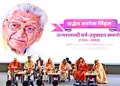
Atal Bihari Vajpayee was not merely a political leader; he was an institution. His life offers enduring lessons in governance, patriotism, morality, and humanity. As India marked its birth centenary on December 25, 2024, the nation was reminded that while leaders may pass, principles endure. Vajpayee ji’s ideals continue to guide India’s political journey, especially in the shaping of a confident, decisive New India.
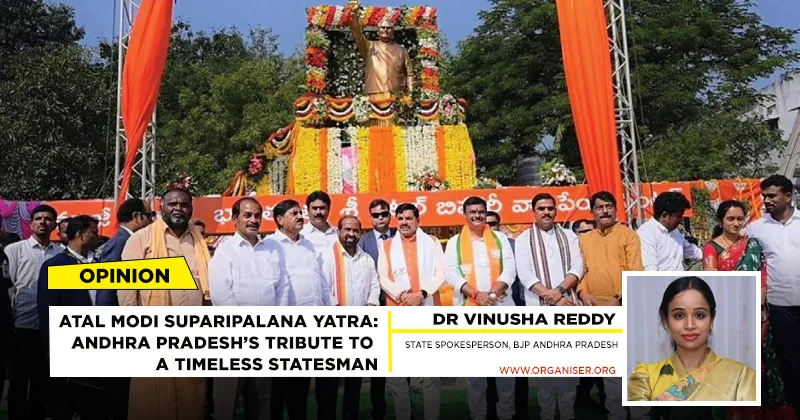
Recognising the relevance of this legacy, PVN. Madhav, who assumed charge as State President of the Bharatiya Janata Party in Andhra Pradesh in July 2025, conceptualised a meaningful and people-centric tribute. The result was the Atal Modi Suparipalana Yatra, a 14-day statewide outreach programme dedicated to celebrating good governance and national leadership.
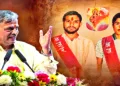
A dedicated bus yatra traversed every district of Andhra Pradesh, bringing BJP leaders directly to the people. Statues of Atal Bihari Vajpayee were unveiled, followed by public meetings that revisited his immense contribution to the construction of modern India and highlighted how his vision continues to be carried forward under the leadership of Prime Minister Narendra Modi.
At a time when the BJP had just two Lok Sabha seats, Vajpayee ji famously declared at the party’s 1984 foundation meeting at Shivaji Park, Mumbai: “Andhera chhateyga, suraj niklega, kamal khilega.” These words were ridiculed at the time, yet they carried unshakable conviction. Vajpayee ji did not merely believe in India’s democratic destiny—he infused that belief into generations of party workers.
From the Jana Sangh to becoming a ten-time Lok Sabha MP and a two-time Rajya Sabha MP, Vajpayee ji stood firm against authoritarianism, most notably during the Emergency. As the ideological pillar and founding Prime Minister of the BJP, he demonstrated that coalition politics could be anchored in trust, respect, and moral clarity. His decision to relinquish power rather than compromise on ethics, when his government fell by just one vote—remains a rare example of political integrity.
Vajpayee ji’s nationalism was resolute yet dignified. His poem Mastak Nahin Jhukega symbolised India’s refusal to bow before external pressure or internal intimidation. This resolve was most evident during the Kargil conflict of 1999, when, as caretaker Prime Minister, he decisively launched Operation Vijay to defend India’s sovereignty. His bold decision to conduct the Pokhran nuclear tests further asserted India’s strategic autonomy, despite intense international opposition.
This legacy of strength has found renewed expression under Prime Minister Narendra Modi. From surgical strikes after Uri to the Balakot air strikes, India today responds to aggression with clarity and confidence. The country has transitioned from being a defence importer to a defence exporter, strengthening its self-reliance under the Atmanirbhar Bharat vision.
Equally significant was Vajpayee ji’s belief in inclusive development. His governance reflected empathy for the common citizen, shaped by his own life of struggle. Initiatives such as Sarva Shiksha Abhiyan, the Golden Quadrilateral, Pradhan Mantri Gram Sadak Yojana, telecom reforms, and Kisan Credit Cards transformed India’s socio-economic landscape. These foundations have been expanded exponentially under Prime Minister Modi, with record-breaking infrastructure growth, affordable digital access, and enhanced connectivity reshaping everyday life.
Vajpayee ji also believed that true leadership balances strength with compassion. His approach to diplomacy laid the groundwork for India’s soft power, an ethos that Prime Minister Modi has elevated globally through the principle of Vasudhaiva Kutumbakam the world as one family.
In Andhra Pradesh, Vajpayee ji’s birth centenary was commemorated with remarkable enthusiasm. Chief Minister Sri N. Chandrababu Naidu described him as “Ajatashatru”, a statesman without enemies, and encouraged active participation from TDP legislators. Jana Sena chief and Deputy Chief Minister Sri Pawan Kalyan extended strong support, with party leaders joining the programmes. Madhya Pradesh Chief Minister Sri Mohan Yadav inaugurated the yatra at Dharmavaram, while Uttarakhand Chief Minister Sri Pushkar Singh Dhami attended the event at Madanapalle. Union and state ministers, along with NDA MLAs and MPs, participated across districts, reflecting the collective respect Vajpayee ji commands beyond party lines.
The people of Andhra Pradesh responded with overwhelming affection, turning the yatra into a people’s movement. The concluding event on December 25 in Amaravati is set to witness the presence of senior BJP, TDP, and Jana Sena leaders, with an invitation extended to Honourable Union Home Minister Sri Amit Shah.
As India moves forward, Vajpayee ji’s values, integrity in politics, compassion in governance, and courage in leadership are more relevant than ever. He remains a moral compass for Indian democracy.
Atal Bihari Vajpayee is not merely a chapter in history. He is its conscience.
He is, without doubt, the Ratna of Bharat.