Kurigram: A land dispute in northern Bangladesh turned violent on January 26, leading to the death of an elderly Hindu man in Kurigram district. The incident has once again raised concerns about the safety of minority communities and how crimes against them are classified by authorities.
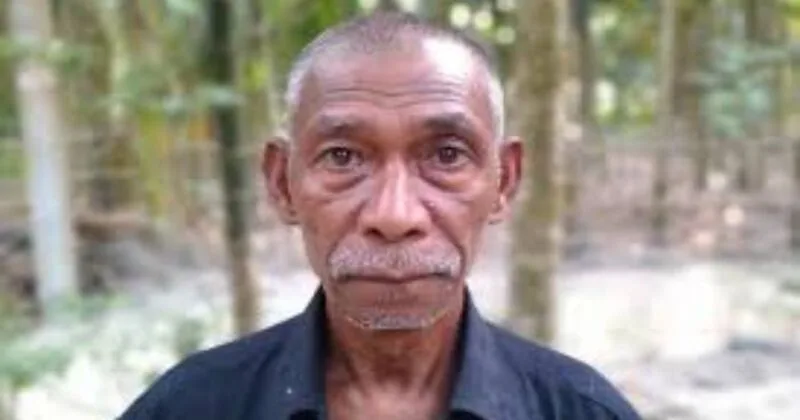
The victim, identified as Madhu Chandra Shil, aged 60, was a resident of Joydev Malsabari village in the Umar Majid Union of Rajarhat upazila. According to media reports, he had been locked in a long-standing dispute with his Muslim neighbour, Abed Ali, over the boundary of their shared land.
Family members said tensions escalated around 12:30 pm on Monday when Madhu Shil began planting saplings in front of his house, an act that reportedly angered his neighbours. Ashraf Ali, the son of Abed Ali, objected to the planting and asked Shil to stop.
According to Shrishti Rani, the wife of Shil’s son, the situation deteriorated further when Abed Ali uprooted the newly planted saplings, triggering a heated argument. “Ashraf Ali, his wife Lucky Begum, and several others pushed my father-in-law during the altercation,” she said. “He lost his balance and fell onto a cemented structure near a tube well.”
Shil collapsed following the incident and was rushed to Kurigram General Hospital by local residents, where doctors declared him dead on arrival. His body was later brought back to the village, plunging the local Hindu community into shock and mourning.
Police arrived at the scene the same day. A team led by Rajarhat Police Station Officer-in-Charge Abdul Wadud recovered the body and sent it to the Kurigram morgue for a post-mortem examination.
As part of the initial investigation, Ashraf Ali was arrested and taken into custody. “We are treating this as a serious criminal case,” a police official said, adding that legal action was being initiated under the relevant sections of the law.
Madhu Shil’s family has demanded strict punishment for those responsible. His son, Palash Shil, said the family is shattered by the loss. “My father was a simple and innocent man,” he said. “We want justice so that no one else has to suffer like this.”
Villagers said the land dispute had persisted for several years and believed that timely intervention by the local administration could have prevented the violence.
Minority groups express concern
The death has sparked concern among minority rights groups, who say the incident reflects the broader insecurity faced by minority communities in Bangladesh, particularly in rural areas where land disputes are frequent.
Manindra Kumar Nath, acting general secretary of the Bangladesh Hindu Buddhist Christian Unity Council, said the killing should not be viewed as an isolated incident. “This once again shows how vulnerable minority communities are,” he said, adding that administrative inaction allowed a long-standing dispute to escalate into violence.
He emphasised that while punishment of the accused is essential, authorities must also examine why preventive measures were not taken earlier. “Without accountability,” he warned, “this will become just another statistic.”