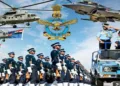
The Indian Army is set to celebrate its 78th Army Day on January 15, 2026, with a grand ceremonial parade in Jaipur, marking the first time the prestigious event is being hosted in the Rajasthan capital. Departing from long-standing tradition, this year’s Army Day parade will be conducted on the lines of the Republic Day celebrations, featuring a full-fledged road-based march-past instead of the conventional cantonment or parade ground setting.
Held against the backdrop of the recently concluded and strategically significant Operation Sindoor, the parade is expected to be a powerful demonstration of the Army’s operational success, combat preparedness, and gallantry. Senior officials say the entire event has been conceptualised to highlight the courage of soldiers, the effectiveness of indigenous and imported weapon systems, and the growing integration of India’s armed forces.
Republic Day-Style Road Parade in Jaipur
For the first time in Army Day history, the parade will unfold along a 1.5-kilometre stretch of Sitapura Road in Jaipur. A special three-tier seating arrangement is being created to accommodate nearly 25,000 spectators, while overall footfall for the event is expected to reach close to 1.5 lakh people. Extensive security, logistical arrangements, and public facilitation measures are being put in place to manage the large turnout.
Defence sources said the decision to hold a road-based parade is aimed at increasing public engagement and allowing citizens to witness the Army’s ceremonial and combat elements up close, much like the annual Republic Day celebrations in New Delhi.
Operation Sindoor at the Heart of Celebrations
Operation Sindoor will form the thematic core of Army Day 2026. The parade will feature a dedicated tableau showcasing the planning, execution, and success of the operation, which is widely seen as a milestone in India’s recent military history. Soldiers who were decorated for gallantry during the operation, including Vir Chakra awardees, will be present at the event for the first time.
In a rare and symbolic gesture, Param Vir Chakra and Ashok Chakra awardees will also take part in the parade, underscoring the Army’s emphasis on honouring bravery and sacrifice alongside showcasing hardware and technology.
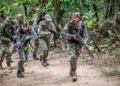
Army Day 2026 will feature nine marching contingents, representing the diversity and operational depth of the Indian Army. Among them will be the Bhairav Battalion, which will participate in the parade for the first time. The battalion was raised in the aftermath of Operation Sindoor and is expected to march alongside displays of advanced systems such as Shaktibaan and Divyastra.
Other contingents will include personnel from the Assam Regiment, Artillery, Jammu and Kashmir Light Infantry, Madras Regiment, Scouts, and NCC cadets. The march-past will be accompanied by Army band units performing indigenous and martial tunes, adding ceremonial grandeur to the event.
In a continuation of last year’s initiative, the Nepal Army band will also participate in the parade. The Nepalese band had made its Army Day debut in 2025, symbolising the deep-rooted military ties and traditions shared by the two neighbouring countries.
Heavy Metal on Display: Tanks, Artillery and Missile Systems
A major highlight of the parade will be the extensive display of weapon systems that played a critical role during Operation Sindoor. These will include the M777 ultra-light howitzer, T-90 Bhishma main battle tanks, Arjun main battle tanks, BMP-2 infantry combat vehicles, K9 Vajra self-propelled artillery guns, Dhanush artillery systems, Smerch long-range multi-barrel rocket launchers, and Grad rocket systems.
Air defence capabilities that proved crucial in countering Pakistani aerial threats during the operation will also be showcased. These include the Medium Range Surface-to-Air Missile (MRSAM) system, Akash missile systems, and the Schilka air defence gun system.
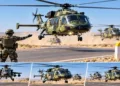
For the first time in an Army Day parade, the indigenous Light Combat Helicopter Prachand and US-origin Apache attack helicopters will participate in the aerial display. They will be joined by Rudra armed helicopters and Chetak utility helicopters, offering spectators a rare glimpse of the Army Aviation Corps’ combat and support capabilities.
Officials said the aerial segment will highlight the Army’s increasing emphasis on mobility, precision strike, and high-altitude operations, especially along India’s western and northern frontiers.
Reflecting the Army’s focus on future warfare, the parade will also feature counter-UAS (unmanned aerial system) platforms, swarm drones, robotic mules, and advanced surveillance systems. Separate contingents of Indian-breed and foreign-breed dogs trained by the Army’s K9 units will also be part of the march, demonstrating their role in operations ranging from counter-insurgency to disaster response.
IAF and Navy Join the Parade
In a strong display of jointness and military integration, elements of the Indian Air Force and the Indian Navy will also participate in the Army Day parade. Defence officials said this reflects the growing emphasis on tri-service coordination, which was a defining feature of Operation Sindoor.
The decision to host Army Day outside Delhi follows Prime Minister Narendra Modi’s suggestion to decentralise major military events and take them to different parts of the country. The move is aimed at strengthening the bond between civilians and the armed forces by allowing people across India to directly engage with military traditions and achievements.
The responsibility for organising Army Day 2026 has been entrusted to the South Western Command. In recent years, Army Day celebrations have been successfully held in cities such as Bengaluru, Lucknow, and Pune, signalling a broader shift in how the Army connects with the nation.