Indian highways are on the verge of an overall makeover in tolling, with the government planning to implement an entirely satellite- and AI-based tolling system at the national highway level by the end of 2026, Union Minister for Road Transport & Highways Nitin Gadkari announced. This step is expected to result in an overall reduction in the waiting time at toll booths, fuel conservation, decreased emissions, and increased logistics efficiency.
This is being rolled out through the Multi-Lane Free Flow (MLFF) tolling system, a technology-based platform which enables vehicles to move through tolling points without stopping or reducing speeds. This AMPM tolling system combines FASTag, high-performance readers, Automatic Number Plate Recognition (ANPR) cameras, and artificial intelligence analysis for error-free identification and payment while facilitating the free flow of vehicles through the tolling points.
According to an official written response submitted to the Rajya Sabha on December 17, 2025, pilot projects for tolling via MLFF have already been introduced in several locations across India by the Ministry of Road Transport & Highways
How the New Tolling Scheme Functions
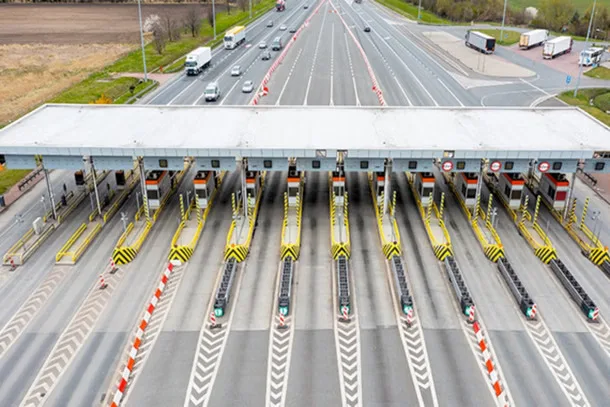
The MLFF framework ensures that gantry-mounted RFID readers and ANPR cameras work in tandem, thus providing a redundant and highly accurate tolling system. Vehicles are detected through FASTag and number plate recognition, and charges are debited from users without the need for physical barriers or toll booths.
Speaking at public gatherings as well as media interactions, Gadkari has mentioned that once all is well with the system, the vehicles will be able to pass through the toll booths with a speed of 80 km per hour, which is a big departure from the existing system that has a stop-start system while passing through toll booths.
According to the annexure affixed to the Rajya Sabha report, work has begun at a few major Toll Plaza sites, which include:
· Choryasi on the Bharuch–Surat section of NH-8 in Gujarat
· Gharaunda on the Panipat–Jalandhar section of NH-44
· Manoharpura, Shahjahanpur, and Daulatpura on the Delhi-Jaipur corridor
· Mundka, on the Urban Extension Road-II corridor, Delhi
Apart from that, there are projects awarded on key stretches in the states of Tamil Nadu and Gujarat. The government has invited bids for the highways in the states of Karnataka, Andhra Pradesh, Maharashtra, Assam, Delhi, and Haryana. The roads include the Bangalore Mysore Highway, Hyderabad-Bangalore NH 44, Pune Nashik Highway, Dwarka Expressway, and Guwahati-Baihata Highway.
Time, Fuel, and Economic Savings
The government is also counting on the vast benefits that the barrier-less tolling system has in store. According to the assessment carried out by the ministry, doing away with queuing at toll booths is expected to greatly reduce fuel consumption as well as vehicle emissions.
Nitin Gadkari has claimed that the new technology will be able to help conserve thousands of crores of rupees every year by reducing the fuel losses as well as the toll evasion. Also, smooth movement of goods will help increase the logistics efficiency, which will increase the economic productivity.
The fact that there are no booths and barriers is also anticipated to bring down operational and maintenance expenses, as there will be no need to spend money on personnel and infrastructure maintenance. The automated tolling, according to the government, shall also improve fee collection.
Phased Expansion Based on Pilot Outcomes
As per an explanation offered by the ministry, a phased rollout of the tolling system through MLFF on a national level would depend on lessons taken from pilot projects that are presently underway. After this, the rollout of the system on a national level highway network in the current as well as the forthcoming years would be done.
With its full implementation, the new system of MLFF, as well as digital highway management, would make way for one of the largest overhauls of highway infrastructure of India since the launch of FASTag technology, bringing Indian highway systems at par with international best practices regarding intelligent transport systems.