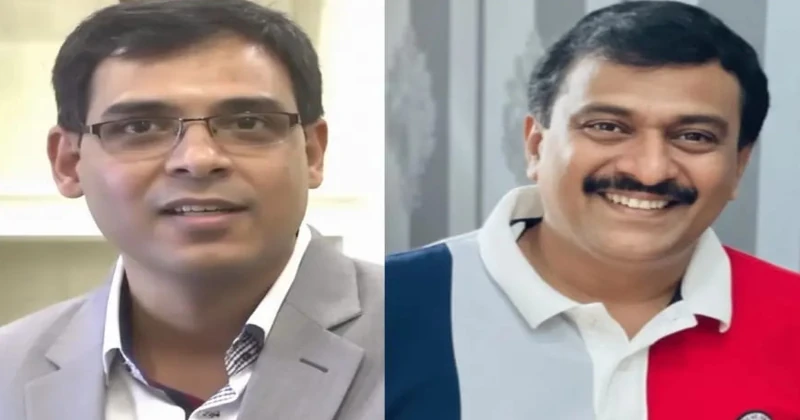
Fresh arrests have marked a major turning point in the Sabarimala gold robbery case, as the Special Investigation Team (SIT) intensified its probe following the arrival of the Enforcement Directorate and sharp criticism from the Kerala High Court over lapses in the investigation. The latest action has led to the arrest of Smart Creations CEO Pankaj Bhandari and Bellary-based jeweller Govardhan, both of whom are now suspected to be central figures in the illegal extraction and diversion of gold from the holy shrine of Sabarimala Temple.
According to the investigation, Bhandari’s firm, Smart Creations, was entrusted with gold-plating work at the temple, including the revered Dwarapalaka statues. The SIT has found that gold was illicitly extracted from these idols and subsequently channeled out of the temple system. Govardhan is accused of purchasing the extracted gold, which investigators say was routed through an intermediary named Kalpesh. During evidence collection in Bellary, the SIT recovered more than 800 grams of gold from Govardhan’s jewellery shop, strengthening the prosecution’s claim that the gold removed from Sabarimala was converted into tradable bullion.
The investigation has also brought to light close personal and professional links between the accused. The SIT has established that Unnikrishnan Potty, a key accused already in custody, was in constant contact with both Pankaj Bhandari and Govardhan regarding the handling and extraction of gold from the temple. Investigators state that Govardhan was the person who initially introduced Unnikrishnan Potty to Smart Creations, a company known for undertaking gold-plating work in several prominent temples across India.
Further revelations emerged after the statement of the Thantri (chief priest) was recorded. The Thantri reportedly told investigators that he had a close relationship with Govardhan, had personally visited the jeweller’s shop in Bellary, and had been introduced to him by Unnikrishnan Potty. After analysing these statements in detail and corroborating them with material evidence, the SIT proceeded with the arrests, concluding that both Bhandari and Govardhan had played active roles in the gold loot and that Bhandari had also derived financial benefits from the operation.
Pankaj Bhandari had been questioned twice earlier by the SIT. He was first interrogated shortly before the arrest of Unnikrishnan Potty and was later summoned again to Kerala for questioning at the Crime Branch office about a week ago. Following the arrests and remand of Unnikrishnan Potty, Murari Babu, then Devaswom administrative officer, and Padmakumar, former Devaswom president, Bhandari was briefly released after citing an urgent family function. On Monday, however, the SIT took him back into custody and formally recorded his arrest, signalling a tougher stance by the investigators after sustained judicial scrutiny. The renewed momentum in the probe has coincided with strong observations by the Kerala High Court, which has described the theft of gold from a major temple as a rare and shocking crime.
The Devaswom Bench observed that the allegations are unheard of in their seriousness and have deeply hurt the religious sentiments of lakhs of Ayyappa devotees. The court rejected the bail pleas of the accused, emphasising that the law applies equally to all and that there should be no discrimination in the conduct of the investigation.
The High Court also criticised the SIT for what it described as negligence in reaching those truly responsible for the crime. Corruption, the court said, is a cancer affecting society, and courts must adopt a parallel and uncompromising approach when dealing with such offences. Given the gravity of the allegations, that gold-plated idols and ornaments of a holy temple were misused and looted, the court stressed that this was not merely a criminal case but one that strikes at the faith of devotees. In its observations, the court noted that the conspiracy and the involvement of officials appeared prima facie clear. It pointed out that the investigation was likely to reveal tampering with official documents, particularly records that described the gold-plated Dwarapalaka idols and panels as being made of copper. This misrepresentation, the court observed, seemed to be a deliberate part of the conspiracy to facilitate the theft of gold.
The court further remarked that senior officials had failed in their duty and that the accused had violated the mandatory rules prescribed in the Devaswom manual for handling temple gold ornaments. Such violations, it said, indicated a continuation of the conspiracy rather than isolated acts. The High Court also underlined that a gold haul of this magnitude could not have taken place without the involvement or complicity of high-ranking officials, including members of the Devaswom Board. With the Enforcement Directorate now examining the financial trail alongside the SIT’s criminal investigation, the case is expected to widen further. Investigators believe the coming days will be crucial in uncovering the full extent of the conspiracy, the flow of illicit funds, and the role played by officials entrusted with safeguarding one of Kerala’s most sacred temples.