NEW DELHI: For more than two decades, India has lived under the shadow of terrorism. From crowded markets and Mandirs to trains, courts, and military bases, ordinary Indians have repeatedly paid the price of a long and complex war against extremist violence. Yet beyond the brutality of the attacks themselves lies another story, how the Indian state responded to terrorism under different political leaderships.
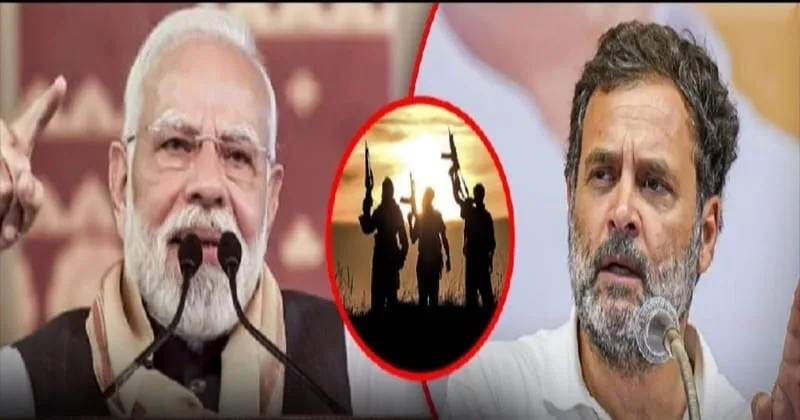
Between 2004 and 2014, during the Congress-led United Progressive Alliance (UPA) governments, India witnessed some of the deadliest terror attacks in its history. After 2014, under the Bharatiya Janata Party (BJP)-led government headed by Prime Minister Narendra Modi, major terror incidents were fewer but were met with a visibly different response.
Here is a list of terrorist attacks during Congress rule in India
While, attacks under Modi govt were avenged with impunity 🔥 https://t.co/89PsyfNqAG pic.twitter.com/Dc8bRNgWo6
— Frontalforce 🇮🇳 (@FrontalForce) December 15, 2025
The Congress Era (2004–2014)
The mid-2000s marked a grim phase. Terror networks such as Lashkar-e-Taiba, Jaish-e-Mohammed, and the Indian Mujahideen carried out coordinated attacks across the country. The UPA government’s approach largely viewed terrorism as a criminal and intelligence problem to be dealt with through investigation, arrests, and trials.
Delhi Serial Blasts, 2005 (Around 70 Killed)
On the eve of Deepawali, coordinated bomb blasts tore through crowded markets in Delhi. The symbolism was unmistakable: attack morale, disrupt normal life, and spread fear. The government responded with condemnation, police action, and intelligence reviews. Several operatives were eventually arrested and prosecuted. However, no external action was taken against terror sponsors, despite intelligence inputs pointing to cross-border involvement.
Varanasi Bombings, 2006 (28 Killed)
Explosions at the Sankat Mochan Hanuman Mandir and the Varanasi railway station targeted both faith and public infrastructure. The attack shook the nation. Once again, the response followed a familiar pattern: investigations, arrests, and heightened security. The broader terror ecosystem, however, remained largely intact.
Mumbai Train Blasts, 2006 (209 Killed)
Seven bombs detonated on Mumbai’s suburban trains during rush hour, killing over 200 people. It was one of the deadliest attacks in India’s history. Evidence later pointed to Pakistan-based terror modules working with Indian operatives. Despite the scale of the carnage, India chose diplomatic engagement and internal security measures over military retaliation.
Malegaon Blasts, 2006 (About 40 Killed)
The Malegaon blasts complicated the terror narrative. Initially blamed on Islamist groups, investigations later revealed the involvement of Hindu extremist elements. This underlined an uncomfortable reality: terrorism in India was not only external but also had internal radicalised networks. The state response focused on legal prosecution rather than broader strategic recalibration.
Samjhauta Express Blasts, 2007 (Around 70 Killed)
The Samjhauta Express, a symbol of India–Pakistan peace, was targeted near Panipat. Early suspicions fell on Pakistan-based groups, but later investigations charged Hindu extremists. The case highlighted both intelligence failures and the political sensitivity surrounding terror investigations. It also reinforced the government’s cautious, restrained posture.
The 2008 Wave: Jaipur, Ahmedabad, and Delhi
In 2008, India experienced a series of coordinated urban attacks:
* Jaipur blasts killed around 70 people.
* Ahmedabad blasts killed over 50.
* Delhi blasts killed dozens more.
These attacks were linked to the Indian Mujahideen, a network with ideological and logistical support from across borders. While arrests followed, the frequency of attacks suggested that deterrence was failing.
26/11 Mumbai Attacks, 2008 (166–171 Killed)
The November 2008 Mumbai attacks marked a turning point in public perception. Ten terrorists held India’s financial capital hostage for three days, targeting hotels, a Jewish center, and the railway station. The attackers were traced directly to Pakistan-based Lashkar-e-Taiba. However, no military retaliation occurred. The decision was shaped by fears of escalation, international pressure, and concerns about regional stability. For many Indians, this restraint came to symbolize weakness, even though the government believed it was acting responsibly.
2010–2013: Pune, Mumbai, Delhi, Hyderabad
Between 2010 and 2013, terror strikes continued:
* Pune’s German Bakery blast
* Mumbai triple blasts in 2011
* Delhi High Court bombing
* Hyderabad twin blasts
Each incident followed the same cycle: attack, mourning, investigation, arrests. Terrorism did not stop. Critics argue that the absence of visible punishment emboldened terror sponsors.
The Modi Era
After 2014, India’s counter-terror posture underwent a fundamental shift. The Modi government articulated an informal but clear doctrine: a terror attack on India would invite retaliation, not just investigation.
Uri Attack, 2016 (19–23 Soldiers Killed)
Terrorists attacked an Indian Army base in Uri, J&K. The assault was a direct strike on the military. Days later, India announced that it had conducted surgical strikes across the Line of Control, targeting terror launch pads. This was significant not only militarily but also politically. For the first time, India publicly acknowledged cross-border military action in response to terrorism.
Pulwama Attack, 2019 (40–46 CRPF Personnel Killed)
A suicide bomber rammed an explosives-laden vehicle into a CRPF convoy in Pulwama. The nation was outraged. This time, the response went further. Indian Air Force jets crossed the international border and struck a terror training facility in Balakot, deep inside Pakistan. This marked the first such airstrike since 1971. The message was clear: geographical boundaries would no longer guarantee impunity for terror sponsors.
Pahalgam Attack, 2025 (26 Killed)
In 2025, terrorists targeted civilians in Pahalgam, a tourist area in Kashmir. The attack was designed to hit both human lives and economic confidence. The government announced Operation Sindoor as a response.
The difference between the two periods lies not in the presence or absence of terrorism, but in how the Indian state chose to respond to it. Under the Congress-led governments, terrorism was largely treated as a law-and-order challenge. The emphasis remained on investigation, prosecution, intelligence gathering, and diplomatic engagement, while military restraint was projected as strategic maturity and responsible statecraft. Terror attacks were followed by arrests, bans on organizations, and institutional reforms, but the response rarely went beyond domestic or diplomatic measures.
Under the Modi-led government, the framing of terrorism underwent a decisive shift. Terror attacks began to be viewed as acts of war rather than isolated criminal incidents. Retaliatory military action was not only undertaken but also publicly acknowledged, signaling a clear intent to impose costs on perpetrators and their sponsors. Deterrence, strategic signaling, and the communication of red lines became central to national security policy, reflecting a more assertive approach to counterterrorism.