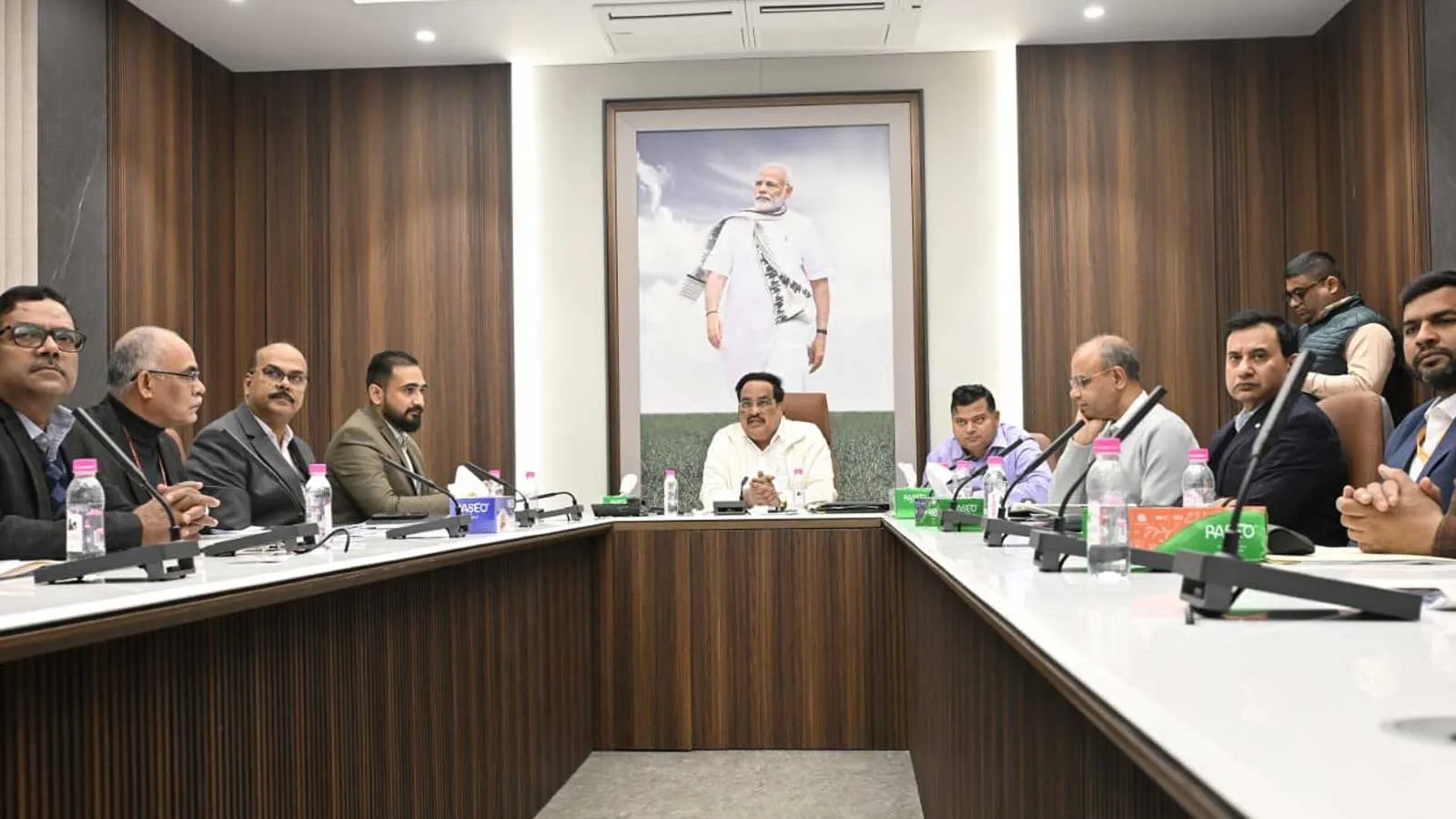
In a significant digital intervention aimed at improving the country’s rural water supply systems, Union Minister of Jal Shakti C.R. Patil on Wednesday launched the Sujalam Bharat App, a comprehensive monitoring platform envisioned to overhaul governance, data transparency and community participation in rural drinking water programmes. The initiative represents a crucial milestone for the Jal Jeevan Mission (JJM), the flagship scheme that aims to provide functional household tap connections to every rural home.
Developed with the technical expertise of the Bhaskaracharya National Institute for Space Applications and Geo-informatics (BISAG-N), the Sujalam Bharat App serves as a digital command centre for real-time tracking of rural water supply operations. During the launch ceremony, Patil described the digital platform as “a major step forward in structured monitoring and community ownership,” emphasising that transparent systems must form the backbone of public service delivery.
“A Turning Point for Jal Jeevan Mission”
Speaking at the event, Minister C.R. Patil highlighted that the launch comes at a time when rural communities increasingly rely on technological tools to monitor public assets. “This is a very important launch for Jal Jeevan Mission,” Patil said, pointing out that effective oversight is essential for long-term sustainability of water supply systems. He added that the app will empower village-level institutions and enable granular tracking of infrastructure functioning.
Officials said the app’s primary purpose is to create a transparent, nationwide digital registry of rural water schemes, ensuring that every component from pipelines and storage tanks to water sources and supply routes, is digitally identified, monitored and maintained.
Nationwide Participation in the Rollout
The launch event saw participation from officials and representatives of all States and Union Territories, joining virtually to mark the nationwide rollout. The broad participation underlined the central government’s objective of building a unified digital water governance framework across India’s diverse rural regions.
During the event, Ashok K.K. Meena, Secretary of the Department of Drinking Water and Sanitation, emphasised the importance of timely data entry and coordination between States and UTs to ensure the platform’s success. He noted that accurate and updated data remains the cornerstone of effective monitoring and future planning under Jal Jeevan Mission.
BISAG-N Director General T.P. Singh presented a detailed overview of the technological architecture, explaining how the system integrates multiple data points into a centralised digital dashboard. He said the platform will help States shift to a structured, digital approach for tracking operations and maintenance (O&M) activities across thousands of rural water supply schemes.
Unified Digital Record for Every Rural Water Scheme
A key feature of the Sujalam Bharat platform is the creation of the Sujalam Bharat Database, a first-of-its-kind digital record of every rural water supply scheme in India. Under the initiative, each scheme and the geographic area it serves will be assigned a unique Sujalam Bharat , Sujal Gaon ID. This identification will allow precise mapping of the scheme’s service coverage, the households receiving water supply, and the condition of the infrastructure.
The database integrates vital information on:
Water sources and supply systems
Infrastructure condition and operational status
Service reliability and supply schedules
Water quality parameters
Maintenance history and repair works
Community feedback and performance indicators
Officials explained that this unified digital record will enable Gram Panchayats, Village Water and Sanitation Committees (VWSCs), and service providers to maintain more accountable and transparent systems. Communities will also have greater access to information, ensuring that users become active stakeholders rather than passive beneficiaries.
Training and Orientation for State Officials
Immediately after the launch, BISAG-N conducted a comprehensive orientation session for officials from all States and UTs. The workshop included hands-on demonstrations on how to use the Sujalam Bharat App, geo-reference existing water assets and upload scheme-level details accurately.
The purpose of the training, officials said, is to ensure smoother implementation, avoiding data inconsistencies and delays that currently hamper the monitoring process. The orientation also focused on standardising the categorisation of assets across States, a key requirement for building a unified national database.
Strengthening the Digital Backbone of Jal Jeevan Mission
Additional Secretary and MD-NJJM Kamal Kishore Soan urged States and UTs to prepare detailed action plans for the implementation phase. He emphasised the need for consistent use of the platform, noting that the digital registry will play a vital role in improving operations and maintenance, identifying gaps in infrastructure, and planning future upgrades.
The Sujalam Bharat platform, he added, is not merely a monitoring tool but a long-term digital backbone that will help ensure the sustainability of rural water supply systems. By maintaining years of infrastructure and maintenance records, the system will allow planners to track wear and tear, identify vulnerabilities, and schedule timely repairs before disruptions occur.
One of the transformative features of the Sujalam Bharat Database is its integration with the PM Gati Shakti National GIS, which enables accurate geospatial mapping of rural water networks. This integration will allow policymakers to visualise supply routes, detect bottlenecks, and plan future expansions with greater precision.
Through geospatial mapping, States will be able to:
Identify water-stressed regions
Analyse infrastructure gaps
Plan new pipelines and water sources
Monitor the expansion of tap connections under JJM
Strengthen resilience against climate-related water disruptions
Officials believe that this mapping capability, combined with real-time digital updates, will significantly enhance local and national planning.
The Ministry of Jal Shakti noted that the Sujalam Bharat platform will act as a “foundational digital layer” for rural water governance, much like Aadhaar serves as the backbone of India’s identity ecosystem. Over time, the app is expected to support integrations with water testing labs, village-level sensors, and remote monitoring systems.
The platform is also designed to encourage community participation, allowing users to provide feedback on service quality and report local issues. This feedback loop is expected to build trust, improve responsiveness, and ensure that village-level committees remain accountable.
App to Be Available Soon for Public Use
The Ministry confirmed that the Sujalam Bharat App will soon be available on the Google Play Store, allowing broader access once the initial data-entry phase by States and UTs is completed. The public-facing version of the app may enable villagers to view infrastructure details, water quality reports, supply schedules and complaint mechanisms.
The launch of the Sujalam Bharat App marks a defining moment in India’s long-term effort to modernise its rural drinking water governance. By creating a transparent, tech-enabled system driven by real-time data and community oversight, the Ministry of Jal Shakti aims to ensure that the Jal Jeevan Mission’s gains remain sustainable for decades to come.
With a nationwide digital registry, geospatial integration and village-level transparency, the platform promises to transform how rural India manages, monitors and safeguards its most precious resource, water.