SIR drive in West Bengal turns into war of narratives
August 6, 2026
  • Read Ecopy
  • Circulation
  • Advertise
  • Careers
  • About Us
  • Contact Us
Android AppiPhone AppArattai
Organiser
  • ‌
  • Bharat
    • Assam
    • Bihar
    • Chhattisgarh
    • Jharkhand
    • Maharashtra
    • View All States
  • World
    • Asia
    • Europe
    • North America
    • South America
    • Africa
    • Australia
  • Editorial
  • International
  • Opinion
  • RSS @ 100
  • More
    • Op Sindoor
    • Analysis
    • Sports
    • Defence
    • Politics
    • Business
    • Economy
    • Culture
    • Special Report
    • Sci & Tech
    • Entertainment
    • G20
    • Azadi Ka Amrit Mahotsav
    • Vocal4Local
    • Web Stories
    • Education
    • Employment
    • Books
    • Interviews
    • Travel
    • Law
    • Health
    • Obituary
  • Subscribe
    • Subscribe Print Edition
    • Subscribe Ecopy
    • Read Ecopy
  • ‌
  • Bharat
    • Assam
    • Bihar
    • Chhattisgarh
    • Jharkhand
    • Maharashtra
    • View All States
  • World
    • Asia
    • Europe
    • North America
    • South America
    • Africa
    • Australia
  • Editorial
  • International
  • Opinion
  • RSS @ 100
  • More
    • Op Sindoor
    • Analysis
    • Sports
    • Defence
    • Politics
    • Business
    • Economy
    • Culture
    • Special Report
    • Sci & Tech
    • Entertainment
    • G20
    • Azadi Ka Amrit Mahotsav
    • Vocal4Local
    • Web Stories
    • Education
    • Employment
    • Books
    • Interviews
    • Travel
    • Law
    • Health
    • Obituary
  • Subscribe
    • Subscribe Print Edition
    • Subscribe Ecopy
    • Read Ecopy
Organiser
  • Home
  • Bharat
  • World
  • Operation Sindoor
  • Editorial
  • Analysis
  • Opinion
  • Culture
  • Defence
  • International Edition
  • RSS @ 100
  • Magazine
  • Read Ecopy
Home Bharat

SIR Under Attack in West Bengal: How political narratives turn routine voter list revision into a contentious battle

The Special Intensive Revision (SIR) of voter rolls, intended to update and verify electoral lists, has sparked intense political controversy in West Bengal. Mamata Banerjee’s strong opposition to SIR frames it as a tactic of voter suppression, highlighting a clash between democratic process and political narrative

Debika DuttaDebika Dutta
Nov 29, 2025, 05:00 pm IST
inBharat, Opinion, West Bengal
Follow on Google News
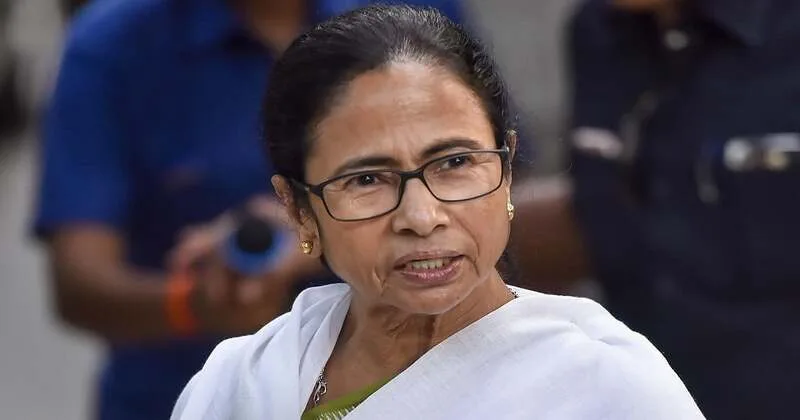
West Bengal Chief Minister Mamata Banerjee

West Bengal Chief Minister Mamata Banerjee

Facebook
Twitter
WhatsAppTelegramEmail

Mamata Banerjee’s vehement condemnation of the Election Commission’s Special Intensive Revision (SIR) as “votebandi” reframes a routine electoral exercise into a drama of disenfranchisement. By drawing a parallel with “notebandi,” she transforms what is fundamentally a technical process into a political battleground. Her narrative, though emotionally charged, risks undermining not just the integrity of voter rolls, but the very institutions that uphold democratic legitimacy.

SIR is not a novel invention; rather, it is a constitutionally sanctioned mechanism under the Registration of Electors Rules, 1960, designed to update voter lists, correct erroneous entries, remove duplicates, and incorporate eligible new voters. In a country as vast and mobile as India, periodic verification of electoral rolls is indispensable. Far from being an extraordinary fiat, SIR simply seeks to align the voter list with ground realities.

Yet, opposing voices in West Bengal have chosen to portray it otherwise. Banerjee’s depiction suggests a sweeping conspiracy to strip citizens of their voting rights. This framing, powerful as it may be, departs significantly from the procedural safeguards that the Election Commission has put in place. Notices are mandatory before removal, objections may be filed, and appeals are available. Bloated rolls are not discarded arbitrarily; BLOs are trained to verify documents with flexibility, even accepting varied proofs for vulnerable populations.

Also Read: Ancient bamboo discovery dating back 37,000 years in Manipur reveals a hidden chapter of Ice Age ecology in Asia

The political subtext cannot be ignored. West Bengal’s electoral history is marked by sensitive demographics, migration, border disputes, and older registration systems. A meticulous revision threatens inaccuracies, inflated lists, and missing entries that benefit entrenched interests. By framing SIR as “votebandi,” Banerjee deflects attention from these distortions, while projecting herself as a guardian of excluded voices.

It is one thing to demand fairness, and quite another to evoke fear. The issue is not paper or forms; it is trust. When political rhetoric turns a precision exercise into a spectacle, voters begin to believe in exclusion even when safeguards exist. The risk is real: a process that should strengthen democracy ends up eroding faith in institutions.

However, concern is not misplaced. Given the complexity of migration, lack of standardised documentation, and historical gaps in registration, many citizens genuinely struggle with verification. But SIR does not block them; it encourages their inclusion. The system allows for alternate proofs, repeated visits, and transparency in dealing with objections. The Commission has repeatedly emphasised that SIR is about inclusion—not elimination.

The danger is that political theatre now fuels administrative anxiety. Instead of reassuring the public, Banerjee’s narrative escalates it, and for a purpose. As electoral competition intensifies with the 2025 cycle looming, her strategy mobilises fear among constituencies that feel vulnerable. In doing so, she trades off civic confidence for political gain.

The heart of the matter, however, is not the reform itself; it is the distrust that political narratives foster. By insisting that the blood of eligible voters runs through “votebandi,” Banerjee makes reassurance more difficult. Rather than calming nerves, she magnifies them, contributing to a culture in which verification becomes suspicion.

A democratic polity must ground itself in trust, not tremors. Even the best processes falter when trust is lacking. If SIR is to succeed, it must not just be implemented properly; it must be communicated with humility and clarity. Publication of deletion lists, clear appeal mechanisms, and citizen-friendly outreach are not optional extras; they are essential to the legitimacy of the exercise.

At its core, SIR is not an administrative act; it is a renewal of the social contract between citizen and state. A clean voter list affirms the principle that every vote matters and that every voter deserves recognition. The political noise around SIR should not obscure this conviction. The integrity of elections demands more than a war of words: it needs steadfast processes, respectful engagement, and transparent institutions.

Mamata Banerjee’s sharp critique may dominate headlines, but history will not remember the slogans. It will remember whether SIR strengthened citizenship or deepened distrust. And in that reckoning, what matters is not just who wins the argument, but who reaffirms the dignity of every voter.

 

Topics: Election CommissionCM Mamata BanerjeeWest Bengal politicsSIRvoter rightsvoter listElectoral Integrity
Share
Tweet
SendShareSend
✮ Subscribe Organiser YouTube Channel. ✮
✮ Join Organiser's WhatsApp channel for Nationalist views beyond the news. ✮
Previous News

The relevance of the personality and deeds of Bhagwan Birsa Munda in contemporary student life and nation-building

Next News

Revolutionary Indian AI system OncoMark redefines cancer understanding through molecular hallmark mapping

Related News

AIMIM President and MP Asaduddin Owaisi, Telangana CM Revanth Reddy

Telangana CM Revanth Reddy succumbs to Asaduddin Owaisi’s push, introduces Family Register Certificate for SIR

Writer Taslima Nasrin

Taslima Nasrin: A voice under attack from fundamentalism and leftist groups

SIR in Karnataka: BJP slams Congress’ doorstep certificate drive as ‘Vote Bank Exercise’ amid electoral roll revision

Kalyan Banerjee Blames Abhishek Banerjee’s ‘Camac Street Ecosystem’, I-PAC for TMC’s 2026 Poll Defeat

‘Camac street finished TMC’: Kalyan Banerjee blames Abhishek Banerjee, I-PAC for Bengal poll debacle and party split

A representative image

Passport meant for international travel, not citizenship proof: MEA clarifies amid political row

Election Comission of India

Election Commission adds parents SIR declaration to online form 6 for new voter registration

Load More

Latest News

Bombay High Court convicts Tarun Tejpal in 2013 sexual assault case

Bombay High Court convicts former Tehelka editor Tarun Tejpal in 2013 rape case, overturns 2021 acquittal

Karnataka: BJP alleges cabinet expansion driven by ‘Payment Quota’, slams Congress over Nagendra’s re-induction

Prime Minister Narendra Modi & Meta CEO Mark Zuckerberg

Meta’s PM Modi video removal sparks concerns over accountability to Indian laws & digital sovereignty: Cyber Experts

Uttar Pradesh Cabinet has approved amendments to the Madrasa Education Act, ending the recognition of Kamil and Fazil degrees

Uttar Pradesh: Yogi government ends recognition of Kamil and Fazil degrees in line with Supreme Court ruling

13 Suspected Bangladeshis Detained Again in Gwalior, MP

Madhya Pradesh on alert: 13 suspected Bangladeshis detained, investigators trace illegal entry network

Centre says NEP 2020 strengthens health education, yoga, nutrition and environmental awareness across Indian schools

From PM POSHAN to Eco Clubs: Centre explains how NEP 2020 promotes healthy and environment-friendly schools

Illegal Bangladeshis deported (This image is generated by AI)

Odisha Police deport 42 illegal Bangladeshi nationals; Six more await repatriation

UPSSSC Exam Calander Released (This image is generated by AI)

UPSSSC Exam Calendar 2026 Released: Recruitment exams from August 9 to December 20; Check complete schedule

A judicial commission has termed the 2024 Sambhal violence a "pre-planned conspiracy," with BJP demanding strict action against the guilty

Sambhal violence report termed 2024 incident a “pre-planned conspiracy”; BJP demands severest punishment for guilty

Exterior of the JPSC office

JPSC Exam Irregularities: CID arrests 5 more, total arrests now 19 in Jharkhand

Load More
  • Privacy
  • Terms
  • Cookie Policy
  • Refund and Cancellation
  • Delivery and Shipping

© Bharat Prakashan (Delhi) Limited.
Tech-enabled by Ananthapuri Technologies

  • Home
  • Search Organiser
  • Bharat
    • Assam
    • Bihar
    • Chhattisgarh
    • Jharkhand
    • Maharashtra
    • View All States
  • World
    • Asia
    • Africa
    • North America
    • South America
    • Europe
    • Australia
  • Editorial
  • Operation Sindoor
  • Opinion
  • Analysis
  • Defence
  • Culture
  • Sports
  • Business
  • RSS @ 100
  • Entertainment
  • More ..
    • Sci & Tech
    • Vocal4Local
    • Special Report
    • Education
    • Employment
    • Books
    • Interviews
    • Travel
    • Health
    • Politics
    • Law
    • Economy
    • Obituary
  • Subscribe Magazine
  • Read Ecopy
  • Advertise
  • Circulation
  • Careers
  • About Us
  • Contact Us
  • Policies & Terms
    • Privacy Policy
    • Cookie Policy
    • Refund and Cancellation
    • Terms of Use

© Bharat Prakashan (Delhi) Limited.
Tech-enabled by Ananthapuri Technologies