Indigenous gene editing: Self-reliance in agriculture biotechnology
June 19, 2026
  • Read Ecopy
  • Circulation
  • Advertise
  • Careers
  • About Us
  • Contact Us
Android AppiPhone AppArattai
Organiser
  • ‌
  • Bharat
    • Assam
    • Bihar
    • Chhattisgarh
    • Jharkhand
    • Maharashtra
    • View All States
  • World
    • Asia
    • Europe
    • North America
    • South America
    • Africa
    • Australia
  • Editorial
  • International
  • Opinion
  • RSS @ 100
  • More
    • Op Sindoor
    • Analysis
    • Sports
    • Defence
    • Politics
    • Business
    • Economy
    • Culture
    • Special Report
    • Sci & Tech
    • Entertainment
    • G20
    • Azadi Ka Amrit Mahotsav
    • Vocal4Local
    • Web Stories
    • Education
    • Employment
    • Books
    • Interviews
    • Travel
    • Law
    • Health
    • Obituary
  • Subscribe
    • Subscribe Print Edition
    • Subscribe Ecopy
    • Read Ecopy
  • ‌
  • Bharat
    • Assam
    • Bihar
    • Chhattisgarh
    • Jharkhand
    • Maharashtra
    • View All States
  • World
    • Asia
    • Europe
    • North America
    • South America
    • Africa
    • Australia
  • Editorial
  • International
  • Opinion
  • RSS @ 100
  • More
    • Op Sindoor
    • Analysis
    • Sports
    • Defence
    • Politics
    • Business
    • Economy
    • Culture
    • Special Report
    • Sci & Tech
    • Entertainment
    • G20
    • Azadi Ka Amrit Mahotsav
    • Vocal4Local
    • Web Stories
    • Education
    • Employment
    • Books
    • Interviews
    • Travel
    • Law
    • Health
    • Obituary
  • Subscribe
    • Subscribe Print Edition
    • Subscribe Ecopy
    • Read Ecopy
Organiser
  • Home
  • Bharat
  • World
  • Operation Sindoor
  • Editorial
  • Analysis
  • Opinion
  • Culture
  • Defence
  • International Edition
  • RSS @ 100
  • Magazine
  • Read Ecopy
Home Bharat

Indigenous gene editing breakthrough: Aatmanirbhar revolution in agricultural biotechnology

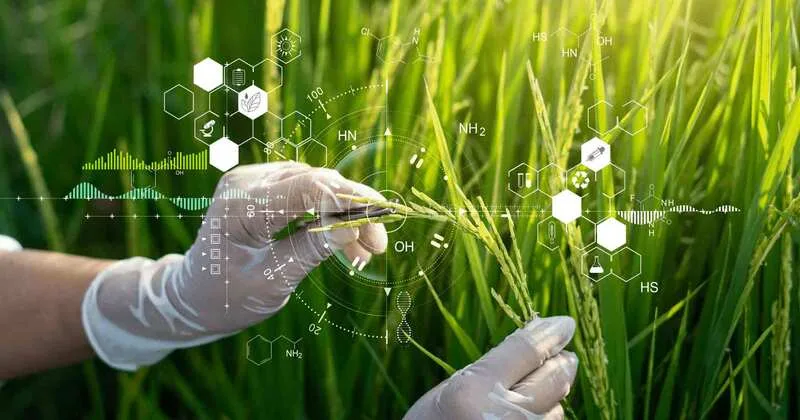
Development of an indigenous TnpB based gene editing platform marks a major step toward agricultural self-reliance. By overcoming global patent barriers and enabling faster, affordable crop improvement, this breakthrough strengthens national food security and positions India as a rising leader in biotechnology

Vivek KumarVivek Kumar
Nov 21, 2025, 10:30 pm IST
in Bharat, Sci & Tech
Follow on Google News
Indigenous gene editing: Self-reliance in agriculture biotechnology

Indigenous gene editing: Self-reliance in agriculture biotechnology

FacebookTwitterWhatsAppTelegramEmail

The agricultural sector in India is an important juncture for the development of nation. Climate variability, increasing input costs, emerging pests and the need for growth in sustainable productivity have placed unparalleled pressure on systems for crop improvement. It is the development of an indigenous gene-editing platform, based on the TnpB protein which represents a scientific and strategically important milestone in development. It’s a homegrown alternative to the globally dominant CRISPR-Cas technology, this innovation was developed at the ICAR Central Rice Research Institute (CRRI), Cuttack and granted an Indian patent in 2025. It is a new molecular tool and important stride toward technological sovereignty in biotechnology.

Breakthrough rooted in Indian science

For a decade, gene editing has been dominated by CRISPR-based systems patented mostly by institutions in the United States, Europe and China. Unfortunately, these systems are enveloped in inflexible intellectual property frameworks that have left their use in public sector breeding and small scale innovation quite limited. Since the licensing fees are high and access to the technology has been constrained with complex global IP agreements.

The system developed by ICAR-CRRI will overcome this bottleneck and is based on TnpB. TnpB is an ancient transposon associated protein evolutionarily older and considerably smaller than the CRISPR-associated Cas enzymes. Its compact size increases its deliverability into plant cells and significantly enhances editing efficiency. It acts like a precise molecular scissor that can accurately identify, bind to and cut targeted DNA segments. The uploaded document outlines a simplified three-step mechanism starting with navigation of the target site, precise locking onto the sequence and accurate cutting of genetic material. It gives Indian researchers a platform that is scientifically sounded and strategically free from foreign patents.

Breaking free from global IP barriers

The global landscape of genome editing has long been shaped by patent-heavy technologies. Most of the public sector institutions in developing countries face administrative and financial challenges in accessing CRISPR-based tools. In India, this has slowed down a number of promising projects for the improvement of crops and has limited the widespread adoption of advanced GE techniques.

India’s TnpB system flips will this equation. With full national ownership over a patented technology, Indian breeding institutions, state agricultural universities and agri-startups can now conduct gene-editing research without negotiating external licenses. This autonomy reduces costs, accelerates research cycles and widens the scope for innovation.

This self-reliance aligns strongly with the country broader scientific and economic goals under the Aatmanirbhar Bharat vision. By building capacity within domestic institutions, India ensures that advances in biotechnology directly support national priorities like food security, climate resilience and farmer income growth.

How the indigenous platform enhances crop improvement

Breeding of crops has always been a time-consuming process. Traditional methods take around 8-12 years for the production of a new variety, especially in the case of rice, wheat and pulses. Gene editing reduces this cycle by enabling targeted changes that otherwise require several rounds of crossing and selection.

The TnpB-based platform developed in India promises several advantages

  • Faster breeding cycles

Its small protein size makes it easier to transport inside plant cells, thus improving success rates and reducing the time taken to produce edited lines. This becomes important at a time when climate-induced stresses are becoming increasingly unpredictable.

  • Reduced development costs

With no foreign licensing fees, technology deployment becomes more affordable. The public-sector breeders serve the needs of millions of small and marginal farmers and therefore can now develop GE varieties at a fraction of earlier costs.

  • Democratization of biotechnology

It enables universities, Krishi Vigyan Kendras and early-stage agri-startups to conduct experimentation and innovation without financial hurdles.

  • Diverse trait development

Gene editing enables yield improvement and enhancement of nutritional quality, pest and disease resistance and also tolerance to different stresses. This opens up possibilities of local level customization, which holds potential for a transformation of Indian agriculture across diverse agroecological zones.

Strengthening Indian strategic position in global biotechnology

Development of this patented and indigenous gene-editing tool will place India among a small group of nations which have designed foundational molecular technologies. This further strengthens the Indian position in international collaborations and markets in biotechnology. This also allows India to contribute original scientific tools to the global research community rather than remain a recipient of external technologies.

The Indian success comes at a time when food security and technological sovereignty are emerging as global concerns. Many countries are reviewing their biotech regulations and seeking alternatives to patent-sensitive technologies. India’s TnpB platform has the potential to become a competitive option internationally, particularly for countries seeking affordable and less restrictive GE tools.

Policy implications for the future

India next priorities are about enabling a policy environment to ensure safety, transparency and farmer centered deployment. Key issues to be considered are

  • Streamlined regulatory pathways for genome edited crops that do not involve foreign DNA insertions.
  • Capacity building programmes for state agricultural universities and public breeding institutions.
  • Public awareness programs to nurture perception of genome editing and its difference with transgenic GM crops.
  • Support for startups engaged in seed technology, gene editing and agri biotech services.
Also Read: Delhi: Govt may cut water connection costs by 10% annually, Jal Board plans big reform of infrastructure charges

A coherent policy framework will help to ensure the translation of laboratory success into field level benefits while maintaining a high level of safety and accountability.

India’s TnpB based gene editing breakthrough is a turning point in the country agricultural biotechnology journey. This frees Indian science from foreign patent dependencies, allowing access to affordable innovation, accelerated crop improvement and much-needed solutions for farmers at lower costs. This reinforces national sovereignty in this domain and places India among the coming leaders in global biotech research.

At a time when sustainable agriculture is important for economic and social stability, Indian scientists achievement offers a way toward more resilience, self-reliance and scientific leadership.

Topics: biotechnologyAgricultural InnovationGene editingTnpBICAR-CRRIAtmanirbhar Bharat
ShareTweetSendShareSend
✮ Subscribe Organiser YouTube Channel. ✮
✮ Join Organiser's WhatsApp channel for Nationalist views beyond the news. ✮
Previous News

Pragjyotishpur Literature Festival 2025 concludes 3rd PLF awards conferred on Deori, Tamuli

Next News

Tamil Nadu: ABVP slams DMK over NEP denial, law and order concerns, urges youth to support SIR

Related News

PMRC Scheme 2026 launched to bring global Indian talent back into India's research ecosystem

PMRC Scheme 2026: Centre invites applications from global Indian scientists; Know eligibility, benefits & how to apply

India produces over 70 per cent of the world’s jaggery, carrying a Vedic legacy into today’s global superfood market

From Vedic Fields to Global Markets: India’s ancient superfood leading a global sweetener revolution

DRDO Virupaksha Radar is stealth-hunting eye in the Indian sky

Virupaksha AESA Radar: DRDO’s high-power GaN system to replace legacy bars Radar on Su-30MKI fleet

PM Modi has called for collective citizen action to help India tackle global economic disruptions, rising prices, and supply chain challenges

PM Modi’s Austerity Appeal to Indians: Save fuel, buy less gold, back Made-in-India, reduce foreign travel

Representative Image for Dhavni

India’s Dhvani HGV: The strategic game-changer in the Indo-Pacific power struggle

First Anniversary of Operation Sindoor: The Doctrinal shift

Load More

Latest News

BJP-backed Independent candidate Parimal Nathwani won one of the two Rajya Sabha seats in Jharkhand

Jharkhand Rajya Sabha Election Result: NDA-backed Parimal Nathwani defeats Congress candidate Pranav Jha

Navi Mumbai Municipal Corporation Additional Commissioner Sunil Pawar accepts a memorandum regarding the Vashi Hospital leaflet

Maharashtra: Beef recommendation in child nutrition pamphlet at Navi Mumbai hospital sparks row; HJS demands action

PM Narendra Modi

India, France to launch TRISHNA satellite next year; PM Modi calls partnership a pillar of stability

UPSC Prelims 2026: 13 Aspirants from Chhattisgarh’s Tribal Youth Hostel Qualify

UPSC Prelims 2026: 13 tribal hostel student clear exam; Chhattisgarh CM lauds success

India’s UPI could soon power payments in South Africa

After Nepal, South Africa eyes India’s UPI model as global footprint expands

UP Plans Cow-Based Enterprises in All 75 Districts Under ‘One District-One Innovation’ Model

Uttar Pradesh plans cow-based enterprises in all 75 districts under ‘One District-One Innovation’ model

Indian Coast Guard (ICG) team with indigenous Air Cushion Vehicles (ACVs) in Goa on June 18, 2026

Indian Coast Guard inducts Indigenous Air Cushion Vehicle (ACV) for coastal security operations

Lebanon must get out of the clutches of Hezbollah

Demand to Free 22 Muslim Prisoners Sparks Fresh Political Controversy in Tamil Nadu (This image is generated by AI)

Tamil Nadu: After Muslim quota push, calls for early release of long-term Muslim prisoners stirs political storm

Prime Minister Narendra Modi with US President Donald Trump

A Handshake, Not a Hug: Why PM Modi must assert India’s strategic red lines in his crucial meeting with Trump

Load More
  • Privacy
  • Terms
  • Cookie Policy
  • Refund and Cancellation
  • Delivery and Shipping

© Bharat Prakashan (Delhi) Limited.
Tech-enabled by Ananthapuri Technologies

  • Home
  • Search Organiser
  • Bharat
    • Assam
    • Bihar
    • Chhattisgarh
    • Jharkhand
    • Maharashtra
    • View All States
  • World
    • Asia
    • Africa
    • North America
    • South America
    • Europe
    • Australia
  • Editorial
  • Operation Sindoor
  • Opinion
  • Analysis
  • Defence
  • Culture
  • Sports
  • Business
  • RSS @ 100
  • Entertainment
  • More ..
    • Sci & Tech
    • Vocal4Local
    • Special Report
    • Education
    • Employment
    • Books
    • Interviews
    • Travel
    • Health
    • Politics
    • Law
    • Economy
    • Obituary
  • Subscribe Magazine
  • Read Ecopy
  • Advertise
  • Circulation
  • Careers
  • About Us
  • Contact Us
  • Policies & Terms
    • Privacy Policy
    • Cookie Policy
    • Refund and Cancellation
    • Terms of Use

© Bharat Prakashan (Delhi) Limited.
Tech-enabled by Ananthapuri Technologies