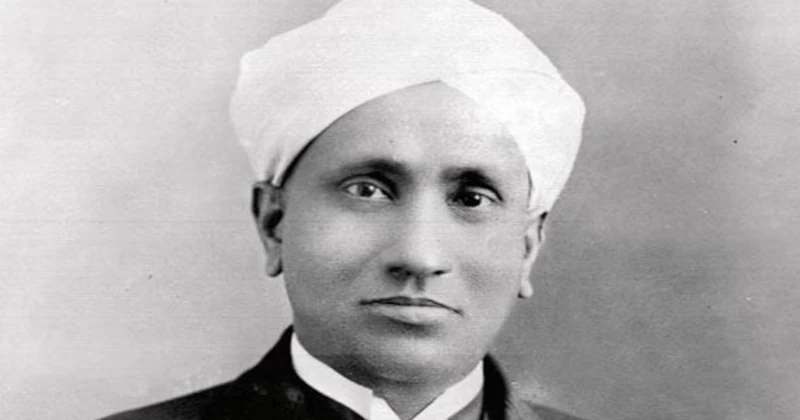
World Science Day: How Dr CV Raman illuminated the world
July 6, 2026
  • Read Ecopy
  • Circulation
  • Advertise
  • Careers
  • About Us
  • Contact Us
Android AppiPhone AppArattai
Organiser
  • ‌
  • Bharat
    • Assam
    • Bihar
    • Chhattisgarh
    • Jharkhand
    • Maharashtra
    • View All States
  • World
    • Asia
    • Europe
    • North America
    • South America
    • Africa
    • Australia
  • Editorial
  • International
  • Opinion
  • RSS @ 100
  • More
    • Op Sindoor
    • Analysis
    • Sports
    • Defence
    • Politics
    • Business
    • Economy
    • Culture
    • Special Report
    • Sci & Tech
    • Entertainment
    • G20
    • Azadi Ka Amrit Mahotsav
    • Vocal4Local
    • Web Stories
    • Education
    • Employment
    • Books
    • Interviews
    • Travel
    • Law
    • Health
    • Obituary
  • Subscribe
    • Subscribe Print Edition
    • Subscribe Ecopy
    • Read Ecopy
  • ‌
  • Bharat
    • Assam
    • Bihar
    • Chhattisgarh
    • Jharkhand
    • Maharashtra
    • View All States
  • World
    • Asia
    • Europe
    • North America
    • South America
    • Africa
    • Australia
  • Editorial
  • International
  • Opinion
  • RSS @ 100
  • More
    • Op Sindoor
    • Analysis
    • Sports
    • Defence
    • Politics
    • Business
    • Economy
    • Culture
    • Special Report
    • Sci & Tech
    • Entertainment
    • G20
    • Azadi Ka Amrit Mahotsav
    • Vocal4Local
    • Web Stories
    • Education
    • Employment
    • Books
    • Interviews
    • Travel
    • Law
    • Health
    • Obituary
  • Subscribe
    • Subscribe Print Edition
    • Subscribe Ecopy
    • Read Ecopy
Organiser
  • Home
  • Bharat
  • World
  • Operation Sindoor
  • Editorial
  • Analysis
  • Opinion
  • Culture
  • Defence
  • International Edition
  • RSS @ 100
  • Magazine
  • Read Ecopy
Home Bharat

World Science Day: How Bharat Ratna Dr CV Raman illuminated the world with the ‘Raman Effect’

On the occasion of the birth anniversary of Bharat Ratna Dr. C.V. Raman, which is celebrated as World Science Day, the nation pays tribute to the visionary physicist whose groundbreaking discovery of the Raman Effect transformed global science and illuminated India’s intellectual prowess

WEBDESKWEBDESK
Nov 7, 2025, 02:30 pm IST
in Bharat
Follow on Google News
FacebookTwitterWhatsAppTelegramEmail

On November 7 1888, Bharat witnessed the birth of one of its most brilliant scientific minds Dr Chandrasekhara Venkata Raman, the man who made light reveal its mysteries and elevated Indian science to global recognition. As the nation celebrates his birthday today, it also recalls the day’s other historical milestones, the massive cow protection movement and the birth anniversary of nationalist leader Shri Bipin Chandra Pal in 1966, symbolising a confluence of science, spirituality, and swadeshi awakening.

Born in Tiruchirappalli, Tamil Nadu, on November 7, 1888, CV Raman was the son of Shri Chandrashekhar Iyer, a physics teacher and astrologer, and Parvati Ammal, a devout and music-loving mother. His home was a microcosm of Indian intellectual tradition a fusion of science, Sanskrit, and spirituality, where the pursuit of knowledge was as natural as breathing. This unique environment shaped the young Raman’s restless curiosity and passion for understanding the natural world.

At the age of 14, Raman joined the BA Physics course at Presidency College, Madras. His British professor, Elliot, initially thought the young boy had entered the class by mistake until Raman topped the examination and won the gold medal in Physics. His extraordinary brilliance was evident early on; while most students were preoccupied with sports or leisure, one of his research papers found its way into the prestigious international journal Nature a rare feat for an undergraduate Indian student under colonial rule.

After completing his Master’s degree, Raman took up a job as an assistant accountant in the Finance Department of the British Government in Calcutta, a conventional career choice for a man of his credentials. But his heart lay elsewhere in laboratories, in experiments, and in the pursuit of understanding how nature worked. The world of numbers could not confine his imagination.

In the evenings, after office hours, he would head to the Indian Association for the Cultivation of Science (IACS) to conduct research in acoustics and optics. Eventually, his passion overpowered his profession he resigned from his government job and joined the University of Calcutta’s Science College as a professor. It was here that he began a journey that would change the course of modern physics and forever inscribe his name in the annals of global science.

Raman’s scientific journey was driven by an insatiable curiosity and an intuitive approach to observation. Every time he encountered a phenomenon he couldn’t fully explain, he would jot down “why?” or “how?” in the book margins questions that became sparks for future research.

One such moment of wonder came during a voyage back from England. Sitting on the deck of a ship, Raman observed the deep blue of the sea and questioned the prevailing belief that it was merely the reflection of the sky. Dissatisfied with simplistic explanations, he began an independent study into light scattering, determined to understand why the ocean appeared blue.

After seven years of relentless experimentation, his perseverance bore fruit. On February 28, 1928, Raman announced his revolutionary discovery, what the world would come to know as the “Raman Effect.” His research showed how light, when passing through a transparent material, changes its wavelength and scatters providing profound insights into the molecular composition of matter.

This path-breaking discovery transformed modern physics, deepening scientific understanding of atomic and molecular structure. The “Raman Effect” became a cornerstone of spectroscopy and quantum mechanics used today in everything from chemistry labs to astrophysics.

In 1930, Dr CV Raman became the first Asian to receive the Nobel Prize in Physics, a moment that electrified India and inspired a generation of young scientists under colonial subjugation. At a time when the British still doubted Indian intellect, Raman’s achievement was a symbolic assertion of India’s scientific capability and civilisational genius.

It is remarkable that the equipment he used for this groundbreaking discovery a simple spectroscope costing just Rs 300, stood in stark contrast to the massive, expensive laboratories of the West. His discovery proved that it was not wealth but willpower and vision that drive true scientific breakthroughs.

Even after global recognition, Raman declined lucrative offers from abroad, choosing instead to serve Bharat. He became the Director of the Indian Institute of Science (IISc), Bengaluru, where he mentored a generation of scientists, and later founded the Raman Research Institute, which continues his legacy of curiosity-driven research.

Also Read: ‘Same blood flows through our veins’: IAF chief urges youth to rise above caste and religion

In 1954, the Government of India honoured Dr Raman with the Bharat Ratna, the nation’s highest civilian award, recognising his monumental contribution to science and education. True to his spirit, he continued his research till his final days, maintaining an active laboratory even after retirement.

Dr. Raman passed away on November 21, 1970, but his legacy endures not just in laboratories and textbooks, but in the Indian ethos of inquiry, innovation, and independence of thought. To honour his discovery, the Government of India declared February 28 as National Science Day, celebrated annually across schools and institutions to promote scientific temper among youth.

CV Raman’s life was a living embodiment of Swami Vivekananda’s ideal of combining science with spirituality, intellect with discipline, and nationalism with global excellence. His story remains a powerful reminder that Indian genius, when nurtured in freedom and rooted in cultural self-confidence, can illuminate the world.

“Ask the right question, and nature will reveal her answer,” Dr. Raman once said. More than a century later, his light still shines through every Indian scientist who dares to ask why and how.


Topics: Dr CV RamanWorld Science DayChandrasekhara Venkata RamanBipin Chandra PalSwami VivekanandaCV Raman
ShareTweetSendShareSend
✮ Subscribe Organiser YouTube Channel. ✮
✮ Join Organiser's WhatsApp channel for Nationalist views beyond the news. ✮
Previous News

‘Same blood flows through our veins’: IAF chief urges youth to rise above caste and religion

Next News

“Removal of significant verses in Vande Mataram sowed seeds of partition”: PM Modi

Related News

United States: Life-size statue of Swami Vivekananda unveiled in Chicago; Resonates the message of service & harmony

From Red to Saffron in Naxalbari: Changing Colour of the Maoist Epicentre

RSS Sarkaryavah’s tour to the west: The enriching outreach

Facebook post shared by Pallikkonam Rajeev (courtesy: Facebook) dated on April 24. (Left Side)

Kerala: Derogatory FB Post on Swami Vivekananda, Yogi Adityanath; Complaint Filed in UP Seeking Strict Action

Akhil Bharatiya Karyakarini Sadasya of the RSS, Suresh Soni ji

The thought of Hindutva can guide not only Bharat but the entire world toward welfare”: Suresh Soni

Statue of Swami Vivekananda unvieled in Seattle, United States

United States: Swami Vivekananda statue unveiled in Seattle: Signifies India’s cultural diplomacy & soft power

Load More

Latest News

Academic Jihad In J&K exposed

Jihad in Academic domain: FIR registered under UAPA; Fazil Imran led in selection of books glorifying terrorists

The seized drugs

Keralam: Police uncover Hamas-like secret chamber during drug seizure in Wayanad; ‘Masha Allah’ sticker above door

How Saurabh Bothra built Rs 112 crore worth wellness empire & sparked global yoga revolution

80 Years of Organiser: Honouring the editors who steered 8 decades of editorial journey amid authoritarian censorship

Karnataka Liqour License Scam: Minister Satish Jarkiholi under Lokayukta scanner as kin issued 30 license to relatives

SIA identifies Yasin Malik as key conspirator in the Sarala Bhat murder case

Sarla Bhat Murder Case: SIA names Yasin Malik as key conspirator; A testament to the genocide of Kashmiri Hindus

The Hangor Story: What China’s submarine gift to Pakistan really means for India?

Japan pitches to co-produce Mogami stealth frigates under Make-in-India; Aims to reinforce Indo-Pacific security

From Vietnam to Iran: Has America repeated its greatest strategic mistake?

ACME Group Secures Landmark Green Ammonia and Methanol Offtake Deals with Japanese Companies

India emerges as global green fuel supplier with landmark ammonia and methanol export deals with Japan

Load More
  • Privacy
  • Terms
  • Cookie Policy
  • Refund and Cancellation
  • Delivery and Shipping

© Bharat Prakashan (Delhi) Limited.
Tech-enabled by Ananthapuri Technologies

  • Home
  • Search Organiser
  • Bharat
    • Assam
    • Bihar
    • Chhattisgarh
    • Jharkhand
    • Maharashtra
    • View All States
  • World
    • Asia
    • Africa
    • North America
    • South America
    • Europe
    • Australia
  • Editorial
  • Operation Sindoor
  • Opinion
  • Analysis
  • Defence
  • Culture
  • Sports
  • Business
  • RSS @ 100
  • Entertainment
  • More ..
    • Sci & Tech
    • Vocal4Local
    • Special Report
    • Education
    • Employment
    • Books
    • Interviews
    • Travel
    • Health
    • Politics
    • Law
    • Economy
    • Obituary
  • Subscribe Magazine
  • Read Ecopy
  • Advertise
  • Circulation
  • Careers
  • About Us
  • Contact Us
  • Policies & Terms
    • Privacy Policy
    • Cookie Policy
    • Refund and Cancellation
    • Terms of Use

© Bharat Prakashan (Delhi) Limited.
Tech-enabled by Ananthapuri Technologies