Vande Mataram: The first proclamation of cultural nationalism
June 23, 2026
  • Read Ecopy
  • Circulation
  • Advertise
  • Careers
  • About Us
  • Contact Us
Android AppiPhone AppArattai
Organiser
  • ‌
  • Bharat
    • Assam
    • Bihar
    • Chhattisgarh
    • Jharkhand
    • Maharashtra
    • View All States
  • World
    • Asia
    • Europe
    • North America
    • South America
    • Africa
    • Australia
  • Editorial
  • International
  • Opinion
  • RSS @ 100
  • More
    • Op Sindoor
    • Analysis
    • Sports
    • Defence
    • Politics
    • Business
    • Economy
    • Culture
    • Special Report
    • Sci & Tech
    • Entertainment
    • G20
    • Azadi Ka Amrit Mahotsav
    • Vocal4Local
    • Web Stories
    • Education
    • Employment
    • Books
    • Interviews
    • Travel
    • Law
    • Health
    • Obituary
  • Subscribe
    • Subscribe Print Edition
    • Subscribe Ecopy
    • Read Ecopy
  • ‌
  • Bharat
    • Assam
    • Bihar
    • Chhattisgarh
    • Jharkhand
    • Maharashtra
    • View All States
  • World
    • Asia
    • Europe
    • North America
    • South America
    • Africa
    • Australia
  • Editorial
  • International
  • Opinion
  • RSS @ 100
  • More
    • Op Sindoor
    • Analysis
    • Sports
    • Defence
    • Politics
    • Business
    • Economy
    • Culture
    • Special Report
    • Sci & Tech
    • Entertainment
    • G20
    • Azadi Ka Amrit Mahotsav
    • Vocal4Local
    • Web Stories
    • Education
    • Employment
    • Books
    • Interviews
    • Travel
    • Law
    • Health
    • Obituary
  • Subscribe
    • Subscribe Print Edition
    • Subscribe Ecopy
    • Read Ecopy
Organiser
  • Home
  • Bharat
  • World
  • Operation Sindoor
  • Editorial
  • Analysis
  • Opinion
  • Culture
  • Defence
  • International Edition
  • RSS @ 100
  • Magazine
  • Read Ecopy
Home Bharat

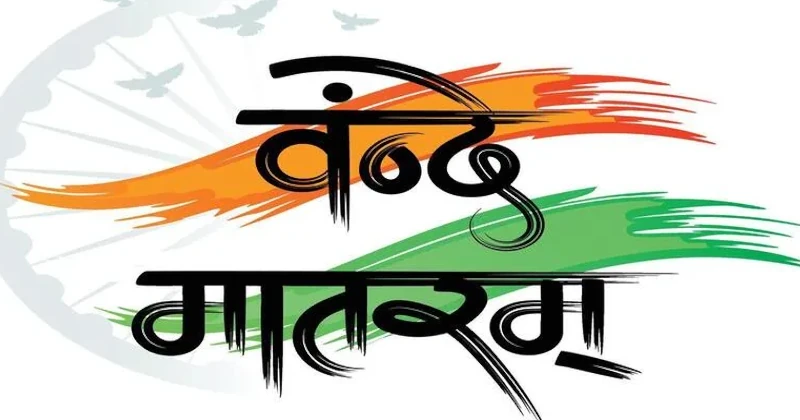
Vande Mataram: The first proclamation of cultural nationalism

Vande Mataram is the first proclamation of Bharat’s Cultural Nationalism, tracing its evolution from Bankim Chandra Chattopadhyay’s sacred hymn to the soul-stirring anthem of India’s freedom struggle. It highlights how the song continues to embody Bharat’s civilisational spirit, unity, and vision of a Viksit Bharat 2047

Amit Shah, Home MinisterAmit Shah, Home Minister
Nov 7, 2025, 12:30 pm IST
in Bharat, Culture
Follow on Google News
FacebookTwitterWhatsAppTelegramEmail

In the long and inspiring journey of our nation’s history, there have been many defining moments when songs and art became the soul of movements, shaping collective emotion into action. Be it the war songs of Chhatrapati Shivaji Maharaj’s army, the patriotic anthems sung during the freedom struggle, or the songs of resistance sung by the youth during the Emergency, songs have always awakened collective consciousness and unity in Bharatiya society.

Among them stands ‘Vande Mataram’, Bharat’s national song, whose story did not begin on a battlefield but in the calm yet resolute mind of a scholar, Bankim Chandra Chattopadhyay. In 1875, on the auspicious day of Jagaddhatri Puja (Kartik Shukla Navami or Akshaya Navami), he composed a hymn that would become the eternal anthem of the nation’s freedom. In those sacred lines, he drew inspiration from Bharat’s deepest civilisational roots, from the Atharva Veda’s declaration “Mata bhumih putro aham prithivyah” (“The earth is my mother, and I am her son”) to the Devi Mahatmya’s invocation of the Divine Mother.

Bankim babu’s words were both a prayer and a prophecy. ‘Vande Mataram’ was not merely a national song or the lifeblood of the freedom movement. It was Bankim Chandra’s first proclamation of Cultural Nationalism. It reminded us that Bharat is not just a geographical territory, but a geo-cultural civilisation, united not by boundaries drawn on a map but by shared culture, memory, sacrifice, valour and motherhood. This is not merely land; it is a tirtha, a sacred soil sanctified by devotion and duty.

As Maharshi Aurobindo described, Bankim was a sage of modern Bharat who reawakened the soul of the nation through his words. His Anandamath was not just a novel; it was a mantra in prose that stirred a sleeping nation to rediscover its divine strength. In one of his letters, Bankim babu wrote, “I shall have no objection if all my works are lost in the Ganga; this one hymn alone will live through eternity. It will be a great song and will win the hearts of the people.” These words were prophetic. Written during one of the darkest hours of colonial rule, ‘Vande Mataram’ became the dawn-song of awakening, a hymn that fused cultural pride with civilisational nationalism. Only an individual brimming with devotion to the motherland could have written such lines.

In 1896, Rabindranath Tagore set ‘Vande Mataram’ to melody and sang it at the Calcutta Congress session, giving the hymn its voice and immortality. It transcended barriers of language and region, echoing across Bharat. In Tamil Nadu, Subramania Bharati rendered it in Tamil and in Punjab, revolutionaries sang it in defiance of British rule.

During the partition of Bengal in 1905, when rebellion swept across the province, the British banned public recitations of ‘Vande Mataram’. Yet on 14 April 1906, in Barisal, thousands defied the order. When the police charged upon the peaceful crowd, men and women alike stood bleeding on the streets, shouting ‘Vande Mataram’ in unison.

From there, this sacred chant travelled with the revolutionaries of the Ghadar Party to California. It echoed in the ranks of the Azad Hind Fauj as Netaji’s soldiers marched from Singapore. It rang through the Royal Indian Navy mutiny of 1946, when Indian sailors hoisted the tricolour on British warships. From Khudiram Bose to Ashfaqulla Khan, from Chandrashekhar Azad to Tiruppur Kumaran, the slogan echoed as one. It was no longer just a song; it had become the collective voice of Bharat’s soul. Mahatma Gandhi himself admitted that ‘Vande Mataram’ had “the magical power to stir even the most dormant blood.” It united liberals and revolutionaries, scholars and soldiers alike. As Maharshi Aurobindo declared, it was “the mantra of Bharat’s rebirth.”

On October 26, during his Mann Ki Baat address, Prime Minister Shri Narendra Modi reminded the nation of Vande Mataram’s glorious legacy. To mark 150 years of this immortal hymn, the Government of India has decided to organise nationwide programs for a year starting November 7. Through these celebrations, the full version of ‘Vande Mataram’ will resonate across the nation once again, inspiring the youth to internalise the idea of ‘Cultural Nationalism’.

As we celebrate Bharat Parv and pay homage to Sardar Vallabhbhai Patel on his birth anniversary, we are reminded of how Sardar’s unification of Bharat was the living embodiment of the spirit of ‘Vande Mataram’. This song is not merely a remembrance of the past but also a call to the future. Even today, Vande Mataram inspires our vision of a Viksit Bharat 2047, a confident, self-reliant and resurgent Bharat. It is the anthem of our civilisational self-belief and it is now our responsibility to transform that spirit into action.

‘Vande Mataram’ is the song of freedom, the spirit of unyielding resolve and the first mantra of Bharat’s awakening. Words born from the soul of a nation never die; they live on, resonating through ages and generations. This sacred chant will continue to echo through eternity, reminding us to view our history, our culture, our values and our traditions through the vision of Bharatiyata (Indianness).

Vande Mataram!
Topics: "Vande MataramShivaji Maharajcultural nationalismMann ki Baat
ShareTweetSendShareSend
✮ Subscribe Organiser YouTube Channel. ✮
✮ Join Organiser's WhatsApp channel for Nationalist views beyond the news. ✮
Previous News

PM Modi launches ‘Vande Mataram@150’ celebrations: Stamp, coin, & portal released to honour national song of Bharat

Next News

Pakistan set for 27th constitutional amendment as Asim Munir tightens grip on power

Related News

Madurai CPM MP Su Venkatesan speaking to media on June 21, 2026

BJP Tamil Nadu calls Su Venkatesan’s ‘Vande Mataram’ remarks in Assembly an insult to the freedom movement’s legacy

Tarabai Bhonsale

Tarabai Bhonsale: The fearless Maratha queen who defied Aurangzeb and preserved swarajya against all odds

Representative Image

Shivaji Maharaj’s Coronation: The reassertion of Swaraj and civilisational confidence

PM Modi welcomed in Slovakia with rendition of 'Vande Mataram'

Historic Visit: PM Modi becomes first Indian PM to visit Slovakia, welcomed with rendition of ‘Vande Mataram’

Israel to Install Statue of Chhatrapati Shivaji Maharaj; Israel’s Consul General in Mumbai, Yaniv Revach, met Maharashtra Chief Minister Devendra Fadnavis and sough his support in this regard

Chhatrapati Shivaji Maharaj’s legacy to reach Israel; Statue to be installed as symbol of India-Israel friendship

Bharat Mata: A cultural icon & civilisational spirit reverberating the message of unity in 21st century

Load More

Latest News

Dr Mahrang Baloch

Pakistan: Mahrang Baloch gets life sentence, Balochistan erupts in protest; BYC calls for shutdown

Prime Minister Narendra Modi

‘Maoism is breathing its last’: PM Modi highlights crackdown on red terror in last 12 years and growth in tribal areas

(Left) Dr Shyama Prasad Mookerjee (Right) West Bengal CM Suvendu Adhikari

Syama Prasad Mookerjee was instrumental in creation of West Bengal’: CM Suvendu Adhikari

Female recruitment in Jihadist networks emerges as major security concern

Khadija Terror Case: Female recruitment, online radicalisation in Jihadi networks poses major security concern

Outcry grows after Dalits in Theeyathur village carry deceased woman across paddy fields due to lack of burial access

Tamil Nadu: Dalits forced to carry deceased woman through paddy fields as Pudukkottai village lacks road access

ASI transfers Rakhigarhi skeletal remains to Anthropological Survey of India for detailed examination

Rakhigarhi’s ancient secrets to be unveiled as human skeletal remains reach AnSI for advanced scientific analysis

Dr Syama Prasad Mookerjee: A Life That Still Guides Bharat’s National Resolve

(Left) Maoist Arms seized (Right) Security personnel with the seized arms of Maoists

Odisha: Major Maoist arms cache recovered in Koraput, sixth such seizure within two weeks

Delhi Chief Minister Rekha Gupta paid tribute to Bharatiya Jana Sangh founder Syama Prasad Mookerjee on his death anniversary

Article 370 abrogation was the greatest tribute to Syama Prasad Mookerjee: Delhi CM Rekha Gupta

Prime Minister Narendra Modi

Viksit Bharat: PM Modi slams Congress — ‘Blocks development, claims credit’

Load More
  • Privacy
  • Terms
  • Cookie Policy
  • Refund and Cancellation
  • Delivery and Shipping

© Bharat Prakashan (Delhi) Limited.
Tech-enabled by Ananthapuri Technologies

  • Home
  • Search Organiser
  • Bharat
    • Assam
    • Bihar
    • Chhattisgarh
    • Jharkhand
    • Maharashtra
    • View All States
  • World
    • Asia
    • Africa
    • North America
    • South America
    • Europe
    • Australia
  • Editorial
  • Operation Sindoor
  • Opinion
  • Analysis
  • Defence
  • Culture
  • Sports
  • Business
  • RSS @ 100
  • Entertainment
  • More ..
    • Sci & Tech
    • Vocal4Local
    • Special Report
    • Education
    • Employment
    • Books
    • Interviews
    • Travel
    • Health
    • Politics
    • Law
    • Economy
    • Obituary
  • Subscribe Magazine
  • Read Ecopy
  • Advertise
  • Circulation
  • Careers
  • About Us
  • Contact Us
  • Policies & Terms
    • Privacy Policy
    • Cookie Policy
    • Refund and Cancellation
    • Terms of Use

© Bharat Prakashan (Delhi) Limited.
Tech-enabled by Ananthapuri Technologies