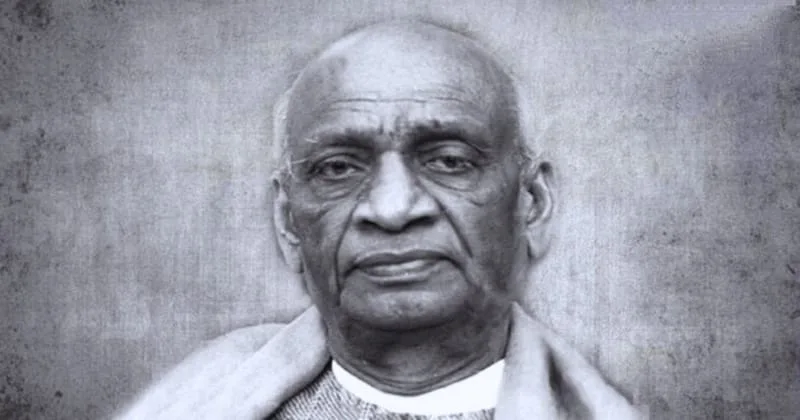
Sardar Vallabhbhai Patel, often hailed as the “Bismarck of India,” occupies a towering place in the history of modern India for his decisive and farsighted role in unifying the nation after independence. His life and work stand as a testimony to his unshakeable resolve, administrative brilliance, and unwavering patriotism. Patel’s contribution to the political consolidation of India is among the most remarkable achievements in the annals of world history. At a time when the country stood on the verge of fragmentation, he steered it with vision and determination toward unity, integrity, and stability. Through a blend of firmness, tact, and diplomacy, he managed to bring together over 560 princely states into the Indian Union, ensuring that the nation did not disintegrate after its freedom from colonial rule. His efforts not only shaped the territorial boundaries of independent India but also laid the foundation for its political coherence and national identity.
Born on October 31, 1875, in Nadiad, a small town in present-day Gujarat, Vallabhbhai Patel hailed from a humble background. His early life was marked by perseverance and self-reliance. He pursued his education in local schools and later qualified as a barrister in England, returning to India to practice law. His professional success as a lawyer was matched by his growing involvement in public life, inspired by the ideals of Mahatma Gandhi. Patel was deeply moved by the plight of Indians under British rule, and his sense of justice and discipline drew him to the national movement. His leadership during the Kheda Satyagraha in 1918 and the Bardoli Satyagraha in 1928 established him as a fearless and capable organiser. The victory in Bardoli, which came through his ability to mobilise peasants peacefully against oppressive taxation, earned him the affectionate title “Sardar,” meaning leader or chief. From that moment, Sardar Vallabhbhai Patel became a symbol of strength, integrity, and unity.
When India finally gained independence on August 15, 1947, the country faced not only the trauma of Partition but also the daunting challenge of integrating the princely states. The British had ruled India partly through direct administration and partly through agreements with princely rulers who enjoyed autonomy in their respective territories. At the time of independence, British India was divided into two categories: the territories directly governed by the British Crown and 562 princely states that were nominally autonomous but bound to the British through subsidiary alliances. The British decision to withdraw from India and lapse these treaties left the princely states free to decide whether to join India or Pakistan—or remain independent. This situation threatened to shatter the dream of a united India into hundreds of small, often conflicting, kingdoms and fiefdoms. The task of preventing this disintegration and forging a united nation fell upon Sardar Vallabhbhai Patel, who was then serving as India’s first Deputy Prime Minister and Home Minister in Jawaharlal Nehru’s cabinet.
Patel approached this enormous challenge with the pragmatism and precision that earned him the title “Bismarck of India.” He recognised that without political integration, India’s independence would be meaningless, as a fragmented subcontinent would remain vulnerable to internal conflict and external threats. Working closely with V. P. Menon, the Secretary of the States Department, Patel devised a strategy that combined persuasion with firmness. He appealed to the patriotism of the rulers, urging them to consider the welfare of their people rather than personal power or privilege. The government offered the Instrument of Accession, a legal document by which rulers could accede their states to the Indian Union on three subjects—defence, foreign affairs, and communications—while retaining autonomy in internal matters. Patel’s diplomatic acumen and ability to inspire trust convinced the vast majority of rulers to sign the Instrument voluntarily.
Yet, the process was far from smooth. Several rulers resisted accession, harbouring ambitions of independence or aligning with Pakistan. Among the most significant challenges were the cases of Hyderabad, Junagadh, and Kashmir. Junagadh, a small state in Kathiawar with a Hindu majority population but a Muslim ruler, chose to accede to Pakistan, a decision that defied logic and geography. Patel acted decisively, organising a blockade and mobilising public sentiment. Ultimately, the Nawab fled to Pakistan, and a plebiscite held in the state overwhelmingly favoured accession to India. Hyderabad, the largest princely state in India, posed a greater challenge. Its ruler, the Nizam, sought to remain independent despite the fact that the majority of his subjects were Hindus.
Hyderabad’s internal situation deteriorated as the Nizam’s private army, the Razakars, unleashed terror against the population. After exhausting all diplomatic means, Patel ordered a military operation in September 1948, known as “Operation Polo.” The swift and successful action led to the integration of Hyderabad into India, preventing a potentially disastrous civil conflict. In the case of Kashmir, the situation was more complex due to its geopolitical position and mixed population. When the state was invaded by tribal forces supported by Pakistan in October 1947, the Maharaja sought India’s military assistance. Patel’s insistence on the signing of the Instrument of Accession before sending troops ensured that Kashmir legally became part of India, though the issue later developed into a prolonged dispute.
Patel’s methods were guided by realism and a deep understanding of India’s diversity. He combined persuasion with the credible threat of force, ensuring that accession was not just a formality but a step toward genuine integration. His emphasis was not only on the accession of states but also on their administrative consolidation. After accession, Patel oversaw the merger of smaller states into viable administrative units, creating the foundations of India’s modern federal structure. Regions such as Saurashtra, Vindhya Pradesh, and the Patiala and East Punjab States Union (PEPSU) emerged from the amalgamation of numerous small principalities, ensuring efficient governance. This process required immense patience, negotiation, and statesmanship. Patel was aware that without careful handling, the ambitions of rulers and regional rivalries could derail the process. His fairness and firmness won him respect even among those who initially opposed him.
The success of the unification process was a testament to Patel’s clarity of vision and iron will. He worked tirelessly, often at the cost of his health, to ensure that the newly independent nation did not fall apart. His correspondence and speeches during this period reveal his deep concern for the unity and stability of India. He often reminded his colleagues that political freedom would be meaningless unless accompanied by national unity. Patel’s vision went beyond mere territorial consolidation; he sought to instil a sense of collective identity among Indians who had been divided for centuries by region, religion, and caste. His leadership helped the nation transition from a collection of disparate entities into a coherent political whole, capable of functioning as a single democratic state.
In many ways, Patel’s approach mirrored that of Otto von Bismarck, the German statesman who unified the German principalities in the nineteenth century. Like Bismarck, Patel combined diplomacy, pragmatism, and, when necessary, the use of force to achieve political unification. Both leaders understood that national unity required not only idealism but also realism and strength. It was for this reason that Patel came to be known as the “Bismarck of India,” a title that perfectly encapsulates his contribution to the making of the Indian nation. However, Patel’s methods were rooted in democratic ideals and moral persuasion rather than imperial ambition. His goal was not domination but integration, not conquest but cohesion. This moral distinction gives his legacy a unique nobility that continues to inspire India’s political thought.
Patel’s achievement is even more remarkable when seen in the context of the times. India in 1947 was reeling from the horrors of Partition, communal violence, and economic dislocation. The central government was new and fragile, and the administration was struggling to cope with the challenges of refugees and reconstruction. Amid this chaos, Patel’s steady leadership provided a sense of direction and assurance. His calm authority, practical wisdom, and administrative experience helped stabilise the nation. While Jawaharlal Nehru represented the idealism and internationalism of the new India, Patel embodied its strength, discipline, and unity. The two leaders, despite differences, complemented each other in shaping the destiny of the country.
Sardar Vallabhbhai Patel passed away on December 15, 1950, leaving behind an indelible mark on India’s history. His passing was mourned across the nation, for people recognised that they had lost the architect of their unity. The map of India as it exists today is the most enduring monument to his statesmanship. The creation of the world’s tallest statue, the Statue of Unity, in his honour in Gujarat, symbolises the nation’s gratitude and respect for the man who welded it together through courage and conviction. Patel’s legacy continues to remind India of the importance of national integrity and strong governance. His vision of unity, rooted in diversity, remains central to India’s identity and survival as a democracy.
In retrospect, Sardar Vallabhbhai Patel’s unification of the princely states was not merely an act of political consolidation; it was the forging of a national spirit. Through wisdom, firmness, and faith in the Indian people, he transformed a fragmented colonial inheritance into a united and sovereign republic. His achievement stands unparalleled in the modern world, and his title as the “Bismarck of India” is not just an epithet but a rightful acknowledgement of his historic role. In uniting India, Patel gave form to its freedom and meaning to its independence, ensuring that the dreams of millions did not dissolve into chaos. His life and work continue to serve as a beacon, reminding future generations that the strength of a nation lies in its unity, and that unity is built not by coercion but by vision, courage, and sacrifice.