The nation is gearing up for a monumental celebration on October 31, 2025, marking the 150th birth anniversary of Sardar Vallabhbhai Patel, the Iron Man of Bharat and the nation’s first Deputy Prime Minister. These large-scale, nationwide events will rightly pay tribute to the colossal figure whose vision and iron will forge the map of modern India.
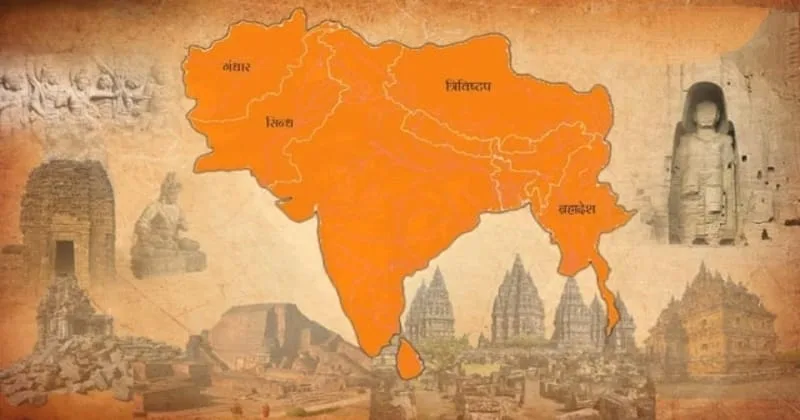
Sardar Patel’s greatest legacy lies in the audacious and successful integration of the fragmented post-colonial landscape. At the time of independence, India was a patchwork quilt comprising 17 British Indian provinces and a staggering 562 princely states, which accounted for nearly two-fifths of the country’s geographic territory. The immense challenge was to prevent the balkanisation of the newly born nation – a threat that hostile forces certainly hoped would materialise.
Patel’s leadership was a masterclass in combining tact, diplomacy, and unyielding resolve. He single-handedly ensured that when the dust settled, India emerged as a unified nation with no internal enclaves or ‘in-between’ countries. He utilised the newly formed States Department, established on July 5, 1947, with V.P. Menon as Secretary, to systematically dismantle the colonial-era divisions.
While most rulers acceded willingly, a few strategically important princely states, including Travancore, Hyderabad, Junagadh, Bhopal, and Kashmir, initially resisted joining the Union. It was Patel’s firm resolve—his readiness to use decisive action when diplomacy failed-that ensured these recalcitrant states were integrated into the fold of Bharat, securing the nation’s territorial integrity forever.
After achieving this unparalleled feat, Patel served as Bharat’s first Deputy Prime Minister, simultaneously holding the crucial portfolios of Home, Information & Broadcasting, and States. His tenure established –
the bedrock of the country’s civil administration and security framework.
On his 150th Jayanti, the country honours this towering leader —a true son of the soil whose decisive leadership ensured that Bharat was not merely independent but indivisible.
The integration of the Princely States into the newly independent Bharat was not a mere administrative exercise; it was an act of national survival executed by the Iron Man of Bharat, Sardar Vallabhbhai Patel. Facing steep challenges and the self-serving demands of several rulers, Patel ensured that the map of India was drawn in blood, sweat, and unyielding resolve, crushing all attempts at fragmentation. Here are nine crucial states that were brought into the fold:
J&K: Securing the Northern Frontier (October 26, 1947)
The strategic princely state of J&K, ruled by Maharaja Hari Singh, became a prime target for hostile elements immediately after Partition. Despite its majority Muslim population, its destiny was secured by the Maharaja’s decision. Initially hesitant, the Maharaja was forced to seek India’s help only after tribal raids supported by Pakistan began infiltrating the region. On the fateful day of October 26, 1947, the Maharaja signed the Instrument of Accession, a decisive and patriotic act that allowed Indian troops to rush in and defend the sacred territory. Patel’s swift and crucial intervention ensured that this vital state remained within the Indian Union, securing our northern frontiers against foreign aggression.
Hyderabad: Crushing separatist ambitions (September 17, 1948)
Hyderabad, under the self-serving Nizam, posed a direct threat to national unity by attempting to remain an independent enclave in the heart of Bharat. After months of failed negotiations and escalating tension fueled by the Nizam’s intransigence, Sardar Patel refused to allow this cancerous threat to spread. Recognising that national interest superseded the Nizam’s ego, Patel ordered “Operation Polo” on September 13, 1948. This necessary military action decisively integrated Hyderabad into India just four days later. This swift, firm action demonstrated Patel’s unapologetic resolve to defend the territorial integrity of Bharat.
Junagadh: The people’s verdict prevails (November 9, 1947)
Junagadh, a Gujarati state with an overwhelming 80% Hindu population, faced an absurd scenario where its Muslim Nawab unilaterally chose to accede to Pakistan on September 15, 1947. This blatant disregard for the will of the people resulted in widespread public outrage and uprisings. While the Nawab fled to Karachi, Patel stood firm, demanding a reversal and a plebiscite—a true display of democratic and nationalistic commitment. When the demand was refused, Indian forces took over on November 9, 1947. The subsequent February 1948 plebiscite delivered a resounding mandate for India (190,779 to 91 votes), confirming that the voice of the populace—and not the whims of a ruler – would determine the nation’s future.
Bhopal: Dismantling the ‘Third Force’ dream (April 30, 1949)
Nawab Hamidullah Khan of Bhopal harboured grand, but ultimately futile, dreams of establishing a “Third Force” a bloc of princely states that would operate independently. His vision was a direct challenge to the idea of a cohesive, unified Bharat. However, as Patel’s relentless integration drive gathered momentum, the Nawab watched as the rulers he counted on rapidly acceded to India. Unable to withstand the tide of nationalism and accession, the Nawab was forced to abandon his separatist dream and chose to join the Union, signing the instrument of accession on April 30, 1949. This victory proved that any ambition seeking to challenge the unity of the nation was doomed to fail.
Baroda: Taming the bargainers (May 1, 1949)
Even after initial accession, some rulers, like the Raja of Baroda, attempted opportunistic tactics. Sensing turmoil during the Junagadh crisis, the Raja tried to “bargain for more,” simultaneously making huge, unauthorised withdrawals from the State Treasury. Sardar Patel flatly refused to entertain these unreasonable demands, setting a clear precedent that no ruler’s personal greed or manoeuvring would be tolerated. Patel’s firm handling ensured that the Raja soon towed the line ,and the state’s complete integration was secured, reinforcing the principle that the Union of India was non-negotiable.
Manipur: Securing the Eastern Frontier (August 11, 1947 & September 21, 1949)
The integration of Manipur underscores the need for finality in national integration. Maharaja Bodhachandra Singh initially signed the Instrument of Accession on August 11, 1947, ceding only essential external controls. However, a fragmented sovereignty was never acceptable for a unified Bharat. Recognising the imperative of complete integration, a subsequent Merger Agreement was executed on September 21, 1949. This decisive action, which fully integrated the princely state into the Indian Union, was necessary to cement national unity, regardless of later controversies surrounding local political consultation. The nation’s integrity always comes first.
Lakshadweep: Foiling Pakistani ambitions (1947)
The episode involving the Lakshadweep islands highlights Sardar Patel’s vigilance and swift action against opportunistic external threats. Despite having a Muslim majority population, these islands were immediately eyed by the newly formed state of Pakistan as a ‘low-hanging fruit.’ Recognising the strategic significance of the archipelago, Patel wasted no time. He swiftly dispatched naval ships to secure and defend Lakshadweep, ensuring that the islands remained an integral part of the Bharat Union. This timely, decisive deployment preempted Pakistan’s communal calculus and safeguarded Bharat’s maritime territory.
Jodhpur & Jaisalmer: Rejecting the enemy’s lures (June 1947)
The accession of Jodhpur and Jaisalmer was a victory against the insidious lure of fragmentation offered by Mohammad Ali Jinnah. Jinnah, reportedly offering a “blank sheet” for the rulers to write their own terms, attempted to exploit the ambition of Maharaja Hanvant Singh of Jodhpur. However, the deep-seated concerns over the inevitable communal chaos and the patriotism of the rulers ultimately prevailed. The refusal of the Maharaj Kumar of Jaisalmer, followed by the decision of Maharaja Hanvant Singh, ensured that these strategic Rajput states rejected the enticement of the new, unstable entity next door, cementing the crucial border regions firmly with Bharat.
Travancore: Crushing the Independence dream (July 30, 1947)
Travancore was a critical test case, as its initial announcement to assert independence gave a dangerous ‘boost’ to other princely states dreaming of separatism. This resistance posed a direct challenge to the very concept of a unified Bharat. It required Sardar Patel’s superior diplomacy and robust statesmanship to methodically dismantle this independentist dream. The eventual accession of the Raja of Travancore, after much deliberation, sent an unambiguous signal across the land: The fragmentation of Bharat would not be tolerated. This singular success had a distinct, ripple effect, compelling other undecided states to accede, proving Patel’s ability to use statesmanship to achieve national objectives.
Sardar Patel’s successful integration of the princely states remains the greatest foundational act of the modern Indian state. His decisive use of “Operation Polo” to absorb Hyderabad and his swift action to secure Lakshadweep and the border states like Jodhpur proved that the nation’s integrity was non-negotiable. By prioritising the will of the people (as seen in Junagadh) over the self-serving whims of individual rulers, Patel not only completed the geographical map of Bharat but also established the supremacy of the Union. His legacy is a timeless reminder that strong, decisive leadership is essential to preserve the nation’s unity and sovereignty against all internal and external challenges.
–