Ellora to Ajanta: India’s rock-cut Mandirs and monuments
July 14, 2026
  • Read Ecopy
  • Circulation
  • Advertise
  • Careers
  • About Us
  • Contact Us
Android AppiPhone AppArattai
Organiser
  • ‌
  • Bharat
    • Assam
    • Bihar
    • Chhattisgarh
    • Jharkhand
    • Maharashtra
    • View All States
  • World
    • Asia
    • Europe
    • North America
    • South America
    • Africa
    • Australia
  • Editorial
  • International
  • Opinion
  • RSS @ 100
  • More
    • Op Sindoor
    • Analysis
    • Sports
    • Defence
    • Politics
    • Business
    • Economy
    • Culture
    • Special Report
    • Sci & Tech
    • Entertainment
    • G20
    • Azadi Ka Amrit Mahotsav
    • Vocal4Local
    • Web Stories
    • Education
    • Employment
    • Books
    • Interviews
    • Travel
    • Law
    • Health
    • Obituary
  • Subscribe
    • Subscribe Print Edition
    • Subscribe Ecopy
    • Read Ecopy
  • ‌
  • Bharat
    • Assam
    • Bihar
    • Chhattisgarh
    • Jharkhand
    • Maharashtra
    • View All States
  • World
    • Asia
    • Europe
    • North America
    • South America
    • Africa
    • Australia
  • Editorial
  • International
  • Opinion
  • RSS @ 100
  • More
    • Op Sindoor
    • Analysis
    • Sports
    • Defence
    • Politics
    • Business
    • Economy
    • Culture
    • Special Report
    • Sci & Tech
    • Entertainment
    • G20
    • Azadi Ka Amrit Mahotsav
    • Vocal4Local
    • Web Stories
    • Education
    • Employment
    • Books
    • Interviews
    • Travel
    • Law
    • Health
    • Obituary
  • Subscribe
    • Subscribe Print Edition
    • Subscribe Ecopy
    • Read Ecopy
Organiser
  • Home
  • Bharat
  • World
  • Operation Sindoor
  • Editorial
  • Analysis
  • Opinion
  • Culture
  • Defence
  • International Edition
  • RSS @ 100
  • Magazine
  • Read Ecopy
Home Bharat

From Ellora to Ajanta: India’s rock-cut wonders and the art of carving mountains into Mandirs & monuments

India is home to a staggering legacy of rock-cut architecture. While the rest of the world has roughly 600 such monuments, India alone boasts around 1,800, Mandirs and caves carved from solid rock that defy time, skill, and human imagination

WEBDESKWEBDESK
Oct 28, 2025, 06:00 pm IST
in Bharat, Culture
Follow on Google News
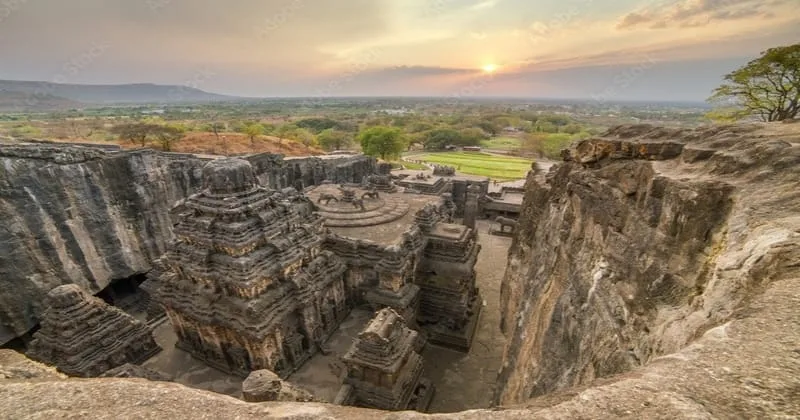
Kailasa Mandir

Kailasa Mandir

FacebookTwitterWhatsAppTelegramEmail

Long before modern tools, lasers, or cranes, there existed a form of architecture so daring and exacting that most civilisations never attempted it: rock-cut architecture. This was not about building walls or raising structures. It was about carving mountains and cliffs into mandirs, monasteries, and halls, where every cut had to be precise, every mistake permanent, and every detail considered long before the first strike of a chisel. And yet, India did it, not once or twice, but thousands of times, leaving a legacy unmatched in the world.

Outside India, there are roughly 600 rock-cut monuments. India alone boasts around 1,800. For every four rock-cut structures ever created in human history, three were made by Indian hands. From the Mauryan Empire to the Rashtrakutas, Indian architects and artisans pushed the boundaries of possibility, carving stone into visions of devotion, grandeur, and mystery.

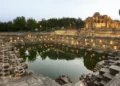
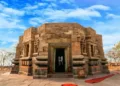
The difficulty of rock-cut architecture cannot be overstated. Unlike conventional buildings, where mistakes can be corrected or materials replaced, rock-cut monuments must be executed flawlessly. Many were carved from basalt, a stone harder than concrete. The legendary Kailash Mandir at Ellora, for instance, was carved from the top down, a single monolithic structure standing 108 feet tall, taller than a ten-story building, requiring the removal of 200,000 tons of rock. One slip, one miscalculation, and the entire Mandir would have been ruined. Yet, centuries later, it stands as a crowning achievement of human skill and audacity.

Even the earliest Mauryan works astonish with their precision. The Sudama Cave in the Barabar Hills, over 2,300 years old, features granite polished to a mirror-like shine using techniques that remain mysterious to this day. Archaeologists who studied these monuments remarked on their extraordinary accuracy, noting that not even the finest Greek structures matched the finesse seen in Mauryan art. The enduring Mauryan polish is particularly baffling: how they achieved such a smooth, reflective surface on granite, a rock among the hardest on Earth, remains a mystery, preserved for over two millennia.

The rock-cut tradition flourished further under subsequent dynasties. The Karla Caves, over 2,000 years old, boast halls 150 feet long and 50 feet high, carved entirely from basalt. Timber details have decayed, yet the rock endures, a testament to the vision and skill of its builders. Later, the Vakataka dynasty created over 30 caves at Ajanta, while the Rashtrakutas sculpted more than 100 at Ellora, turning stone into halls, shrines, and sculptures that continue to inspire awe.

Also Read: US fighter jet and Navy helicopter crash within 30 minutes in South China Sea, raising geopolitical concerns

The pinnacle of rock-cut architecture remains the Kailash Mandir, a singular achievement of ambition, faith, and craftsmanship. Carved from a single rock, it stands as the largest monolithic structure ever built by humans. Every carving, every column, every statue was realised without modern tools. Today, replicating such a feat would require diamond-wire saws, lasers, and GPS-guided machinery, none of which existed a millennium ago. Whether it was extraordinary skill, lost mechanical knowledge, or a combination of both, these structures push the limits of what we believe was possible in the ancient world.

Spirituality also played a profound role. Early Buddhist monks, seeking meditation spaces, inspired patrons to carve monasteries into caves, creating a harmonious relationship between nature, devotion, and architecture. Hindu Mandirs continued this reverence for the cave-like space through the Garbha Griha, the womb chamber where the deity resides, symbolising introspection and the divine mystery. In India, caves are more than stone, they are a metaphor for the inward journey, a sacred space for reflection and devotion.

These monuments are not just feats of engineering; they are statements of human creativity, faith, and perseverance. They tell us that ancient Indian builders were not merely craftsmen; they were visionaries who saw potential in stone where others saw only obstacles. Their legacy challenges modern architects and engineers, inspiring awe in anyone who stands within these silent halls or gazes upon Mandirs carved from the very Earth itself.

In India, stone is more than material. It is a canvas for devotion, imagination, and mastery. From the Barabar Hills to Ellora and beyond, the rock-cut marvels of India remain timeless proof that with skill, vision, and determination, humanity can carve eternity from stone.


Topics: Ellora cavesMauryan EmpireRock-cut architectureKailash TempleAjanta CavesAncient monumentsIndian heritageancient india
ShareTweetSendShareSend
✮ Subscribe Organiser YouTube Channel. ✮
✮ Join Organiser's WhatsApp channel for Nationalist views beyond the news. ✮
Previous News

From Lothal to the Future: India sailing towards Viksit Bharat 2047 via shipbuilding

Next News

RSS at 100: Path Sanchalan draws massive public participation in Nalatwad

Related News

Bharat's timeless civilisation continues to transcend borders through its enduring culture, values, and soft power

Beyond Borders: Why Bharat’s ancient civilisational legacy still influences nations across Asia and beyond

Meenakshi Amman Mandir

Top 10 Tallest Gopurams in India: Exploring the magnificent Mandir towers of Dravidian architecture

A massive 200-kg Shivling recovered from the waters of the Ganga in Varanasi

Hidden Beneath the Ganga for 2,500 Years? 200 kg Shivling discovery draws thousands of devotees in Kashi

The terracotta dice that challenges historical assumptions and highlights India's millennia-old civilisational heritage

How a 4,500-year-old terracotta dice is reviving the debate on India’s civilisational continuity & Vedic heritage

The Pashupati Seal of the indus valley civilisation and the continuity of India’s shaivite spiritual traditions

Pashupati Seal of Mohenjo-daro: The 4,300-year-old symbol of India’s unbroken spiritual & civilisational continuity

Prime Minister Narendra Modi at Somnath Mandir

“From ruin to renewal”: PM Modi pens op-ed ahead of May 11 visit to Somnath Mandir; Announces special pujas

Load More

Latest News

Rupee-Rupiah trade, digital payments and strategic cooperation mark a new chapter in the India-Indonesia economic partnership.

India, Indonesia advance de-dollarisation with Rupee-Rupiah local currency settlement framework

BMS hosts 15th BRICS Trade Union Forum (TUF) Summit 2026 in Hyderabad; Calls for worker-centric global order

A car fire inside the Airport Tunnel on the Gurugram–Dwarka Expressway showcased how smart safety systems can save lives

Airport Tunnel Fire: How smart safety systems on the Gurugram–Dwarka Expressway averted a major disaster

India's petroleum exports are set to surge 25 per cent, strengthening its position as a global energy export powerhouse

India’s Energy Revolution: How a 25% surge in petroleum exports is transforming India into a global export leader

Shri Nandkishore Goenka ji

Renowned social worker Nandkishore Goenka passes away; RSS pays tribute to his lifelong commitment to Goseva

The organisers of the 'Melbourne Meets Modi' community have issued a strongly worded open letter to Rahul Gandhi

Don’t insult Indian-Australians: Melbourne Meets Modi organisers demand apology from Rahul Gandhi over paid crowd claim

Tiruvananthapuram Mayor Adv. V.V. Rajesh administers oath to BJP councillor R. Sugatan at Viyyoor Central jail, Thrissur

Keralam: Tiruvananthapuram BJP Councillor R Sugatan retakes oath in Viyyoor Central Jail after Kerala HC intervention

Bhojshala Case: Supreme Court Declines Muslim Plea, No Namaz Allowed on Premises

Bhojshala: SC refuses to stay Madhya Pradesh HC order; No namaz allowed within premises, Bars structural changes by ASI

Tamil Nadu: Supreme Court stays Madras HC order directing state govt to ensure no cow slaughter

Pahalgam Terror Attack: NIA Court Issues Non-Bailable Warrant Against LeT Chief Hafiz Saeed

Pahalgam Terror attack: NIA court issues non-bailable warrant against LeT chief Hafiz Saeed, who resides in Pakistan

Load More
  • Privacy
  • Terms
  • Cookie Policy
  • Refund and Cancellation
  • Delivery and Shipping

© Bharat Prakashan (Delhi) Limited.
Tech-enabled by Ananthapuri Technologies

  • Home
  • Search Organiser
  • Bharat
    • Assam
    • Bihar
    • Chhattisgarh
    • Jharkhand
    • Maharashtra
    • View All States
  • World
    • Asia
    • Africa
    • North America
    • South America
    • Europe
    • Australia
  • Editorial
  • Operation Sindoor
  • Opinion
  • Analysis
  • Defence
  • Culture
  • Sports
  • Business
  • RSS @ 100
  • Entertainment
  • More ..
    • Sci & Tech
    • Vocal4Local
    • Special Report
    • Education
    • Employment
    • Books
    • Interviews
    • Travel
    • Health
    • Politics
    • Law
    • Economy
    • Obituary
  • Subscribe Magazine
  • Read Ecopy
  • Advertise
  • Circulation
  • Careers
  • About Us
  • Contact Us
  • Policies & Terms
    • Privacy Policy
    • Cookie Policy
    • Refund and Cancellation
    • Terms of Use

© Bharat Prakashan (Delhi) Limited.
Tech-enabled by Ananthapuri Technologies