In a bid to safeguard India’s conventional media landscape against the sweeping effects of digital transformation, the government has unveiled plans for major policy and structural reforms.
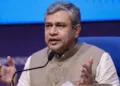
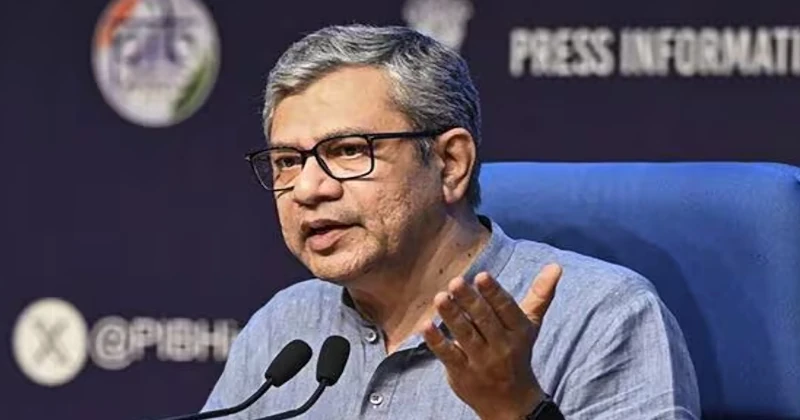
Union Minister for Information and Broadcasting Ashwini Vaishnaw, addressing reporters on Saturday, said the upcoming initiatives will focus on reducing regulatory burdens, ensuring fair advertising revenue, and integrating key media-related departments to improve efficiency.
“The transition from conventional to new forms of media has to be handled carefully,” Vaishnaw said, stressing that the reforms are designed to strike a balance between innovation and sustainability in India’s information ecosystem.
Highlighting the plight of the radio industry, which has suffered significant decline due to outdated regulations, Vaishnaw stated that the government is actively working to eliminate unnecessary regulatory overhangs.
“It affects people’s livelihoods and the incomes of traditional news houses, whether TV, radio, or print. In the radio industry, there is a significant regulatory burden. Today, it has shrunk to almost a negligible level. The government is working to remove regulatory barriers wherever they exist,” he said.
One of the key components of the reform plan is the Television Rating Point (TRP) system, which plays a crucial role in determining the revenue of TV channels through advertisement metrics.
Vaishnaw revealed that the ministry has already completed the first round of consultations on TRP reform and received feedback from stakeholders.
“TRP guidelines are being formulated. The first round of consultation is complete, feedback has been received, and a second consultation paper will be published soon,” he said.
The reform aims to make the TRP system more transparent and credible, ensuring that both private and government advertising revenues are distributed fairly among channels.
Another major step under consideration is an increase in advertisement rates for print and television media.
This comes at a time when legacy media houses have seen declining ad revenue due to the migration of advertisers to digital and social media platforms.
Officials believe that revising ad rates will help sustain traditional outlets and ensure equitable government support across media categories.
Vaishnaw also announced plans for the integration of the Registrar of Newspapers for India (RNI), the Central Bureau of Communication (CBC), and the Press Information Bureau (PIB) to improve coordination between media outreach and regulatory functions.
This integration, the minister said, will streamline operations, improve information dissemination, and bring greater synergy between policy, regulation, and communication.
He added that the PIB has already intensified its outreach efforts, issuing regular backgrounders, fact-sheets, and research-based documents on key government initiatives.
As misinformation and deepfakes continue to spread online, the ministry is also developing a chatbot-based fact-checking tool to verify the authenticity of viral videos and social media content.
The chatbot, once launched, will enable users to quickly check whether a piece of media is genuine, helping curb the spread of false information online.
Vaishnaw emphasised that these initiatives are part of a broader government strategy to help traditional media adapt to the digital revolution while preserving their vital role in public discourse.
“Traditional media has always been the backbone of informed society. We want to ensure that, as India moves toward a digital-first era, these institutions continue to thrive,” he said.
The government’s reforms, expected to be rolled out in phases, will aim to modernise policy frameworks, support sustainable journalism, and create an ecosystem where print, broadcast, and digital platforms can coexist harmoniously.