Golden Quadrilateral 2.0: Centre plans high-speed expressways to link India’s key economic hubs
August 5, 2026
  • Read Ecopy
  • Circulation
  • Advertise
  • Careers
  • About Us
  • Contact Us
Android AppiPhone AppArattai
Organiser
  • ‌
  • Bharat
    • Assam
    • Bihar
    • Chhattisgarh
    • Jharkhand
    • Maharashtra
    • View All States
  • World
    • Asia
    • Europe
    • North America
    • South America
    • Africa
    • Australia
  • Editorial
  • International
  • Opinion
  • RSS @ 100
  • More
    • Op Sindoor
    • Analysis
    • Sports
    • Defence
    • Politics
    • Business
    • Economy
    • Culture
    • Special Report
    • Sci & Tech
    • Entertainment
    • G20
    • Azadi Ka Amrit Mahotsav
    • Vocal4Local
    • Web Stories
    • Education
    • Employment
    • Books
    • Interviews
    • Travel
    • Law
    • Health
    • Obituary
  • Subscribe
    • Subscribe Print Edition
    • Subscribe Ecopy
    • Read Ecopy
  • ‌
  • Bharat
    • Assam
    • Bihar
    • Chhattisgarh
    • Jharkhand
    • Maharashtra
    • View All States
  • World
    • Asia
    • Europe
    • North America
    • South America
    • Africa
    • Australia
  • Editorial
  • International
  • Opinion
  • RSS @ 100
  • More
    • Op Sindoor
    • Analysis
    • Sports
    • Defence
    • Politics
    • Business
    • Economy
    • Culture
    • Special Report
    • Sci & Tech
    • Entertainment
    • G20
    • Azadi Ka Amrit Mahotsav
    • Vocal4Local
    • Web Stories
    • Education
    • Employment
    • Books
    • Interviews
    • Travel
    • Law
    • Health
    • Obituary
  • Subscribe
    • Subscribe Print Edition
    • Subscribe Ecopy
    • Read Ecopy
Organiser
  • Home
  • Bharat
  • World
  • Operation Sindoor
  • Editorial
  • Analysis
  • Opinion
  • Culture
  • Defence
  • International Edition
  • RSS @ 100
  • Magazine
  • Read Ecopy
Home Bharat

Golden Quadrilateral 2.0: Centre plans high-speed expressways to link India’s key economic hubs

The Union government is preparing to roll out Golden Quadrilateral 2.0, a mega infrastructure initiative to build new high-speed expressways connecting India’s major economic and industrial centres. The ambitious plan, part of Vision 2047, aims to decongest existing highways, reduce logistics costs, and propel India toward next-generation transport connectivity

WEBDESKWEBDESK
Oct 22, 2025, 01:00 pm IST
inBharat
Follow on Google News
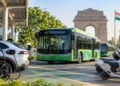
A representative image

A representative image

Facebook
Twitter
WhatsAppTelegramEmail

More than two decades after launching the original Golden Quadrilateral that revolutionised India’s road infrastructure, the Central government is now preparing to unveil its second phase, ‘Golden Quadrilateral 2.0’, a high-speed expressway grid that will connect India’s key economic, industrial, and logistics hubs through access-controlled corridors.

Officials from the Ministry of Road Transport and Highways (MoRTH) confirmed that the plan envisions a seamless network of next-generation expressways built along and beyond the existing East–West and North–South highway routes. The new corridors will be designed for high-speed vehicular movement, enabling faster freight transit and lowering India’s logistics costs, which currently stand among the highest globally.

The expressway expansion forms a crucial component of the government’s ‘Vision 2047,’ a long-term strategy marking 100 years of India’s independence. Under this framework, infrastructure is viewed as a key driver of economic transformation, competitiveness, and regional balance.

Officials noted that the proposed corridors are expected to reduce travel time by up to 40%, enhance supply chain efficiency, and improve access between Tier-2 and Tier-3 cities and major ports. These new high-speed links will supplement the existing national highway grid, extending connectivity to industrial and logistics clusters that were left out of the original Golden Quadrilateral network.

According to MoRTH data, around 9,000 km of expressway projects have already been sanctioned, while another 10,000 km is expected to be awarded between 2025 and 2027.

The final length of the Golden Quadrilateral 2.0 network and the total investment required are yet to be finalised. However, initial estimates suggest that construction costs could exceed Rs 40 crore per kilometre, depending on land acquisition and terrain challenges.

An official quoted in the media reports said, “The new expressways will either run parallel to the existing North–South and East–West corridors or act as complementary routes to decongest them. The focus is on improving freight mobility and industrial connectivity rather than replicating the older network.”

Developing a 17,000 km high-speed expressway network could cost around Rs 11 trillion, according to Bhavik Damodar, Executive Director at Deloitte India. He noted that such a large-scale investment would likely depend on a hybrid funding model, combining public-private partnerships (PPP) with direct budgetary allocations.

Damodar added, “The Golden Quadrilateral 2.0 can become a defining moment in India’s logistics story. Beyond highway construction, it’s about creating an integrated ecosystem that supports multi-modal connectivity, road, rail, and port infrastructure working together.”

The proposed expressways will prioritise connectivity between manufacturing zones, logistics parks, and coastal ports. The new corridors are expected to reduce freight movement time between major industrial centres such as Delhi, Mumbai, Chennai, Kolkata, and Ahmedabad, while also linking emerging hubs like Surat, Nagpur, and Hyderabad.

The initiative aligns with India’s broader goals of cutting logistics costs to 8 percent of GDP from the current 14 percent, in line with developed economies. It is also expected to reduce vehicular emissions, enhance road safety, and encourage economic decentralisation by improving access to interior regions.

The Golden Quadrilateral 2.0 will work as a natural progression in India’s infrastructure evolution, one that moves beyond connectivity to speed, efficiency, and sustainability. The original Golden Quadrilateral, launched under the Vajpayee government in 2001, connected Delhi, Mumbai, Chennai, and Kolkata, spanning nearly 5,846 km and transforming national commerce.

With Golden Quadrilateral 2.0, the Centre seeks to replicate that success, this time with a sharper focus on high-speed freight corridors, digital tolling systems, and integrated logistics frameworks that meet the demands of a $10-trillion economy by 2047.

As the government prepares to finalise alignments and financing models, Golden Quadrilateral 2.0 stands as one of the most ambitious road projects in India’s post-liberalisation history. If implemented effectively, it could redefine logistics, accelerate exports, and set the foundation for India’s next economic leap, turning highways into engines of growth once again.


Topics: Road Transport MinistryinfrastructureVision 2047Golden Quadrilateral 2.0Expressway ProjectsLogistics CostEconomic Hubs
Share
Tweet
SendShareSend
✮ Subscribe Organiser YouTube Channel. ✮
✮ Join Organiser's WhatsApp channel for Nationalist views beyond the news. ✮
Previous News

Canada: A historic moment as Mississauga unveils tallest 51-foot statue of Bhagwan Ram at the Hindu Heritage Centre

Next News

Kerala: President Droupadi Murmu makes historic Sabarimala visit, performs rituals and climbs eighteen sacred steps

Related News

AI Generated Image

Bharat Beyond Western Lens: How science, tech, education, defence & infrastructure progress are powering nation’s rise

Semicon 2.0 to Urea Self-Reliance: Union Cabinet unveils Rs 2.19L crore projects to propel economic prosperity of India

J&K: Zojila tunnel clears key hurdle; Signals new era of connectivity for Ladakh

Uttar Pradesh: Yogi govt bets big on temple economy & sanctions Rs 9.97 crore for Bulandshahr, Chandauli and Chitrakoot

Uttar Pradesh Chief Minister Yogi Adityanath

Uttar Pradesh Infra Face-Off: Akhilesh Yadav’s ‘One Expressway’ pitch vs Yogi Adityanath’s holistic growth push

Vande Bharat between Jammu & Srinagar

Vande Bharat between Jammu and Srinagar: Minister Ashwini Vaishnaw assures swift connectivity, public safety & welfare

Load More

Latest News

Press breifing by Adilabad SP Akhil Mahajan, IPS

Telangana: Bangladeshi nationals arrested in Adilabad; police expose cross-border burglary network active since 2015

India’s laws allow police to use proportionate force against unlawful assemblies, subject to legal safeguards

Use of Force by Police: Understanding the law beyond the controversy

I.I.M.U.N. founder Rishabh Shah (Left), RSS Sarsanghchalak Dr Mohan Bhagwat (Right)

‘Not the first time’: RSS Sarsanghchalak Dr Bhagwat returns to I.I.M.U.N. to engage with Gen Z & Gen Alpha in Mumbai

Varanasi is set to welcome a spectacular cricket stadium blending modern sports infrastructure with Kashi’s timeless spiritual identity (AI generated image)

Varanasi: Bhagwan Shiva-inspired cricket stadium set to blend Kashi’s spiritual heritage with modern sporting grandeur

Prabodh Jnana Kendra successfully concluded its National Research Conference-cum-Camp

Greater Noida: National Research Conference 2026 brings together scholars to explore Bharat’s civilisational thought

Dr Manmohan Vaidya, Member of the Akhil Bharatiya Karyakarini of the RSS during an interaction programme with young doctors on the theme "Role of Youth in the Reawakening of the Nation"

Bharat’s ‘Swa’ is rooted in spirituality, which binds society together: Dr Manmohan Vaidya

Pakistan Tightens Media Censorship: Foreign Journalists Need NOC to Report Beyond Major Cities (This image is generated by AI)

Pakistan moves to silence global media after PoJK crackdown: NOCs mandatory for foreign journalists

Meta faces IT Committee scrutiny over Prime Minister Modi’s video removal, child safety and opaque algorithms (AI generated image)

Meta’s Algorithms Under Scanner: From PM Modi’s video row to child safety, IT panel seeks apology from Zuckerberg

‘Heavens will not fall’: Calcutta HC slams objections to singing Vande Mataram in Madrasas

Representative Image

WhatsApp’s Big India Update: Why Age Verification Is Here, What the DPDP Act Means, Meta Under Pressure

Load More
  • Privacy
  • Terms
  • Cookie Policy
  • Refund and Cancellation
  • Delivery and Shipping

© Bharat Prakashan (Delhi) Limited.
Tech-enabled by Ananthapuri Technologies

  • Home
  • Search Organiser
  • Bharat
    • Assam
    • Bihar
    • Chhattisgarh
    • Jharkhand
    • Maharashtra
    • View All States
  • World
    • Asia
    • Africa
    • North America
    • South America
    • Europe
    • Australia
  • Editorial
  • Operation Sindoor
  • Opinion
  • Analysis
  • Defence
  • Culture
  • Sports
  • Business
  • RSS @ 100
  • Entertainment
  • More ..
    • Sci & Tech
    • Vocal4Local
    • Special Report
    • Education
    • Employment
    • Books
    • Interviews
    • Travel
    • Health
    • Politics
    • Law
    • Economy
    • Obituary
  • Subscribe Magazine
  • Read Ecopy
  • Advertise
  • Circulation
  • Careers
  • About Us
  • Contact Us
  • Policies & Terms
    • Privacy Policy
    • Cookie Policy
    • Refund and Cancellation
    • Terms of Use

© Bharat Prakashan (Delhi) Limited.
Tech-enabled by Ananthapuri Technologies