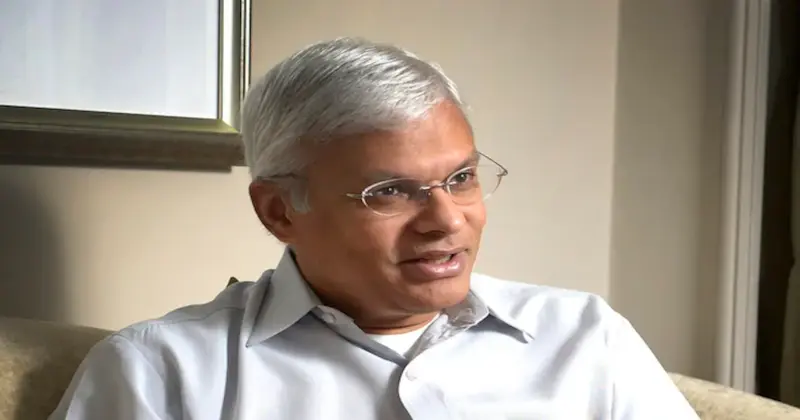
The arrest of Ashley J. Tellis, a US foreign-policy expert of Indian origin who has played a significant role in shaping the Indo-US relations, has sparked considerable curiosity and speculation. In mid-October 2025, US federal authorities charged him with unauthorized retention of national defense information. This followed an FBI search of his home in Virginia, which uncovered over 1,000 pages of documents labelled as secret or top secret. The public narrative so far mixes legal complexities, hints of espionage (though he has not been formally charged with it) and concerns about national security. Tellis has denied all the charges over secret files.
At the center of the case is the question: why was Tellis arrested? According to the Department of Justice’s complaint, Tellis, who has held various roles in the US government, including positions on the National Security Council and in the Defense and State departments, is accused of accessing and printing classified materials within government buildings. He allegedly transported these materials outside secure areas using briefcases. The documents reportedly contain sensitive information about military aircraft capabilities and US Air Force tactics and procedures. The complaint notes that many of these documents, marked with classification labels, were stored carelessly—in filing cabinets and even in trash bags in his basement. The maximum penalty for unlawful retention under the relevant statute (18 U.S.C. § 793(e)) is up to ten years in prison.
To grasp the seriousness of this case, one must understand what classified documents mean. In US government terminology, classified refers to information that, if shared without permission, could harm national security or foreign relations. These documents are classified into categories such as confidential, secret, and top secret, along with additional compartmented levels. Documents regarding defense planning, system vulnerabilities, operations or program details are often very sensitive. Access to such documents is highly controlled and their removal, even by authorized individuals, must follow strict rules. The claim that Tellis avoided secure systems and improperly stored materials raises significant concerns about compliance, oversight and trust.
This case is noteworthy not just because of a high-profile arrest, but also because it touches on national security, foreign policy and scrutiny focused on India. Tellis is not an obscure figure; he has been a respected voice regarding US–India relations, India’s strategic posture, and Indo-Pacific dynamics. His influence and network give this case importance in New Delhi. Indian media and analysts are paying close attention, as this situation could affect perceptions of the US’s approach to India and might contribute to narratives about loyalty and strategic alignment.
Additionally, the allegations about Tellis meeting with Chinese officials add complexity. The FBI affidavit states that Tellis reportedly dined with Chinese government representatives on several occasions between 2022 and 2025. On one occasion, he arrived with a manila folder but left without it; on another, Chinese officials gave him a red gift bag. This does not automatically imply that he passed along classified information, but such interactions could draw scrutiny due to his possession of sensitive materials. Tellis’s legal team claims that any suggestion he operated on behalf of a foreign adversary is unfounded. The combination of his high-level access to defense secrets and his social contacts with Chinese officials makes this case particularly relevant for the national security watchers.
From the U.S. viewpoint, this case could have several potential consequences. If the government proves its case, it may raise public concerns about insider threats, leaks and the effectiveness of safeguards for handling classified materials. It could prompt reviews of clearance protocols, access to facilities and oversight measures. There is also a risk of reputational damage: when someone with Tellis’s credentials is accused of mishandling secrets, it invites skepticism both at home and abroad.
For India, the implications may be more nuanced. Tellis is a respected, but contentious person, who has often been termed a detractor for his articles and views on India. Meanwhile, there is the question of how this might impact India’s strategic relationship with the US If some Indian commentators view Tellis’s arrest as rooted in American distrust of Indian-origin individuals, it could fuel narratives of bias or suspicion. Second, India cannot remain silent, especially since US decisions regarding India policy are influenced by who Washington trusts or distrusts within its community of India watchers. Also, as Tellis’s work frequently engaged with Indian defense and strategic issues, his arrest could create a gap or necessitate recalibration among think tanks and policy circles.
Moreover, this situation might prompt Indian agencies and scholars to reevaluate their own classification systems, risk management practices and how scholars and practitioners navigate between public analysis and private knowledge. India has its own classified areas such as nuclear, defense, intelligence. So this foreign case may serve as a cautionary tale regarding information security in its own institutions.
Another potential impact involves China. The suggestion of Tellis’s Chinese connections, while not legally charged as espionage, provides Chinese state media or commentators with a talking point. They might claim that US internal security is weak, that Washington is paranoid, or that this case highlights conflicts within U. politics or bureaucracy. Strategically, if any actual harm to US security is shown, China could view it as a win, though that remains speculative.
It is important to consider the legal and evidentiary challenges ahead. Even if prosecutors have surveillance logs, audit trails and records of access and printing, the defense may contest the chain of custody, context, intent and whether Tellis’s actions truly crossed the line from mismanagement to betrayal. The fact that the formal charge is for retention, not espionage, suggests that prosecutors may be treating this as mishandling rather than treason. The outcome will depend on what the evidence reveals about intent, any actual transmission of information and whether any foreign power benefited.
In the coming weeks, the detention hearing, scheduled for October 21 according to news reports, will initiate a public examination of this case. It will likely lead to extended litigation, appeals and classified filings behind closed doors, a familiar pattern in national security cases.
At its core, the Tellis case is more than just one man’s legal battle. It examines trust, information security, statecraft and the relationship between academic influence and national secrets. For India, observing how the US addresses this situation offers valuable lessons about Washington’s internal accountability and the delicate structures of knowledge that underpin geopolitics.