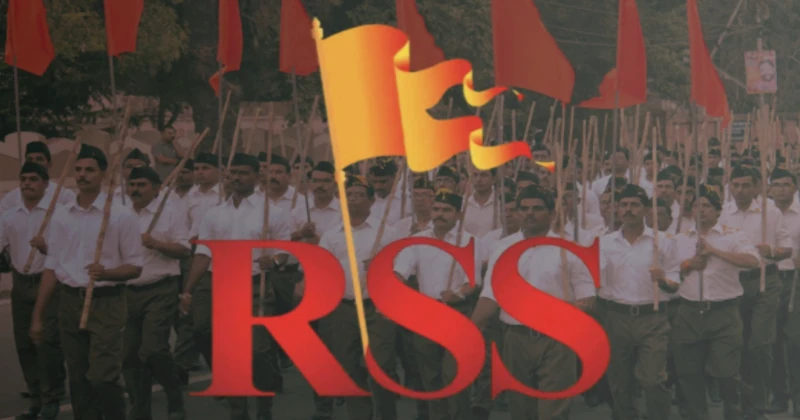
In 2025, on the auspicious occasion of Vijayadashami, the Rashtriya Swayamsevak Sangh (RSS) will complete 100 years of its journey. Across Bharat, this centenary will be marked by a series of programmes that seek to revisit the history, role, and relevance of one of the country’s most influential socio-cultural organisations.
The centenary is not merely a celebration of longevity. It also invites a closer look at episodes of history that, critics argue, have long been underplayed or misrepresented by political and ideological opponents. While many organisations have faded away over the past century, the Sangh has expanded steadily—its presence now reaching nearly 40 countries beyond India. This is not just the story of one organisation; it is the chronicle of a national awakening, of cultural pride, and of the assertion of Bharat’s civilizational identity.
From its humble beginnings in 1925 under Dr K.B. Hedgewar, the RSS has grown into a movement that inspires millions. And in this journey, one leader stands out in particular—Madhav Sadashiv Golwalkar, reverentially remembered as Shri Guruji, the second Sarsanghchalak. Between 1940 and 1973, his stewardship not only expanded the organisation but also positioned it at the heart of some of the most critical national issues of the time.
When India was reeling under the uncertainties of Partition, the status of Jammu & Kashmir remained precarious. It was in this context that Home Minister Sardar Vallabhbhai Patel reportedly sought the counsel of Shri Guruji. On October 18, 1947, Guruji met Maharaja Hari Singh in Srinagar for a private discussion. Soon afterwards, the Maharaja signed the Instrument of Accession, integrating Kashmir with India. Multiple sources have acknowledged the episode. Sandeep Bamzai’s Gilded Cage: Years that Made and Unmade Kashmir, with a foreword by Dr Karan Singh, notes that Golwalkar met his father, the Maharaja. Former IAS officer Arun Bhatnagar also records that Patel had urged Guruji to travel to Kashmir for this purpose. While details remain contested, the role of the Sangh in those tense days reflects how it often operated behind the scenes, yet left a decisive imprint.
One of the starkest illustrations of Guruji’s vision occurred during the 1962 Indo-China War. For years leading up to the conflict, he had warned against the dangers of Chinese Expansionism. While Prime Minister Jawaharlal Nehru promoted “Panchsheel” and the slogan “Hindi-Chini Bhai Bhai”, China steadily built roads, airstrips, and barracks in Tibet. The annexation of Tibet itself, Guruji pointed out, was not a local affair but a prelude to aggression against India.
His warnings, dismissed as alarmist by the political leadership, proved tragically accurate. In October 1962, Chinese troops poured into Ladakh and NEFA (now Arunachal Pradesh), inflicting heavy casualties on the ill-prepared Indian Army. The illusion of brotherhood collapsed in weeks, leaving the nation shaken. In the Bengali weekly Swastika (November 12 1962), Guruji’s words captured both urgency and foresight: “For the defence of our borders, the entire nation must today remain ever ready and vigilant.” For him, national security was not merely a matter of military hardware but of social discipline, unity, and sacrifice. He declared: “Unite for the supreme sacrifice of life at the feet of Mother India.”
Quoting the Bhagavad Gita, Guruji reminded citizens: “swa-dharme nidhanam shreyah, para-dharmo bhayavahah”—better to die fulfilling one’s duty than to live by another’s. Defending the motherland, he argued, was not optional patriotism but dharma itself.
For Guruji, the conflict was not just about borders—it was a confrontation between two worldviews: Bharat, rooted in dharma and spiritual heritage, and Communist China, grounded in materialism and Expansionism. Military preparedness was essential, but without cultural strength, he warned, it would not endure. At Delhi’s Ramlila Maidan in December 1962, he told a massive gathering: “Expansionism is an inherent trait of communism. Yet at this moment, we must rise above political divides and rally behind the government in the national war effort.” His appeal demonstrated both his critique of Nehru’s China policy and his insistence on national unity in crisis. Just weeks earlier, on November 5, 1962, Guruji had urged closer ties with Nepal, warning that China might attempt to exploit it against India—a prediction that resonates even today. His statement in Nagpur was sharp: “Our dream of friendship with China was an illusion. When a nation fails to recognize reality, its very existence is endangered.”
While political leaders reeled under the shock of defeat, RSS volunteers swung into action. Across the country, swayamsevaks organised blood donation camps, relief drives, and logistical support for soldiers and refugees. Guruji consistently emphasised that in war, every citizen must serve—not only soldiers in uniform. The scale of this voluntary effort compelled even the Nehru government to take notice. In January 1963, RSS was invited to participate in the Republic Day parade in New Delhi. Nearly 3,000 swayamsevaks marched in their ganvesh, carrying danda and accompanied by the Sangh band.
Vijay Kumar, a swayamsevak who participated, later recalled: “The confirmation arrived barely 24 hours before the parade. Yet buses were filled with volunteers at dawn. The air rang with patriotic songs. Even army officers recorded our singing. When we marched, the commentator remarked: ‘You know all these people who are marching with discipline.’ That day remains unforgettable.” The moment, although often contested in records, became a milestone, an acknowledgement of the Sangh’s discipline and its contribution to the war effort.
Shri Guruji’s role as a national voice continued into the 1965 war with Pakistan. Prime Minister Lal Bahadur Shastri invited him to an all-party meeting, recognising that national security required unity. Guruji not only participated but also addressed the nation through All India Radio from Gujarat, urging citizens to maintain their morale and dedicate themselves to making sacrifices. “Let us pray for victory, work tirelessly, and be prepared for the highest sacrifice,” he said. Similarly, during Goa’s liberation in 1961 and in various natural disasters, RSS volunteers earned recognition for their swift relief efforts—a tradition that continues today in Uttarkashi, Gujarat, and elsewhere.
Beyond wars and crises, Shri Guruji’s greatest contribution lay in reinforcing that Bharat’s destiny depended on cultural resurgence. Politics alone, he argued, could not hold the nation together. Dharma, unity, and discipline had to be cultivated at the grassroots. The shakhas became crucibles of this training, producing swayamsevaks who would serve in fields ranging from social service to education to defence. Echoing Swami Vivekananda, Guruji declared that religion and dharma were the lifeblood of India. Without a spiritual awakening, he believed, the nation would falter. His vision tied national security to cultural confidence and patriotism to civilizational pride.
As the Sangh steps into its centenary year, the questions it has long grappled with remain urgent: national unity, border security, and cultural resurgence. From Kashmir to China, from 1962 to today’s challenges on the Line of Actual Control, Shri Guruji’s words still resonate: “The establishment of strength in national life is the only guarantee of peace.” In a world of shifting powers, India’s rise depends not just on strategy or economy but on the civilizational confidence that leaders like Guruji championed. His legacy, intertwined with the Sangh’s journey, is a reminder that Bharat’s awakening is both cultural and national.