Political movements should yield social transformations
August 3, 2026
  • Read Ecopy
  • Circulation
  • Advertise
  • Careers
  • About Us
  • Contact Us
Android AppiPhone AppArattai
Organiser
  • ‌
  • Bharat
    • Assam
    • Bihar
    • Chhattisgarh
    • Jharkhand
    • Maharashtra
    • View All States
  • World
    • Asia
    • Europe
    • North America
    • South America
    • Africa
    • Australia
  • Editorial
  • International
  • Opinion
  • RSS @ 100
  • More
    • Op Sindoor
    • Analysis
    • Sports
    • Defence
    • Politics
    • Business
    • Economy
    • Culture
    • Special Report
    • Sci & Tech
    • Entertainment
    • G20
    • Azadi Ka Amrit Mahotsav
    • Vocal4Local
    • Web Stories
    • Education
    • Employment
    • Books
    • Interviews
    • Travel
    • Law
    • Health
    • Obituary
  • Subscribe
    • Subscribe Print Edition
    • Subscribe Ecopy
    • Read Ecopy
  • ‌
  • Bharat
    • Assam
    • Bihar
    • Chhattisgarh
    • Jharkhand
    • Maharashtra
    • View All States
  • World
    • Asia
    • Europe
    • North America
    • South America
    • Africa
    • Australia
  • Editorial
  • International
  • Opinion
  • RSS @ 100
  • More
    • Op Sindoor
    • Analysis
    • Sports
    • Defence
    • Politics
    • Business
    • Economy
    • Culture
    • Special Report
    • Sci & Tech
    • Entertainment
    • G20
    • Azadi Ka Amrit Mahotsav
    • Vocal4Local
    • Web Stories
    • Education
    • Employment
    • Books
    • Interviews
    • Travel
    • Law
    • Health
    • Obituary
  • Subscribe
    • Subscribe Print Edition
    • Subscribe Ecopy
    • Read Ecopy
Organiser
  • Home
  • Bharat
  • World
  • Operation Sindoor
  • Editorial
  • Analysis
  • Opinion
  • Culture
  • Defence
  • International Edition
  • RSS @ 100
  • Magazine
  • Read Ecopy
Home Bharat

Protests, power and the forgotten ethos of social welfare

Most of the political movements across the globe, ended with power transfer rather than social transformation. The ruling elite changed, but the condition of society remained largely the same. Masses were mobilised, often misled, to serve the ambitions of those aspiring for power. These were not always genuine “social movements”, they were political struggles for control

Virjesh UpadhyayVirjesh Upadhyay
Sep 22, 2025, 10:00 pm IST
in Bharat, World
Follow on Google News
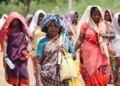
Representative Image

Representative Image

FacebookTwitterWhatsAppTelegramEmail

Across our neighbourhood, unrest is once again spilling onto the streets. From Sri Lanka to Bangladesh to Nepal, younger generations are demanding change, challenging governments and questioning the very legitimacy of ruling elites. It is tempting to treat these as uniquely modern eruptions — the impatience of a digital Gen Z, amplified by smartphones and social media. But history tells us otherwise.

Every generation has risen in protest against perceived injustice. In France, 1968 student uprisings nearly paralysed the nation. In India, the Nav Nirman movement and the Sampoorna Kranti spearheaded by Jayaprakash Narayan shook the Indira Gandhi government. Soweto in South Africa, Tiananmen Square in China, the Velvet Revolution in Europe and later, the Arab Spring — all testify that the impulse to rise against authority is as old as civilization itself.

Yet if we look closely, a sobering pattern emerges. Most of these movements, however dramatic, ended with power transfer rather than social transformation. The ruling elite changed, but the condition of society remained largely the same. Masses were mobilised, often misled, to serve the ambitions of those aspiring for power. These were not always genuine “social movements” — they were political struggles for control.

Indian Gen Z has every reason to ask: why were earlier generations so fragmented? Why did they burn themselves over the Mandal Commission, demand separate homelands in Kashmir, Punjab, Tamil Nadu or the North-East or drift into Naxalite extremism in the 1970s? Why did linguistic chauvinism claim lives, while corruption and instability of the 1990s left us with five Prime Ministers in six years? Were these truly struggles for justice — or contests for power fought in the name of justice?

This brings us to the real question: what is the intention behind protest? Is it to create or to destroy? To discipline rulers and expand social welfare — or merely to seize the reins of the state? Any generation that encounters injustice will rise up. But if the objective is only to dislodge and occupy, the cycle repeats itself endlessly.

Also Read: MP sets record in solar breakthrough: India’s first solar-plus-storage project promises power below Rs 3/unit

Here lies the unique wisdom of India’s civilizational thought. From ancient traditions to Gandhian practice, empowerment has never been about aspiring for power. It has been about holding power accountable to society. Dharma demanded that rulers be disciplined; governance was legitimate only when it served the people. True social empowerment was not to replace one king with another, but to ensure justice, welfare and balance for all.

This ethos must be the guiding compass for today’s Gen Z. Their restlessness is real, their courage admirable. But without purpose, movements can easily be hijacked into anger, violence or performative gestures. If, instead, they anchor themselves in India’s civilizational wisdom — seeking dialogue, practicing restraint and keeping “We the People” at the centre — they can break history’s cycle of power struggles and build a more humane society.

The challenge before us is clear. Do we allow youthful energy to be consumed in yet another round of power politics, or do we nurture it into a force for genuine social renewal? The answer will decide not only the politics of the day but the shape of our democracy for generations to come.


Topics: Sri LankaNepalBangladeshProtestsSocial TransformationPower struggleIndia
ShareTweetSendShareSend
✮ Subscribe Organiser YouTube Channel. ✮
✮ Join Organiser's WhatsApp channel for Nationalist views beyond the news. ✮
Previous News

Indian scientists unveil Milky Way dust map, reshaping global cosmic research

Next News

Odisha: Cattle smugglers employ new tactics – Bran sacks on top, beef hidden below; Three quintals of beef seized

Related News

West Asia Conflict: Stranded Sikhs in Iran land in India; Express gratitude to PM Modi and MEA for safe evacuation

Representative Image

Youth Power: Not anyone’s pawn, but the engine of a developed India

India's Ambassador to China Vikram Doreswami interacted with the Indian diaspora during the Open House event(File Photo)

Indian diaspora in China flags anti-India hate & abuse on social media; Embassy reaffirms to counter misinformation

Representative Image

India to set up 40 Intelligence Bureau units in Bangladesh border; Shield against infiltration & organised crimes

As per the reports, Russia is considering to settle payments with Bangladesh via Indian rupees

Russia Pushes Rupee trade with Bangladesh to bypass US sanctions; A leverage for Indian currency in cross-border trade

Triple Joy at CWG 2026: Asmita Dey, Harsh Singh clinch Gold; Yamini Maurya claims Silver

Load More

Latest News

Site of Suicide bombing attack in which 14 people were killed in in Swat district of Khyber Pakhtunkhwa province in Pakistan

Pakistan: 8 policemen among 14 killed in suicide bombing at Kabal police station in Swat district, 22 injured

(Left) Bilawal Bhutto (Right) Pakistan PM Shehbaz Sharif

PoJK Polls: Bilawal accuses PML-N of robbing votes through bullets & batons; warns of withdrawing support to PM Sharif

Minister Vanni Arasu, CM Vijay Joseph (Left to right) (File Photo)

Tamil Nadu: VCK Minister Vanni Arasu mistakes NCC’s ‘jai hind, sriman’ for ‘jai shri Ram’, BJP hits back

Protesters affiliated to Cockroach Janta Party confronting a policeman on duty at Jantar Mantar protest sight

Cockroach Janta Party: Scientific dissection of cockroaches

Dr Suresh Hanagavadi conferred with Padmashri

Dr Suresh Hanagavadi: The remarkable journey of a doctor who revolutionised haemophilia care & patient advocacy

A discussion on anti-paper leak in Parliament

Public Examinations (Prevention of Unfair Means) Amendment Bill, 2026: Passing the trust test

(Left) Sanket Upadhyay (Right) Veteran BBC journalist Rehan Fazal

Veteran Journalist Rehan Fazal claims BBC India blocked RSS coverage, raising questions over editorial neutrality

Kanwar Yatra

When Faith Walks the Highways: A journey through the Kanwar yatra and the living soul of India

Bhojshala Campus

Bhojshala: The legacy of  a scholarly king

Boxer Lovlina protests against incorrect India map at a Glasgow restaurant

CWG silver medalist Lovlina flags incorrect India map in Glasgow restaurant; Protests missing Northeast & Kashmir

Load More
  • Privacy
  • Terms
  • Cookie Policy
  • Refund and Cancellation
  • Delivery and Shipping

© Bharat Prakashan (Delhi) Limited.
Tech-enabled by Ananthapuri Technologies

  • Home
  • Search Organiser
  • Bharat
    • Assam
    • Bihar
    • Chhattisgarh
    • Jharkhand
    • Maharashtra
    • View All States
  • World
    • Asia
    • Africa
    • North America
    • South America
    • Europe
    • Australia
  • Editorial
  • Operation Sindoor
  • Opinion
  • Analysis
  • Defence
  • Culture
  • Sports
  • Business
  • RSS @ 100
  • Entertainment
  • More ..
    • Sci & Tech
    • Vocal4Local
    • Special Report
    • Education
    • Employment
    • Books
    • Interviews
    • Travel
    • Health
    • Politics
    • Law
    • Economy
    • Obituary
  • Subscribe Magazine
  • Read Ecopy
  • Advertise
  • Circulation
  • Careers
  • About Us
  • Contact Us
  • Policies & Terms
    • Privacy Policy
    • Cookie Policy
    • Refund and Cancellation
    • Terms of Use

© Bharat Prakashan (Delhi) Limited.
Tech-enabled by Ananthapuri Technologies