People in Bharat and even elsewhere have increasingly started talking of Akhand Bharat (undivided or united India). And it is for the right reasons. The concept of Akhand Bharat is not a concept born out of strong sentiment, fantasy or jingoism. Akhand Bharat was a living reality for a huge period in the time continuum and this fact has been observed by seers and savants—the Rishis of this sacred land. These seers or sages were endowed with a higher grade of intellect, and through yogic practice, they were able to correctly understand history and also envision the future. The foremost of such savants is Maharishi Dayanand Saraswati, who had comprehensively deciphered the eternal divine scriptures, the Vedas, like no one had in the last 1000 years. According to Swami Dayanand, Bharat or Aryavarta is the divinely endowed and gifted nation in the world. It is the figurative goldmine on this planet. It is the mystical, proverbial philosopher’s stone. Like this stone, which turns base metals into gold by contact, the Aryavarta country makes the poor foreigners rich and prosperous when they interact with it. History bears ample testimony to this.
During the last century or so, the concept of Akhand Bharat, or Undivided India was envisioned within certain segments of the Indian community. It is described as the reunification of the Indian subcontinent, encompassing modern-day India, Pakistan, Bangladesh, Afghanistan, Tibet, Nepal, Bhutan, Myanmar, Sri Lanka, and the Maldives. Its proponents cite ancient empires like the Mauryan and Chola dynasties as historical precedents, and its modern articulation is an aspiration of nationalist groups in Bharat, in particular the Rashtriya Swayamsevak Sangh (RSS).
Historical context and ideological origins
The idea of a culturally and geographically unified Bharatvarsh has existed in ancient texts for thousands of years, referencing a broad landmass south of the Himalayas. This cultural sphere, often called Aryavarta saw the spread of Vedic dharma and its offshoot Indic religions, languages, and art forms across South and Southeast Asia.
The modern call for Akhand Bharat, as articulated by Hindu nationalists, is an ideological expression coming from the political, economic and cultural history of Aryavarta, the landmass comprising the ten modern countries mentioned in the foregoing paragraph. This vision is linked with the concept of Sanatan Dharma, emphasising the cultural and civilisational unity of the region. This concept comes straight from the cultural and civilisational elements drawn from the primordial, eternal scriptures called the Vedas. The Vedic culture is almost as old as mankind on this planet and as per these prime scriptures, the first humans appeared on this planet more than 1.96 billion years ago.
The potential reintegration of South Asian countries to form a greater India (Bharat) is a subject coming not from glib historical and cultural narratives but it is becoming increasingly relevant in the contemporary time, and for very valid reasons.
The emergence of Akhand Bharat, or Undivided India, is an upcoming phenomenon, rather than an irredentist idea in the opinion of those not aligned with the age-old cultural and civilisational realities of Bharat. They highlight the unfeasibility of this concept due to complex geopolitical realities and the sovereign identities of modern South Asian nations. But these realities and these identities appear to be in a state of discernible flux now.
The rapidly changing geopolitical landscape shows it. Nations are becoming self-closed, adopting restrictive trade policies and protectionist measures. They appear to be getting increasingly aligned with their native cultures. Besides, quite ironically, the world seems to be drifting or rather inching towards a new setting that is antithetical to the settings of yesteryears going back to the medieval times—characterised by territorial annexation, colonialism, economic depredation and hegemonic behaviour on the part of powerful nations.
Foundations of Akhand Bharat
The notion of Akhand Bharat or Greater India is not based on the idea of a historical Indian cultural sphere as made out by Indologists of Western origin, but on our traditional beliefs, mores and folklore. Bharat is a civilisational state, and it is not that civilisations across South and Southeast Asia adopted cultural and institutional elements from the Indian subcontinent. Rather, civilisations spread from Bharat to all these regions. It is important to observe that the spread of Sanatan Dharma (timeless Hindu Dharma) and its offshoot Buddhism through trade routes influenced societies across the region, from present-day Iran and Afghanistan to Indonesia. The Indian Brahmi script influenced the development of numerous local scripts, such as Khmer, Thai, and Javanese. Sanskrit became a liturgical and scholarly language in many areas.
There is strong evidence to suggest that Bharat has been the technology and trade hub of the world for a long period. The scientific and technological threads in our Brahman Granths, like Shathpath Brahman and Aitrya Brahman are fabulously rich in scientific precepts and principles and are dated back to almost 15000 years ago in history. Pieces of evidence for this can still be found in many countries. Ancient temples like Angkor Wat in Cambodia and Borobudur in Indonesia bear the imprint of Indian artistic styles and religious iconography.
Current political realities of South Asia
We must cast a comprehensive look at the present geopolitical realities of South Asia to paint a pragmatic picture of what the current phenomena portend for the future. Despite enormous potential for a combined GDP and market size, South Asia is presently one of the least economically integrated regions in the world. It has low intra-regional trade. Intra-regional trade makes up a tiny fraction of South Asia’s total trade, in stark contrast to the European Union or ASEAN. High trade costs are another issue.
Ironically, it has often been more expensive for countries in the region to trade with their neighbours than with distant partners due to high tariffs, poor infrastructure, and bureaucratic red tape. But things have changed vastly during the last 10 years. India’s infrastructure has undergone tremendous development. Modern highways that are the envy of countries like the USA mark the geographical landscape of the country in all four directions. There has been great progress in railways and aviation networks, as well as telecommunications and power infrastructure.
Critics of the Akhand Bharat state that the ground in South Asia is a mosaic of diverse and sometimes conflicting identities. They talk of religious diversity leading to issues in the peaceful coexistence of religious communities. But this, too, is a warped view. The USA is a far more complex medley of different ethnic and linguistic groups, each with its own distinct history and culture and existing as a vibrant democracy for more than 250 years. They talk of Pakistan as a country divorced from the notion of Akhand Bharat as a cultural and civilisational construct. But they forget that Pakistan was carved out of the cunning intrigues of the British colonialists, supported by their few Indian stooges. And Pakistan is not a nation but an artificial state which is organically non-sustainable.
Feasibility of Akhand Bharat in the current times
The following points determine and affirm the feasibility of the creation of Akhand Bharat in the not-too-distant future.
Regional cooperation
The South Asian Association for Regional Cooperation (SAARC) has been largely ineffective due to ongoing political tensions, particularly between India and Pakistan. But trade can take place and grow in spite of political tensions. Trade is a transactional, mutually beneficial activity that benefits both trading partners. This can go on despite political or ideological conflicts of any nature. Examples are the trade between Russia and the European Union, between Russia and the USA and between India and China. Trade can be regulated through extant transnational laws and need not really suffer due to political differences or tensions. It is perhaps time to consider reviving SAARC, though in a very controlled way.
India’s diplomatic stance
While some groups champion Akhand Bharat, India’s official foreign policy is not expansionist and focuses on respecting the sovereignty of its neighbours. India has traditionally been a non-expansionist state in the sense that it has never annexed any foreign territory with the aim of subjugating any other country and plundering its wealth and other resources. However, India’s expansionism has been cultural and ideological, followed by political in a natural, organic transformational process. Here it would be in the fitness of things to understand and appreciate that Chakravarti Samrat of the olden times was a ruler whose overall suzerainty was recognised by the subordinate states, but the relationship between the dominant state and subordinate states was a mutually respecting, peaceful and progressive one. This kind of relationship can still be established between India and other nations of South Asia or even some countries of Central and West Asia.
A European Union model
Some scholars have suggested that a more pragmatic path forward to the formation of Akhand Bharat is gradual, sustained economic integration, similar to the early stages of the European Union. However, the EU model took decades and required immense political will to overcome historical animosities, a prerequisite largely absent in South Asia. The European Union got its act together, integrating its member countries, because it was not that challenging. Despite the historical fact of friction and fighting between European countries—Britain, France, Germany, etc., they have been able to integrate themselves on account of basic cultural similarities—common religious faith of Christianity among most of the countries of the EU except Turkey and lifestyle similarities springing from ideological commonality.
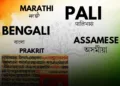
The European model is transactional, economic and cultural. A similar model can be built for the political integration of the countries of South Asia, considering that India has 22 official languages, while the European Union has 24 official and working languages, and both have linguistic and cultural diversity to that extent.
Some sceptics say that the vision of a reintegrated Akhand Bharat is a political and cultural fantasy as it fails to account for the contemporary sovereign identities, geopolitical complexities, and deep-seated divisions that define modern South Asia. But truly speaking, these divisions are artificially engineered due to the machinations of dominant global powers. This is a geopolitical reality. Further, we cannot ignore or wish away these realities but certainly look more deeply to understand the core, underlying realities of our subcontinent’s long, chequered history and Sanatan (eternal) Hindu ideology that has traversed many aeons.
Confederation model
The confederation model inspired by the erstwhile USSR envisions a confederation where sovereign states—such as India, Pakistan, and Bangladesh—maintain their independence but integrate economically and politically. Culturally, there is much in common in these countries. They have a long, long history of being part of a bigger, composite political entity. After all, what is not common between Bangladesh and West Bengal? Language and culture are the same. Bangladesh has a 91 per cent Muslim population, and West Bengal too has a substantial section of Muslims accounting for 29 per cent of its population. The Confederation model for Akhand Bharat is practical and well realisable.
Cultural and economic influence
A soft power approach is required for India’s growing economic and technological prowess to draw neighbouring countries into its orbit. India could expand its digital payments system (UPI), increase trade, and strengthen cultural ties to foster greater interconnectedness. In this regard, sceptics say that many smaller neighbours are wary of India’s potential cultural and economic dominance. But this is also not exactly true. The majority populations in all South Asian countries would be willing to form a politico-economic union or confederation if a referendum were held. In many cases, it is the political oligarchies manipulated by dominant external powers that prevent it. These powers also interfere in the affairs of smaller countries to install their stooges in the saddle of power. Recent examples are provided by the Maldives, Sri Lanka and Bangladesh. But strong cultural spread and soft power action can thwart even such vile regime change operations.
Emergence of Akhand Bharat is the writing on the wall, and the current geopolitical events are strong pointers at this. Bharat has to re-emerge as Vishwa Guru in accordance with the will of the Almighty Creator, who has specially endowed it with the best material and human resources, and more importantly, the timeless, universal, and divine knowledge of the Vedas.