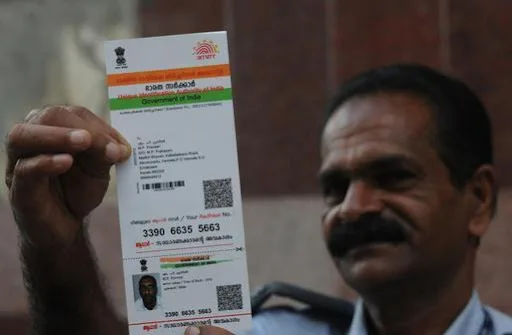
Over the past decade, Aadhaar has become the backbone of India’s identity system, linking over 142 crore people to welfare schemes, banking services, and telecom connections. Yet, confusion persists about what Aadhaar represents.
On September 8, UIDAI Chief Bhuvnesh Kumar drew a clear line: Aadhaar is not a proof of citizenship. Instead, it is a proof of residency, available to Indian citizens, NRIs, foreign nationals, and even newborns, provided they meet certain conditions.
The Aadhaar Act explicitly states this distinction. Foreigners from countries such as Nepal and Bhutan, OCI cardholders, and even other foreign nationals who have lived in India for 182 days or more are entitled to apply. For NRIs, the 182-day condition does not apply, since they already hold Indian passports.
“There is no age limit and no citizenship requirement for Aadhaar. It is meant to be a universal identity for residents, not a nationality document,” Kumar said, emphasising that Aadhaar should not be mistaken for documents like passports or voter IDs that establish nationality.
Why Aadhaar is different from other IDs
Unlike passports, ration cards, or driving licences, which only rely on demographic details such as name, age, and address, Aadhaar is built on biometric uniqueness.
When a person applies for Aadhaar, 13 biometric features, 10 fingerprints, two iris scans, and a face image, are captured and checked against the Central Identities Data Repository (CIDR). This ensures no duplication.
“Most other IDs cannot guarantee uniqueness. Aadhaar does,” Kumar explained. “If someone tries to impersonate another person, Aadhaar’s authentication will catch it.”
This biometric foundation is why Aadhaar has been called a “foundational ID”, unlike other documents that simply establish an individual’s existence but not uniqueness.
How Aadhaar’s security works
To strengthen trust, Aadhaar carries a QR code on its reverse side. This digitally signed code contains secure details such as the cardholder’s photo, name, gender, and date of birth.
The UIDAI chief pointed out that even offline verification is possible. Using the Aadhaar QR scanner app, anyone can check the authenticity of a card without internet connectivity.
“This ensures Aadhaar can be verified even in the remotest parts of India, in forests, villages, or on the sea. The app reveals the data packet instantly, confirming whether an Aadhaar is genuine,” Kumar said.
Why Aadhaar cannot prove citizenship
Despite its biometric strength, Aadhaar’s scope is limited. It is a tool of identity, not nationality. Citizenship requires documents such as passports, birth certificates, or voter IDs.
This is where confusion arises. Since Aadhaar is widely demanded for everything from bank accounts to mobile SIMs, many assume it proves nationality. In reality, it only verifies that a person resides in India, not whether they are Indian.
This distinction is crucial for sensitive issues like electoral rolls, welfare benefits, and citizenship verification drives.
The Supreme Court’s role in Bihar
Bhuvnesh Kumar’s clarification came on the same day the Supreme Court intervened in Bihar’s voter list revision.
A bench of Justice Surya Kant and Justice Joymalya Bagchi directed the Election Commission to accept Aadhaar as the 12th identity document for the ongoing Special Intensive Revision (SIR) of Bihar’s electoral rolls, ahead of Assembly elections later this year.
The court made it clear that Aadhaar could be used to establish identity, but not citizenship. Authorities, it added, must be free to demand further proof if required.
What is Bihar’s Special Intensive Revision (SIR)?
The Special Intensive Revision (SIR) is a large-scale verification exercise of the state’s electoral rolls ordered by the Election Commission of India (ECI). Conducted periodically, SIR involves door-to-door verification, field surveys, and cross-checking of documents to ensure voter lists are accurate.
In Bihar, the 2025 SIR has turned into a political storm because it has reportedly uncovered thousands of suspicious or fake entries. These include cases of:
1. Multiple voter IDs linked to the same individual
2. Names of people who had died are still present on rolls
3. Migrants or outsiders registered in more than one constituency
4. Bogus entries with incomplete or unverifiable details
The use of Aadhaar authentication during SIR has helped flag several of these discrepancies, though officials stress that Aadhaar alone cannot determine eligibility.
How SIR has exposed fake voter networks
Reports from Bihar suggest that SIR has brought to light the scale of voter list manipulation. Opposition parties have accused the ruling establishment of padding rolls with ghost voters, while ruling parties allege misuse by local strongmen.
For example:
1. In certain districts, voter turnout exceeded the total registered voters in past elections, now raising suspicion.
2. In others, clusters of identical Aadhaar-linked entries pointed to systematic enrolment of fake voters.
3. Cases of illegal migrants allegedly obtaining voter IDs through forged documents have also emerged.
By cross-verifying Aadhaar with electoral rolls, SIR has provided an unprecedented audit trail, exposing loopholes that have long been whispered about in Indian elections.
Why it matters for India’s democracy
The revelations from Bihar’s SIR touch the core of India’s democratic system. If voter rolls are inflated with fake or duplicate entries, it undermines the credibility of elections.
Electoral fraud does not always happen at the ballot box; it can begin at the stage of who gets to be on the list. Even small manipulations in closely fought constituencies can swing outcomes.
SIR, therefore, is not just a bureaucratic exercise but a test of electoral integrity. For the first time, Aadhaar-linked verification has provided authorities with a tool to weed out irregularities at scale.
Linking Aadhaar and voter rolls?
While many argue that Aadhaar could help clean voter lists by eliminating duplicates and impersonation, the larger risk is being overlooked, Aadhaar is not proof of citizenship. Since it can be easily acquired by anyone who has stayed in India for 182 days, including foreigners and even illegal infiltrators, making it central to voter registration could backfire. Infiltrators from neighbouring countries could misuse Aadhaar to gain legitimacy and quietly enter the electoral system, thereby diluting the sanctity of India’s democracy.
The real danger lies in confusing residency with nationality. Aadhaar was designed as a universal identity for residents, not as a citizenship certificate. Linking it directly with voting rights opens the door to manipulation, while genuine citizens continue to face Aadhaar-related errors, mismatches, and exclusions. The Supreme Court’s cautious stance reflects this reality: Aadhaar may be useful as an additional identity document, but relying on it as the main tool for voter registration is a serious risk that could benefit illegal entrants more than Indian citizens.
A wake-up call
The UIDAI chief’s clarification, coupled with the experience of Bihar’s Special Intensive Revision (SIR), serves as a sobering reminder about the limits of Aadhaar. While the system is powerful in verifying identity, it does not establish nationality, and that distinction is critical when it comes to something as sensitive as voting rights.
The Bihar exercise has further exposed how easily fake entries and manipulations can creep into voter rolls, distorting the very foundation of democracy. Technology like Aadhaar can certainly aid in improving transparency, but it cannot be treated as a silver bullet. Electoral reforms, strict vigilance, and greater accountability are equally essential to safeguard the integrity of the system.
As India moves into an intense election season, the larger lesson remains clear: clean voter rolls are the backbone of a clean democracy. Aadhaar may play a supporting role, but real citizenship verification and robust institutional mechanisms are what truly ensure voter integrity.