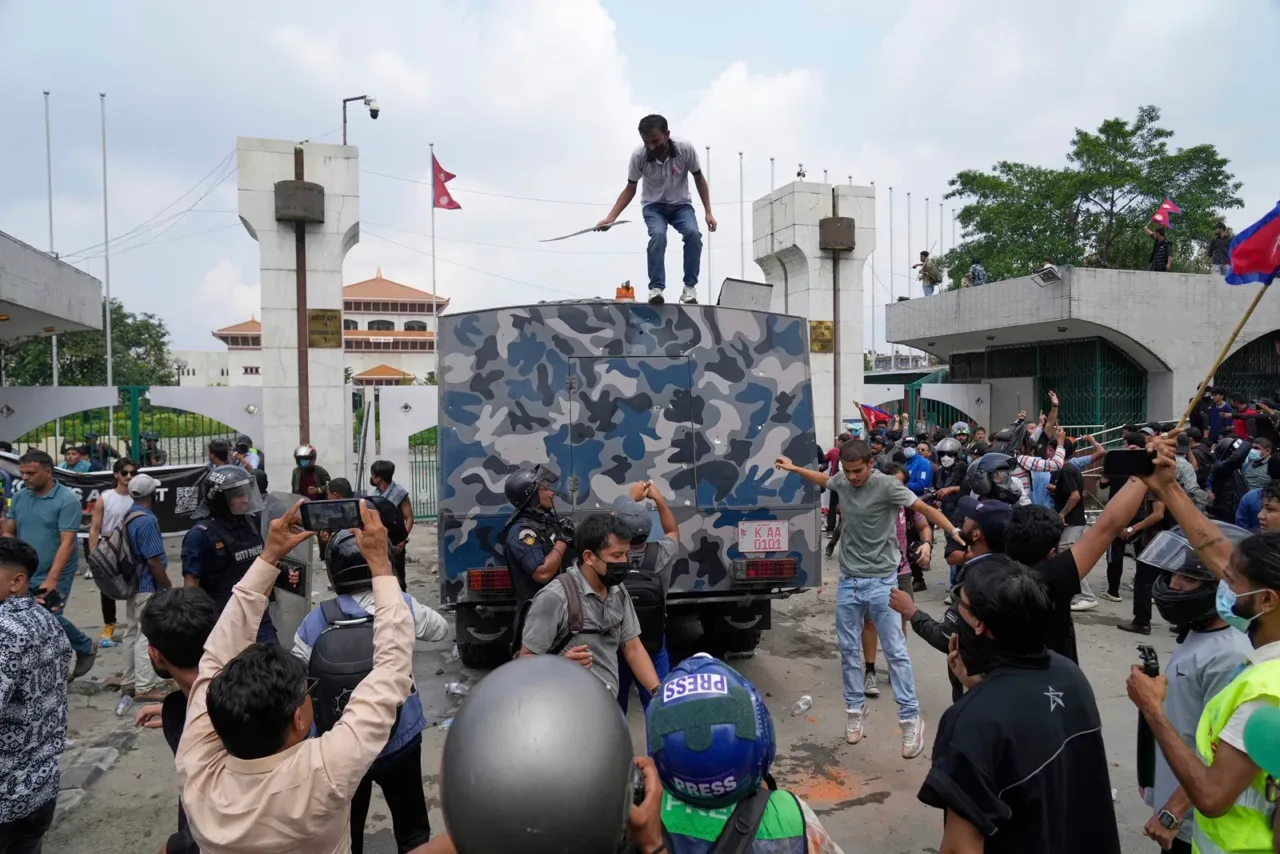
What is unfolding in Nepal is disturbingly familiar. The sudden decision of Prime Minister KP Sharma Oli’s government to block major global social media platforms has triggered massive youth-led protests across the country. But this is not just about Facebook or YouTube being shut down, it reflects a deeper trend of instability that has already rattled neighbouring countries.
In recent years, South Asia has repeatedly seen youth anger erupt into violent street movements. Bangladesh has been paralysed by student protests and deadly crackdowns, Thailand has witnessed fierce youth uprisings against military-backed governments, Sri Lanka saw an unprecedented people’s revolt against economic mismanagement, and Malaysia too has battled waves of political uncertainty amplified by online campaigns.
Now Nepal, a fragile democracy still struggling to find its footing after years of political turbulence, seems to be sliding into the same cycle of unrest.
A ban that backfired
On August 28, Nepal’s Ministry of Communication and Information Technology issued an ultimatum to social media platforms: register with local authorities within one week or face a ban. When global companies like Meta (Facebook, Instagram, WhatsApp), Alphabet (YouTube, Google), X (Twitter), Reddit, and LinkedIn refused to comply, the government responded with a sweeping shutdown on September 4.
Only a handful of platforms, TikTok, Viber, Witk, Nimbuzz, and Popo Live, registered successfully. The rest went dark overnight, cutting off millions of young Nepalis from the apps that connect them to the wider world.
The ministry notice said, “The Hon’ble Supreme Court has issued a directional order to the Government of Nepal in a case of contempt of court, directing online and social media platforms of domestic or foreign origin to mandatorily list with the relevant authorities before operating and to evaluate and monitor unwanted content.”
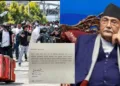
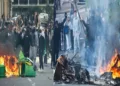
Instead of restoring control, however, the blackout poured fuel on the fire. By September 8, Kathmandu’s streets were filled with tens of thousands of angry young protesters. What began as a fight for digital freedom soon turned into a broader revolt against corruption, unemployment, and lack of accountability.
Oli’s hardline response
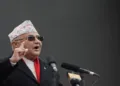
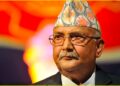
Prime Minister Oli has defended the crackdown as a matter of sovereignty. His message is blunt: Nepal will not bow to tech giants or allow platforms to operate outside its legal framework. “Any attempt to undermine the nation can never be tolerated,” Oli declared, framing the move as a patriotic defence against global arrogance.
Government spokesperson Gajendra Kumar Thakur said that unregistered platforms would remain blocked, but any platform completing registration would be restored the same day.
Officials argue that the measure is necessary to safeguard national sovereignty and enforce accountability.
Allegations of corruption
The sudden ban on social media platforms in Nepal has become a flashpoint in a country already reeling under deep political discontent. For many young Nepalis, the move reflects not just an assault on freedom of expression but also the entrenched rot of a political class that has monopolised power since the country transitioned into a democratic republic in 2008.
Over the past 17 years, the same handful of leaders, most of them in their seventies and burdened with corruption allegations, have rotated in and out of power, forming and breaking alliances at will. Names like KP Sharma Oli, Pushpa Kamal Dahal “Prachanda” of the Maoist Centre, and five-time prime minister Sher Bahadur Deuba have dominated the corridors of power, leaving little room for generational change.
It is social media that gave a handful of younger faces the chance to break through this closed circle. Kathmandu mayor Balendra Shah, a former rapper in his thirties, rose to prominence largely through online campaigns. He has openly sided with the GenZ protesters, many of them under 28, who now lead the demonstrations against the ban. Similarly, Rashtriya Swatantra Party chief Rabi Lamichhane, a former TV anchor who briefly served as deputy prime minister, built his political capital on digital platforms that the government is now trying to silence.
Monday’s mass rally in Kathmandu, organised by a civic group called Hami Nepal, drew thousands of young protesters. Its chairperson, Sudhan Gurung, made it clear that the agitation was “a response to government actions and corruption.”
The anger on the streets is not new. Just this March, similar protests broke out, then the demand was calling for a return to monarchy and declaring the republican experiment a failure. The current wave of unrest, however, appears broader, blending discontent over corruption, dynastic politics, and now, the assault on digital freedoms.
Govt lifts social media ban
In a dramatic climbdown, the Nepal government has withdrawn its ban on 26 social media platforms after three days of unprecedented protests. The protests left at least 20 people dead and more than 300 injured, a grim testament to the intensity of public outrage against both online censorship and a political establishment widely viewed as corrupt and self-serving.
The reversal came during an emergency Cabinet meeting on Monday, where pressure from both the streets and within the ruling coalition proved impossible to ignore. Communication, Information and Broadcasting Minister Prithvi Subba Gurung announced the withdrawal, promising that access to major platforms like Facebook and X would be restored immediately.
Home Minister Ramesh Lekhak tendered his resignation, saying he felt a “moral responsibility” for the escalating chaos. His exit underscored just how deeply the issue had shaken the government. Prime Minister KP Sharma Oli, however, initially refused to relent, insisting that the ban was necessary to regulate platforms that had allegedly failed to register with Nepalese authorities. His intransigence widened fissures within his Cabinet, as senior leaders from the Nepali Congress staged a walkout in protest and openly demanded that the ban be lifted.
The larger pattern and the Indian contrast
After Pakistan, Afghanistan, Sri Lanka, and Bangladesh, its Nepal’s turn now. The country’s Parliament was besieged, protesters forced their way in, the army had to be called, and people lay dead with many more injured before a curfew was imposed. For those who have watched South Asia’s political churn closely, the story feels eerily familiar.
There is a pattern, one that repeats itself with clinical precision. A protest snowballs into an uprising, institutions are paralysed, and chaos paves the way for instability or worse. Whether it is Bangladesh’s violent quota protests, Sri Lanka’s storming of government buildings over inflation and corruption, or Malaysia’s digitally fuelled youth movements shaking weak coalitions, the trajectory is near-identical. Nepal has now been swept into this cycle.
But what is more telling is how some parties in India seem almost eager to romanticise these upheavals. Each time a neighbouring nation implodes under mob pressure, certain political voices here find it convenient to nod approvingly, as though disorder elsewhere should become a roadmap for India too. Their stances speak for themselves: on Operation Sindoor, they parrot Islamabad’s line; on tariffs, they find themselves in sync with Washington; on illegal infiltrators, their sympathies echo Dhaka.
This is not accidental. It reflects a mindset that treats India not as a stable anchor in a volatile neighbourhood, but as just another laboratory for imported narratives. The tragedy in Nepal is therefore not only a reminder of how fragile democracies can become when street fury replaces constitutional order, it is also a warning.
For India, the lesson is simple. Stability is not an inconvenience to be mocked; it is the very foundation that keeps us from slipping into the same abyss as our neighbours. Yet there are those in our political landscape who, unable to win the confidence of the people, would rather see India stumble down that same path. They will never say it outright but their positions, time and again, give them away.
Amid all this, India stands out as a relatively stable democracy. Despite challenges, India has managed to absorb social media disruptions, regulate tech giants without resorting to blanket bans, and prevent youth discontent from spiralling into uncontrolled uprisings.
For Nepal, and indeed for South Asia, the lesson may be stark: unless governments find a balance between accountability, openness, and firm governance, they risk being consumed by the very digital forces they seek to control.