India must champion a value-based AI leadership in Global South
July 13, 2026
  • Read Ecopy
  • Circulation
  • Advertise
  • Careers
  • About Us
  • Contact Us
Android AppiPhone AppArattai
Organiser
  • ‌
  • Bharat
    • Assam
    • Bihar
    • Chhattisgarh
    • Jharkhand
    • Maharashtra
    • View All States
  • World
    • Asia
    • Europe
    • North America
    • South America
    • Africa
    • Australia
  • Editorial
  • International
  • Opinion
  • RSS @ 100
  • More
    • Op Sindoor
    • Analysis
    • Sports
    • Defence
    • Politics
    • Business
    • Economy
    • Culture
    • Special Report
    • Sci & Tech
    • Entertainment
    • G20
    • Azadi Ka Amrit Mahotsav
    • Vocal4Local
    • Web Stories
    • Education
    • Employment
    • Books
    • Interviews
    • Travel
    • Law
    • Health
    • Obituary
  • Subscribe
    • Subscribe Print Edition
    • Subscribe Ecopy
    • Read Ecopy
  • ‌
  • Bharat
    • Assam
    • Bihar
    • Chhattisgarh
    • Jharkhand
    • Maharashtra
    • View All States
  • World
    • Asia
    • Europe
    • North America
    • South America
    • Africa
    • Australia
  • Editorial
  • International
  • Opinion
  • RSS @ 100
  • More
    • Op Sindoor
    • Analysis
    • Sports
    • Defence
    • Politics
    • Business
    • Economy
    • Culture
    • Special Report
    • Sci & Tech
    • Entertainment
    • G20
    • Azadi Ka Amrit Mahotsav
    • Vocal4Local
    • Web Stories
    • Education
    • Employment
    • Books
    • Interviews
    • Travel
    • Law
    • Health
    • Obituary
  • Subscribe
    • Subscribe Print Edition
    • Subscribe Ecopy
    • Read Ecopy
Organiser
  • Home
  • Bharat
  • World
  • Operation Sindoor
  • Editorial
  • Analysis
  • Opinion
  • Culture
  • Defence
  • International Edition
  • RSS @ 100
  • Magazine
  • Read Ecopy
Home World North America USA

Navigating the US–China AI divide: Priorities for India

With respect to AI development and governance, India must identify and define areas where it can strengthen domestic capabilities while simultaneously paving the way for value-based AI leadership in the Global South

Ameya KulkarniAmeya Kulkarni
Sep 7, 2025, 08:00 pm IST
in USA, World, China, India, Sci & Tech
Follow on Google News
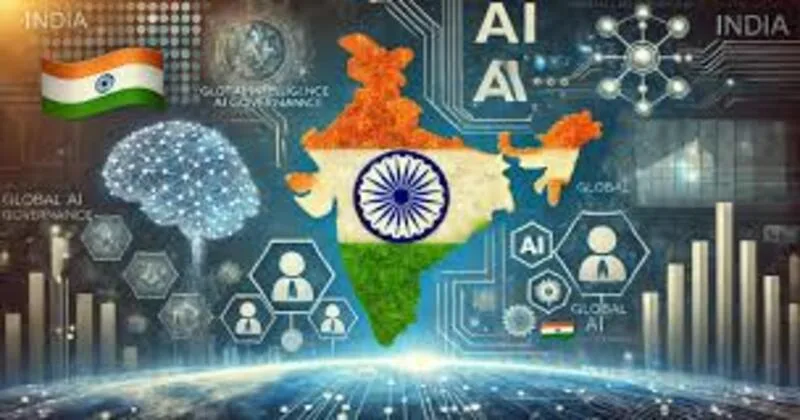
India must champion a value-based AI leadership in Global South by filling the gaps created by the AI economies of the USA and China

India must champion a value-based AI leadership in Global South by filling the gaps created by the AI economies of the USA and China

FacebookTwitterWhatsAppTelegramEmail

The United States (US) launched its AI Action Plan on July 23, 2025. Just three days later, on July 26, 2025, China released its Action Plan for Global Artificial Intelligence Governance at the 2025 World AI Conference hosted in Shanghai. The key difference between the two approaches is that while the US is increasingly looking inwards to build its domestic capabilities, China is looking outwards in a bid to leverage multilateral partnerships — developed over years of building institutions such as the Belt and Road Initiative (BRI) and the Digital Silk Road (DSR).

Crucially, while the US narrative on AI policy has been one of unfettered innovation, China’s approach places the focus squarely on governance. Beijing has proposed the establishment of a global AI cooperation organisation to strengthen collaboration on development and regulation. Coupled with its growing influence across global standards bodies and attempts to manipulate standard-setting processes, China aims to move the needle on how AI should be governed.

The US’ AI Action Plan for ‘Winning the Race’ rests on the three pillars of innovation, infrastructure, and security. The advancement of these three pillars is structured around deregulation across the board, whether it be in AI regulation per se or environmental regulation to build data centres. This is complemented by proposals to strengthen the export control regime, plug existing loopholes, and insulate US innovation from its adversaries.

While the US is championing deregulation as a strategic approach to enhance its competitiveness, its focus on the export of “the full AI technology stack – hardware, models, software, applications, and standards,” as well as on open source and open weight AI, is a nod to DeepSeek’s phenomenal success and adoption around the world. DeepSeek is also integrated as part of a suite of products and services offered by US-based hyperscalers, which means it is now built into the AI infrastructure offered by cloud companies.

China’s recent AI strategy brings the focus back on governance and international cooperation, contrasting sharply with the US strategy of using technology as a strategic leverage. Beijing’s propositions of international cooperation rest on the firm foundation of having spent decades building strategic infrastructure projects like the BRI and the DSR. As two economic and AI powers spar, India must carve out its own space.

Governance, Adoption and Market Penetration

Developing mechanisms for governing AI systems is a value-laden exercise — it determines how an AI system is developed and its impacts on deployment and implementation. Moreover, governance frameworks are key for higher adoption and for fostering trust in the system. The development of governance mechanisms encompasses defining technical specifications and standards, as well as oversight of processes related to the modes of development and deployment.

The structures of dependency that China has created through its international projects, such as the BRI and the DSR, lay the groundwork for the diffusion of social, technical, and institutional norms that enable frictionless access for Chinese products and services across world markets. Much as the US built its AI industry on the legacy effects of Big Tech social media products and services during Web 2.0, China has constructed its legacy by creating systems of strategic dependency.

A key aspect of the Chinese AI strategy is the proposal to extend technological assistance to nations in the Global South. China’s recent Politburo study session on AI demonstrated a strong intent to support the Global South and highlighted how Beijing aims to win the AI race through adoption and market penetration as opposed to innovation.

Over the years, China has had a growing influence within international standards-setting bodies and digital governance institutions, with its key stakeholders occupying strategic leadership positions. Beijing’s increased influence in AI governance is expected to reduce trade frictions and open markets for Chinese firms.

On the other hand, propositions under the US AI Action Plan appear to be undercut by the White House’s actions, such as President Donald Trump’s “little deals”, which involve a 15 percent cut to the federal government from NVIDIA and AMD’s resumption of sales of H20 and MI308 chips to China. The H20 chip was specifically designed for the Chinese market, in compliance with export control restrictions. NVIDIA was asked by the Trump administration to halt its sales at the beginning of the year until further notice.

Notably, the H20 is an important chip within the mix that DeepSeek claims to have been trained on, although its compute corpus is estimated to be much higher than declared. The question remains whether this is an ad hoc exemption or a precedent for standalone deals that can circumvent the proposed export control mechanisms.

India’s Value-Based Leadership

India has articulated its support for a pro-innovation governance approach and a proposed framework that leverages existing laws, all while taking steps to enhance its domestic capacity in models, data, and compute. However, the two AI economies of the US and China have established foreign policy agendas that build on their existing strengths. In this context, India must identify and define areas where it can strengthen domestic capabilities while simultaneously paving the way for value-based AI leadership in the Global South.

Also Read: Trump might have not understood India’s policy of strategic autonomy: Ex-diplomat Veena Sikri on US’s softer approach

India’s export of its Digital Public Infrastructure framework and components is grounded in frugal innovation, which can be easily adapted to the realities of implementing countries. It respects sovereignty without creating structures of dependency, highlighting values underpinning its innovation and technological leadership. India should build on this momentum to develop technical tools suited to developing country realities, such as Kompact AI by IIT Madras and Ziroh Labs, which enables LLMs to run on local computers. This must be complemented by an effort to foster bilateral and multilateral consensus on the key aspects of operationalizing global AI governance, including definitions of technical tools and specifications, standards, and norms.

The neglect of governance as a key aspect of the global AI agenda will allow China to stake its technological leadership over the Global South, which encompasses vast, untapped markets. This increased market penetration will place New Delhi at a disadvantage, particularly at a time when Indian technical innovations have demonstrated the potential to accelerate development outcomes for the Global South.


Topics: digital public infrastructurevalue-based AI leadershipIndiaChinaUSAArtificial Intelligence
ShareTweetSendShareSend
✮ Subscribe Organiser YouTube Channel. ✮
✮ Join Organiser's WhatsApp channel for Nationalist views beyond the news. ✮
Previous News

Saptanga Sutra for Amrit Kaal: Ancient wisdom for modern nation-building

Next News

From dharma to development: India’s timeless traditions defining sustainability

Related News

Commerce and Industry Minister Piyush Goyal

Fact Check: Piyush Goyal rejects Reuters report on India-US trade deal as “false & misleading”; Reaffirms balanced pact

Great Nicobar is emerging as a strategic gateway that strengthens India's maritime reach while increasing pressure on China's Malacca Dilemma

Great Nicobar Project to boost India’s Indo-Pacific leverage, deepen China’s Malacca Dilemma: Report

As India expands its global partnerships, China grapples with growing political, military and economic challenges

Coup Fears in China? Why President Xi staying home while PM Modi expands India’s global diplomatic footprint?

PM Modi's Gifts to Albanese Blend India's Ancient Craft, Modern Music and Premium Coffee

From Dhokra Sculpture to Colonial Cousins Vinyl: PM Modi’s gifts to Australian PM Albanese showcases cultural heritage

Prime Minister Narendra Modi and New Zealand Prime Minister Christopher Luxon

India-New Zealand Strategic Partnership: A new horizon for New Delhi’s economic diplomacy

Economic resilience of India amid West Asia crisis

Load More

Latest News

Indian mathematician T A Sarasvati Amma

The Woman Who Rewrote Mathematical History: The extraordinary journey of T A Sarasvati Amma

The people in Pakistan-occupied Jammu Kashmir (PoJK) are rising against Pakistan's brutality

POJK Unrest: Azad or gulam

Prime Minister Narendra Modi (Left) and Indonesian President Prabowo Subianto (Right)

PM Modi’s Indonesia Visit: Threads from the past, transformation for future

PoJK: Uprising against continued colonisation

Delhi Riots 2020

Delhi Riots 2020: Former AAP Councillor Tahir Hussain & four others convicted for murdering IB Officer Ankit Sharma

500-year-old murti recovered from Bay Of Bengal after fishermen find it in fishing net

500-year-old murti recovered from Bay of Bengal by fishermen; Authorities probe origin & possible smuggling link

Commerce and Industry Minister Piyush Goyal

Fact Check: Piyush Goyal rejects Reuters report on India-US trade deal as “false & misleading”; Reaffirms balanced pact

Representative Image

West Bengal: 48 girls, including minors, rescued from Islampur red-light area in major anti-trafficking crackdown

Great Nicobar is emerging as a strategic gateway that strengthens India's maritime reach while increasing pressure on China's Malacca Dilemma

Great Nicobar Project to boost India’s Indo-Pacific leverage, deepen China’s Malacca Dilemma: Report

PM POSHAN

PM POSHAN Scheme: Yogi government launches massive drive to recruit 3.53 lakh cooks in Uttar Pradesh

Load More
  • Privacy
  • Terms
  • Cookie Policy
  • Refund and Cancellation
  • Delivery and Shipping

© Bharat Prakashan (Delhi) Limited.
Tech-enabled by Ananthapuri Technologies

  • Home
  • Search Organiser
  • Bharat
    • Assam
    • Bihar
    • Chhattisgarh
    • Jharkhand
    • Maharashtra
    • View All States
  • World
    • Asia
    • Africa
    • North America
    • South America
    • Europe
    • Australia
  • Editorial
  • Operation Sindoor
  • Opinion
  • Analysis
  • Defence
  • Culture
  • Sports
  • Business
  • RSS @ 100
  • Entertainment
  • More ..
    • Sci & Tech
    • Vocal4Local
    • Special Report
    • Education
    • Employment
    • Books
    • Interviews
    • Travel
    • Health
    • Politics
    • Law
    • Economy
    • Obituary
  • Subscribe Magazine
  • Read Ecopy
  • Advertise
  • Circulation
  • Careers
  • About Us
  • Contact Us
  • Policies & Terms
    • Privacy Policy
    • Cookie Policy
    • Refund and Cancellation
    • Terms of Use

© Bharat Prakashan (Delhi) Limited.
Tech-enabled by Ananthapuri Technologies