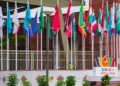


When history looks back at the Shanghai Cooperation Organisation (SCO) Summit in Tianjin, it will not be remembered as another routine multilateral gathering. It will be remembered as the moment India, under Prime Minister Narendra Modi, asserted its strategic autonomy, stood shoulder-to-shoulder with global powers Russia and China, and snubbed both Washington’s arrogance and Islamabad’s terrorism in one sweep.
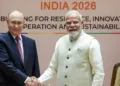
The images from Tianjin are telling: Modi walking hand-in-hand with Vladimir Putin, pulling Xi Jinping into a conversation, and the interpreters scrambling to record the words of a powerful triad. These were not just diplomatic pleasantries. They were visuals that spoke louder than entire policy papers. They were visuals of a rising Bharat that refuses to bow to Western diktats, visuals of a new Asian axis defying Donald Trump’s tariff bullying, and visuals of a civilization reclaiming its rightful place in global leadership.
The context was critical. Washington had just slapped 50 per cent tariffs on Indian goods a crude, colonial-style attempt by Trump to punish India for daring to think independently, especially on Russian oil purchases. The Trump-Modi communication line had broken down. Trump himself was sulking, refusing to come to India for the QUAD summit, and sulking even further at the prospect of India maintaining ties with Moscow. It was against this backdrop that Modi’s Tianjin visit became a masterstroke both in optics and substance.
Unlike Washington’s transactional diplomacy, Modi’s meetings with Xi Jinping and Vladimir Putin were about depth, not dictation. His first bilateral with Xi in eight years lasted 50 minutes, tackling the complexities of India-China ties head-on. With Putin, the scheduled 50-minute dialogue turned into a marathon conversation, thanks to the now-famous car ride that lasted nearly an hour. The results were immediate: resumption of direct India-China flights and Putin’s upcoming visit to India in December. The message was unmistakable India was not a supplicant at the SCO; it was the centerpiece. For decades, Western analysts have peddled the lie that India is a junior partner in world affairs. Tianjin shattered that myth. Xi and Putin sought out Modi, not the other way around.
The pictures of Modi walking hand-in-hand with Putin before pulling Xi into an impromptu trilateral discussion will haunt the corridors of Washington, D.C. Trump, who was already fuming at India’s oil imports from Russia, would have found the visuals unbearable. These were not random gestures. Modi, Putin, and Xi together represented a counter-vision to Washington’s unilateralism. The optics were a direct rebuttal to Trump’s tariff diplomacy. In fact, Modi and Putin’s camaraderie became the top trend on Chinese social media, with Weibo and Baidu flooded with images of the two leaders. It was Asia sending a message to the West: we will not be lectured to by a declining power intoxicated with its own arrogance.
Nothing in diplomacy is accidental. When Putin invited Modi into his car for the short ride to their meeting, it was not a gesture of convenience. It was a deliberate act of symbolism. The 10-minute drive turned into a 55-minute heart-to-heart conversation. Putin personally waited for Modi, underscoring the respect Moscow accords to Bharat. For Trump, who only weeks earlier had tried to showcase his rapport with Putin by sharing a car ride in Alaska, this was a slap in the face. Putin’s message was loud and clear: his trust and friendship with Modi carries as much weight if not more than his optics with the American president. India’s presence in Putin’s strategic calculus is not tokenism. It is a partnership rooted in decades of trust, something Washington can neither buy with dollars nor coerce with tariffs.
Perhaps the biggest diplomatic victory for India was the inclusion of the Pahalgam terror attack in the SCO joint statement. Just months ago, Defence Minister Rajnath Singh had refused to endorse a draft that ignored India’s concerns. Modi corrected that imbalance. Standing at the same table as Pakistan’s Prime Minister Shehbaz Sharif, Modi thundered against “double standards on terrorism.” He asked whether open support for terror could ever be acceptable. The message was crystal clear: Pakistan’s role as a terror factory was no longer a topic to be brushed aside in multilateral forums. This was not just a moral win. It was a strategic one. For years, Pakistan relied on China and Russia to water down statements at global forums. Modi’s assertiveness ensured that the SCO itself acknowledged India’s concerns. It was a diplomatic humiliation for Pakistan, a country that survives on exporting terror while begging the IMF for loans.
While the West thrives on perpetuating conflicts, Modi projected India as a peacemaker. His dialogue with both Putin and Ukrainian President Volodymyr Zelenskyy positioned India as one of the rare nations trusted by both sides. Modi’s words to Putin were measured yet impactful: “A way has to be found to end the conflict as soon as possible and establish lasting peace. This is the call of the entire humanity.” Unlike Western leaders who issue ultimatums, Modi sought constructive dialogue. With Putin scheduled to visit India in December, speculation is rife that New Delhi may emerge as the venue for serious backchannel talks. If successful, Modi will not just be Bharat’s leader but the world’s statesman the man who could bring Europe’s bloodshed to an end.
At its core, Tianjin was not just about diplomacy. It was about civilizational assertion. The United States, under Trump, attempted to browbeat India with tariffs, thinking New Delhi would fall in line like a colony. But India responded with dignity and strength. The RSS and BJP have long spoken of Bharat as a “Vishwaguru” not a nation that takes orders, but one that sets moral and strategic direction for the world. Tianjin was proof that this is no longer rhetoric. Whether in fighting Pakistan’s terror, resisting Washington’s tariff blackmail, or balancing ties with Russia and China, Modi showed that India acts out of self-respect, not submission.
The SCO Summit in Tianjin was more than an event. It was a defining moment in the shift of global power. Modi did not merely attend; he dominated. He was not a participant; he was the pivot. In Washington, Trump may seethe at being ignored. In Islamabad, Shehbaz Sharif may stew in humiliation. But in Tianjin, it was Bharat’s civilizational strength that was on display. The car ride with Putin, the troika optics with Xi, the naming of Pahalgam in the joint statement, and the prospect of peace in Ukraine each element underscored one reality: the Asian century is taking shape, and India under Modi is at its heart. The days of Western bullying are over. Bharat has risen.