
Sustainable development can reduce migration
June 23, 2026
  • Read Ecopy
  • Circulation
  • Advertise
  • Careers
  • About Us
  • Contact Us
Android AppiPhone AppArattai
Organiser
  • ‌
  • Bharat
    • Assam
    • Bihar
    • Chhattisgarh
    • Jharkhand
    • Maharashtra
    • View All States
  • World
    • Asia
    • Europe
    • North America
    • South America
    • Africa
    • Australia
  • Editorial
  • International
  • Opinion
  • RSS @ 100
  • More
    • Op Sindoor
    • Analysis
    • Sports
    • Defence
    • Politics
    • Business
    • Economy
    • Culture
    • Special Report
    • Sci & Tech
    • Entertainment
    • G20
    • Azadi Ka Amrit Mahotsav
    • Vocal4Local
    • Web Stories
    • Education
    • Employment
    • Books
    • Interviews
    • Travel
    • Law
    • Health
    • Obituary
  • Subscribe
    • Subscribe Print Edition
    • Subscribe Ecopy
    • Read Ecopy
  • ‌
  • Bharat
    • Assam
    • Bihar
    • Chhattisgarh
    • Jharkhand
    • Maharashtra
    • View All States
  • World
    • Asia
    • Europe
    • North America
    • South America
    • Africa
    • Australia
  • Editorial
  • International
  • Opinion
  • RSS @ 100
  • More
    • Op Sindoor
    • Analysis
    • Sports
    • Defence
    • Politics
    • Business
    • Economy
    • Culture
    • Special Report
    • Sci & Tech
    • Entertainment
    • G20
    • Azadi Ka Amrit Mahotsav
    • Vocal4Local
    • Web Stories
    • Education
    • Employment
    • Books
    • Interviews
    • Travel
    • Law
    • Health
    • Obituary
  • Subscribe
    • Subscribe Print Edition
    • Subscribe Ecopy
    • Read Ecopy
Organiser
  • Home
  • Bharat
  • World
  • Operation Sindoor
  • Editorial
  • Analysis
  • Opinion
  • Culture
  • Defence
  • International Edition
  • RSS @ 100
  • Magazine
  • Read Ecopy
Home World

A sustainable growth model will stop people from migrating to other countries

Unsustainable economic growth and environmental degradation are driving millions to migrate in search of better livelihoods. To curb this trend, countries must adopt diverse, sustainable development models tailored to their unique economic and ecological contexts

Sudhansu R DasSudhansu R Das
Aug 24, 2025, 01:00 pm IST
in World, Opinion, International Edition
Follow on Google News
Representative image

Representative image

FacebookTwitterWhatsAppTelegramEmail

Every big or rich nation has illegal migrants who come there to earn a living. Poverty, lack of employment, poor governance, corruption and lawlessness, etc, compel people to leave their home country. Though the illegal migrants constitute the much-needed cheap labour force of the US, they become untraceable and pose a security risk for any country. US President Donald Trump wanted to remove nearly 11.4 million illegal migrants from the US in a harsh and dictatorial manner. A few months back, he had created a war-like situation in the USA. The illegal migrant issue can be solved if different countries evolve country-specific sustainable development models based on the diversity of economic sectors existing in their countries.  It is also the responsibility of the rich nations to understand that they are also the cause of the illegal migrants; they also need illegal migrants who work as skilled and semi-skilled labourers at a very low cost. Without the migrants, the cost of living in the USA will increase manyfold. Besides, the rich countries do not weave their economic model on the basis of diversity of skills and different economic sectors; they are caught in the web of mono sector to create skill deficiencies in their own countries.

Mono-sector bias in the economic growth model only destroys the livelihood of people across the world. There were sustainable and diverse economic activities in different countries. Though those activities had not amassed wealth, those nature-based economic activities had kept unemployment, hunger and malnutrition at bay. While maximising profit by marketing products, projects and services, the rich nations ignore what is sustainable. As a result, people lose their livelihood and are compelled to migrate to other nations. The mass production started during the industrial revolution in the late 18th century, turned aggressive in the 19th and 20th centuries; today it is about to devour everything sustainable. Overexploitation of natural resources leads to deforestation, depletion of groundwater and destruction of biodiversity, etc. The number and the intensity of natural calamities have increased in the past two decades, causing deaths to thousands of people and economic loss to countries.

The world has lost 420 million hectares or 10.34 per cent of the total forest area since 1990 due to unsustainable economic growth. The Food and Agriculture Organisation estimates that 10 million hectares were still lost annually between 2015 and 2020.  Deforestation causes landslides, intensifies the impact of floods, increases the atmospheric temperature, lets dangerous viruses escape from the forest, destroys hundreds of minor forest products, food backup, medicinal plants and cultural heritage, etc. The tribes that used to make eco-friendly utility items and added high value to their products have lost their skills in many countries. There has been a massive loss of livelihood across the world due to unsustainable economic activities.

Also Read: Digital Dreams, Cultural Roots: Empowering vanvasi youth

Like forests, the depletion of water resources adversely affects the economy of a country. Groundwater charges the rivers, lakes and wetlands to save people from the impact of drought. It meets the drinking water and irrigation needs of 50% of the world’s population. The data from WRI’s Aqueduct Water Risk Atlas show that  25 countries — housing one-quarter of the global population — face extremely high water stress each year. And at least 50% of the world’s population — around 4 billion people — live under highly water-stressed conditions for at least one month of the year.

According to the 2025 Global Report on Food Crisis, acute hunger has grown in 2024 for the sixth consecutive year. Around 295 million people are now facing high levels of acute food insecurity, with the most people experiencing the most severe forms of acute food insecurity (IPC/CH5) and famine living in countries affected by conflicts. The annual State of Food Security and Nutrition in the World report said that around 733 million people faced hunger in 2023, about one in 11 people globally.

The Global Report on Food Crises (GRFC) indicates that acute food insecurity and child malnutrition rose for the sixth consecutive year in 2024, pushing millions of people to the brink, in some of the world’s most vulnerable regions.  Around half of child deaths were linked to nutritional deficiencies. As per UNESCO’s findings, on current trends, 30 per cent of adults and 20 per cent of young people will still be illiterate in poor countries, and about 18 per cent of children in the world are without school.

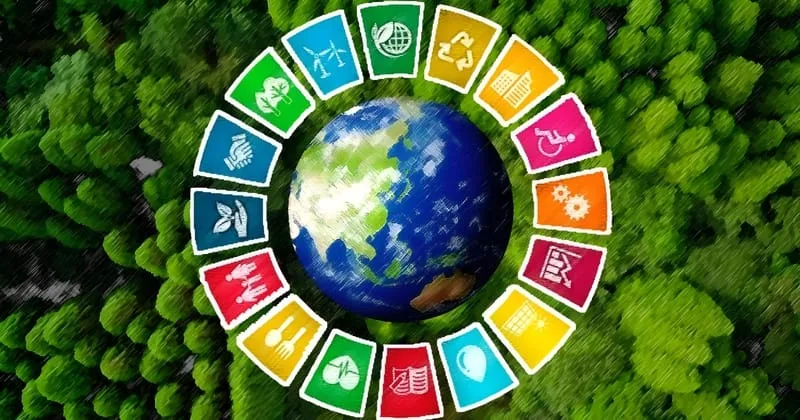
Biodiversity loss due to unsustainable growth and construction of unnecessary mega infrastructure projects is a reality. Today, one million species are at risk of extinction, 75 per cent of land ecosystems and two-thirds of marine environments have been significantly altered by human activity. The UN Secretary-General António Guterres has called on countries to radically rethink their relationship with nature, warning that biodiversity loss is a global crisis no nation can ignore. It is high time for all United Nations Member States to adopt the 2030 Agenda for Sustainable Development, a shared blueprint for peace and prosperity for people and the planet, now and into the future.

 

Topics: Water ScarcityGlobal PovertyBiodiversity Losssustainable developmentEconomic Growthenvironmental degradationmigration
ShareTweetSendShareSend
✮ Subscribe Organiser YouTube Channel. ✮
✮ Join Organiser's WhatsApp channel for Nationalist views beyond the news. ✮
Previous News

RSS in J&K: Ground realities & fake narratives

Next News

Trade wars in a multipolar world: A scientific look at US–India tariff frictions

Related News

India has been transformed by major advances in digital governance, financial inclusion, and global influence under Modi govt

India After 12 Years of Modi: A record, revolution and remaining challenges

Pakistan Prime Minister Shehbaz Sharif face the brunt as Punjab draws excess water from Indus basin and Sindh suffers from scarcity

Pakistan: Indus water drifts to Punjab & erupts political rift; Acute crisis in Dadu canal & drought in Sindh

Representative Image

Plastic, Traffic and Landslides: How rising tourist footfall is posing threat to the mountainous region

World Environment Day: A green future demands more than planting trees

India’s renewable energy revolution is transforming the nation into a global leader in sustainable development and clean energy innovation

India’s Renewable Energy Revolution: Leading the world towards a sustainable future

Bharat’s FY 2025–26 marks a landmark year of multi-sector economic acceleration

Historic Economic Milestone: Bharat’s FY 2025–26 showcases strong industrial growth, energy transition & export surge

Load More

Latest News

The West Bengal Budget 2026–27 aims to drive growth through infrastructure, industry, innovation and welfare

Reimagining Bengal: How the West Bengal Budget 2026–27 seeks to balance growth, welfare & economic transformation

Pratiraksha is Gujarat Police's Aadhaar-based verification platform designed to identify illegal workers and prevent identity fraud in industrial sectors

Pratiraksha: How Gujarat police uses Aadhaar verification to secure industrial workforce against identity fraud

Israel-Iran crisis has highlighted not only shifting dynamics of West Asia but also growing confidence of India's foreign policy

India, Israel and the rise of strategic autonomy in an era of global geopolitical realignment

Saleem and Jaleel arrested in forced religious conversion case

Karnataka Conversion Case: Forced conversion of Hindu woman and minor son sparks outrage; Saleem and Jaleel arrested

Bareilly Cantonment Emerges as Model for Sustainable Urban Development in India (Image Source X)

Uttar Pradesh: Bareilly Cantonment becomes India’s first carbon-negative cantonment

CM Yogi Adityanath making industry, investment and the connectivity revolution in Eastern Uttar Pradesh

The Purvanchal Growth Story: How industry, infrastructure, tourism & exports are fueling development in eastern UP

(Left) Fire at the coaching centre in Lucknow (Right) Members of ABVP extending all possible help

Lucknow Coaching Centre Fire tragedy is heartbreaking and deeply unfortunate: ABVP seeks action against culprits

Andhra Pradesh Minister and TDP National General Secretary Nara Lokesh

Nara Lokesh dismisses rumours of TDP sabotaging Modi government, reaffirms unconditional NDA support

With new military deployments, export opportunities and potential Russian production, BrahMos is entering a new era of strategic relevance

BrahMos enters high-volume production as military demand and global export orders surge

Dr Mahrang Baloch

Pakistan: Mahrang Baloch gets life sentence, Balochistan erupts in protest; BYC calls for shutdown

Load More
  • Privacy
  • Terms
  • Cookie Policy
  • Refund and Cancellation
  • Delivery and Shipping

© Bharat Prakashan (Delhi) Limited.
Tech-enabled by Ananthapuri Technologies

  • Home
  • Search Organiser
  • Bharat
    • Assam
    • Bihar
    • Chhattisgarh
    • Jharkhand
    • Maharashtra
    • View All States
  • World
    • Asia
    • Africa
    • North America
    • South America
    • Europe
    • Australia
  • Editorial
  • Operation Sindoor
  • Opinion
  • Analysis
  • Defence
  • Culture
  • Sports
  • Business
  • RSS @ 100
  • Entertainment
  • More ..
    • Sci & Tech
    • Vocal4Local
    • Special Report
    • Education
    • Employment
    • Books
    • Interviews
    • Travel
    • Health
    • Politics
    • Law
    • Economy
    • Obituary
  • Subscribe Magazine
  • Read Ecopy
  • Advertise
  • Circulation
  • Careers
  • About Us
  • Contact Us
  • Policies & Terms
    • Privacy Policy
    • Cookie Policy
    • Refund and Cancellation
    • Terms of Use

© Bharat Prakashan (Delhi) Limited.
Tech-enabled by Ananthapuri Technologies