The Tiranga and the spirit of civilizational freedom
June 10, 2026
  • Read Ecopy
  • Circulation
  • Advertise
  • Careers
  • About Us
  • Contact Us
Android AppiPhone AppArattai
Organiser
  • ‌
  • Bharat
    • Assam
    • Bihar
    • Chhattisgarh
    • Jharkhand
    • Maharashtra
    • View All States
  • World
    • Asia
    • Europe
    • North America
    • South America
    • Africa
    • Australia
  • Editorial
  • International
  • Opinion
  • RSS @ 100
  • More
    • Op Sindoor
    • Analysis
    • Sports
    • Defence
    • Politics
    • Business
    • Economy
    • Culture
    • Special Report
    • Sci & Tech
    • Entertainment
    • G20
    • Azadi Ka Amrit Mahotsav
    • Vocal4Local
    • Web Stories
    • Education
    • Employment
    • Books
    • Interviews
    • Travel
    • Law
    • Health
    • Obituary
  • Subscribe
    • Subscribe Print Edition
    • Subscribe Ecopy
    • Read Ecopy
  • ‌
  • Bharat
    • Assam
    • Bihar
    • Chhattisgarh
    • Jharkhand
    • Maharashtra
    • View All States
  • World
    • Asia
    • Europe
    • North America
    • South America
    • Africa
    • Australia
  • Editorial
  • International
  • Opinion
  • RSS @ 100
  • More
    • Op Sindoor
    • Analysis
    • Sports
    • Defence
    • Politics
    • Business
    • Economy
    • Culture
    • Special Report
    • Sci & Tech
    • Entertainment
    • G20
    • Azadi Ka Amrit Mahotsav
    • Vocal4Local
    • Web Stories
    • Education
    • Employment
    • Books
    • Interviews
    • Travel
    • Law
    • Health
    • Obituary
  • Subscribe
    • Subscribe Print Edition
    • Subscribe Ecopy
    • Read Ecopy
Organiser
  • Home
  • Bharat
  • World
  • Operation Sindoor
  • Editorial
  • Analysis
  • Opinion
  • Culture
  • Defence
  • International Edition
  • RSS @ 100
  • Magazine
  • Read Ecopy
Home Bharat

The Tiranga and the spirit of civilizational freedom

India's Independence Day, celebrated on August 15, is not merely a national holiday but a profound commemoration of a civilizational rebirth. It marks the day when Bharat, after centuries of subjugation, reclaimed its sovereignty, and the tricolor flag became a symbol of national pride

Dr Prosenjit NathDr Prosenjit Nath
Aug 17, 2025, 08:00 pm IST
in Bharat, Opinion, Delhi
Follow on Google News
Representative Image

Representative Image

FacebookTwitterWhatsAppTelegramEmail

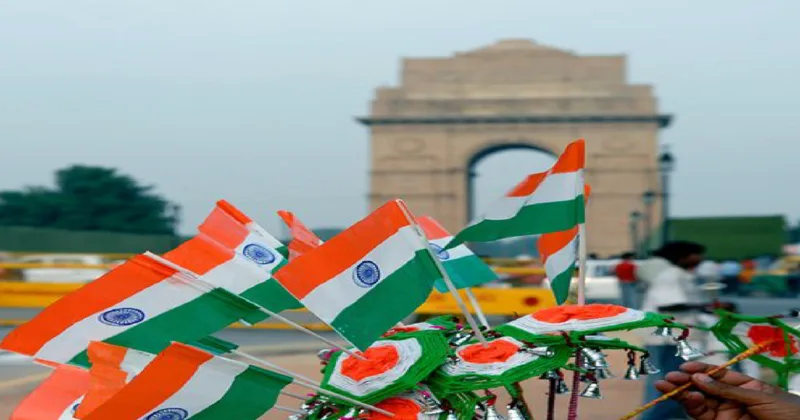
Independence Day is not just a holiday marked by flag-hoisting and parades. It is the sacred festival of Bharat, the day when the chains of colonial rule were broken after centuries of humiliation, and a civilizational nation reclaimed its sovereignty. Seventy-nine years later, the Tiranga our Tricolour continues to flutter not only on rooftops and vehicles but also in the collective heartbeat of every Indian. It is not a mere flag; it is a testimony to sacrifice, a reminder of the vision of our ancestors, and an eternal call to protect and strengthen the nation.

The history of the Tricolour is itself symbolic of India’s pluralistic yet rooted nationalism. Accounts suggest that Suraiya Tyabji finalized its design, and Hansa Mehta led the women members of the Constituent Assembly to hand it over to Dr. Rajendra Prasad as the midnight hour of freedom struck. The first official hoisting was on Parliament House on August 15, 1947, when the Union Jack was finally lowered. Later that day, a public ceremony at India Gate turned into a massive outpouring of patriotic fervor. The tradition of the prime minister hoisting the flag from the Red Fort began the following day with Jawaharlal Nehru’s address. Since then, that moment has become the most iconic symbol of Independence Day a direct reminder that political freedom must always be accompanied by cultural self-confidence.

But for the leaders of our freedom struggle, independence was never about a mere transfer of power. It was not about white rulers replaced by brown rulers. It was about swatantrata self-rule in the truest sense not just swaraj. Mahatma Gandhi’s dream of Ram Rajya was a moral vision where truth, justice, and dharma guided governance. He did not see democracy as a blind imitation of Western systems but as rooted in India’s own civilizational ethos. Rabindranath Tagore’s immortal words “Where the mind is without fear” reflected the aspiration for a society guided by reason and not fragmented by narrow divisions.

Sardar Patel, the Iron Man of India, exhorted citizens to remain united and to uphold truth and dharma, for only unity could raise India to greatness. Sri Aurobindo, whose birthday coincided with August 15, saw the date as divine sanction. He believed India was destined to play a spiritual role in the world, offering not consumerism and materialism but the eternal wisdom of Sanatan civilization.

Even Nehru, in his “tryst with destiny” address, acknowledged India’s unending quest since the dawn of history, asking whether the nation would be brave and wise enough to accept the challenge of the future. But the tragedy was that he himself abandoned the very ideals he invoked. His vision was of a “nation in the making,” a civilizational amnesia in which Western models were imported wholesale, while indigenous thought was derided as “backward.” Instead of Bharatiyata cultural nationalism India was shackled with Eurocentric socialism and centralized planning. Gandhi was reduced to a statue outside Parliament, while inside Nehru’s Westernized governance dominated.

The Rashtriya Swayamsevak Sangh (RSS), founded in 1925 by Dr KB Hedgewar, had already understood that freedom without cultural regeneration would be hollow. Hedgewar, inspired by the vision of a strong and united Hindu society, believed that true swatantrata meant not only political liberation but also the revival of India’s dharmic identity. His successor, M.S. Golwalkar, repeatedly emphasized that the nation was not just a territory but a living cultural entity rooted in Sanatan civilization. The RSS quietly nurtured this spirit of nationalism during and after the freedom struggle, reminding generations that independence was not the end goal but the beginning of a larger journey.

This is why, despite decades of Nehruvian socialism, India’s soul refused to die. Cultural nationalism continued to thrive in temples, villages, and grassroots movements. When Deendayal Upadhyaya articulated his philosophy of Integral Humanism in the 1960s, it offered an authentic Indian framework of development neither Marxist nor capitalist, but rooted in dharma and harmony. Sadly, the Congress elite dismissed such visions, preferring to remain a pale imitation of Western states.

Yet, Bharat endured. And as the decades passed, the failures of Nehruvian policies became evident. License-permit raj choked enterprise, socialism bred inefficiency, and imported models alienated people from their cultural roots. It was only in recent years, particularly under Narendra Modi’s leadership, that the call for true swatantrata has found political expression. His vision of Atmanirbhar Bharat is not just an economic slogan; it is a civilizational reawakening. It tells Indians to have faith in their own capabilities, their traditions, and their knowledge systems.

Under Modi, forgotten heroes of the freedom struggle from Rani Gaidinliu in the Northeast to Subhas Chandra Bose have been restored to national memory. The flag has been carried with unprecedented pride through initiatives like the Har Ghar Tiranga campaign, which transformed Independence Day into a household festival. For the first time, the Tricolour is not just a state symbol but truly a people’s symbol, embraced in every home.

This ideological shift is crucial. Independence Day must not be remembered as a date when India merely changed rulers. It must be remembered as the day Bharat began her civilizational renaissance. Gandhi’s Ram Rajya, Tagore’s fearless mind, Patel’s unity, Aurobindo’s divine mission, and Upadhyaya’s Integral Humanism all converge into one truth: India’s destiny is to stand tall as a self-confident, self-reliant, dharmic nation.

Seventy-nine years on, the journey is still unfolding. Elephants, as the saying goes, do not turn suddenly they take their time. So too does a civilization of India’s magnitude. But the turning is underway. The Tiranga that waves proudly today is more than cloth it is the embodiment of our freedom struggle, our civilizational pride, and our promise to future generations. Independence Day is therefore not just a celebration; it is a reaffirmation that Bharat will no longer live as an imitator but as the torchbearer of Sanatan wisdom for the world.

In this lies the true meaning of freedom. Political liberation was achieved in 1947. Civilizational liberation is the task of our own times. The Tiranga reminds us of both of the sacrifices of our forefathers and of the responsibility we hold today to fulfill the dream of a resurgent Bharat.

Topics: Atmanirbhar BharatTirangaIndependence DayRSS
Dr Prosenjit Nath
Dr Prosenjit Nath
The writer is a technocrat, political analyst, and author. [Read more]
ShareTweetSendShareSend
✮ Subscribe Organiser YouTube Channel. ✮
✮ Join Organiser's WhatsApp channel for Nationalist views beyond the news. ✮
Previous News

Book Review: Reconnecting with the frontier

Next News

‘A Liar’: BJP hits back after Gurkirat Singh Dang rejects ‘Vote chori’ allegations by Rahul Gandhi

Related News

RSS centenary year is a time for renewed resolve and greater commitment to nation-building: Dr Mohan Bhagwat

Atul Limaye Ji Sah Sarkaryavah, Rashtriya Swayamsevak Sangh while addressing a Pramukh Jan Gosthi Rashtriya at Raipur, Chhattisgarh

Chhattisgarh: Society must lead its own transformation through collective initiative: Atul Limaye

Rajasthn | RSS centenary journey embodies dedication to nation-building: Dr Ramesh Agrawal

Odisha: RSS Sangh Shiksha Varg concludes in Sambalpur; Dr. Mahapatra cites century-long effort to unite hindu society

Padma Bhushan awardee and noted industrialist Kumar Mangalam Birla Kumar Mangalam Birla addressing the Samapana Samaroh (Valedictory Function) of the Rashtriya Swayamsevak Sangh Karyakarta Vikas Varg – Dwitiya at Nagpur, on June 4, 2026

“RSS always stood by the society and nation”, Kumar Mangalam Birla at RSS Karyakarta Vikas Varg 2 in Nagpur

PMRC Scheme 2026 launched to bring global Indian talent back into India's research ecosystem

PMRC Scheme 2026: Centre invites applications from global Indian scientists; Know eligibility, benefits & how to apply

Load More

Latest News

Now Islamists Eye Keralam’s Ancient Kottiyoor Temple: How Congress, Muslim Family Built Fake ‘Bavalikkettu’ Narrative

Amaravati Gets Major Boost: Andhra Pradesh Cabinet Clears Rs1,299 Crore Central Government Office Complex

PM Narendra Modi and French President Emmanuel Macron

PM Modi’s six-day Europe tour to focus on G7, AI, innovation and strategic partnerships

POJK Burns (This is an AI generated image)

POJK Boils Over: Rs 1 crore bounty on JAAC leaders as anti-government protests intensify

NSE has announced that 10 per cent of its annual CSR corpus will be routed through the Social Stock Exchange

NSE to route 10 per cent of CSR corpus through Social Stock Exchange, sets new benchmark for impact funding

Organisational Secretary of Bharatiya Mazdoor Sangh (BMS), Bojji Surendran addressing the gathering at the 114th Session of the International Labour Conference (ILC) of the International Labour Organization (ILO) in Geneva

114th ILO Session | Innovation must serve humanity and create inclusive growth for all: BMS Org Secretary B Surendran

Mansoor Ahmed and daughter Shamshad Begum arrested for Rs 5.3 cr government job scam

Karnataka Job Scam Busted: Mansoor, daughter Shamshad Begum arrested for Rs 5.3 crore fraud; 40+ aspirants duped

Shamli Conversion Case: Delhi Nikahnama, Name Changes and Pakistan-Based Preacher Videos Under Scanner; Father Awaits Ayush Malik’s Return Home

Shamli Conversion Case: How a Delhi nikahnama, Pakistani cleric’s lectures and an affair changed Ayush Malik’s life

CM Suvendu Adhikari announces 125-ft Syama Prasad Mookerji statue in Kolkata on 125th birth anniversary

CM Suvendu Adhikari announces 125-foot Syama Prasad Mookerjee statue in Kolkata to mark his 125th birth anniversary

“They Took My Son Away”: Ayush Malik’s Father Accuses Chandni Qureshi of Conversion Plot and Property Grab in Shamli

“They ruined my family, took my son away”: Ayush Malik’s father accuses Chandni Qureshi of conversion & property grab

Load More
  • Privacy
  • Terms
  • Cookie Policy
  • Refund and Cancellation
  • Delivery and Shipping

© Bharat Prakashan (Delhi) Limited.
Tech-enabled by Ananthapuri Technologies

  • Home
  • Search Organiser
  • Bharat
    • Assam
    • Bihar
    • Chhattisgarh
    • Jharkhand
    • Maharashtra
    • View All States
  • World
    • Asia
    • Africa
    • North America
    • South America
    • Europe
    • Australia
  • Editorial
  • Operation Sindoor
  • Opinion
  • Analysis
  • Defence
  • Culture
  • Sports
  • Business
  • RSS @ 100
  • Entertainment
  • More ..
    • Sci & Tech
    • Vocal4Local
    • Special Report
    • Education
    • Employment
    • Books
    • Interviews
    • Travel
    • Health
    • Politics
    • Law
    • Economy
    • Obituary
  • Subscribe Magazine
  • Read Ecopy
  • Advertise
  • Circulation
  • Careers
  • About Us
  • Contact Us
  • Policies & Terms
    • Privacy Policy
    • Cookie Policy
    • Refund and Cancellation
    • Terms of Use

© Bharat Prakashan (Delhi) Limited.
Tech-enabled by Ananthapuri Technologies