The Tiranga and the spirit of civilizational freedom
August 30, 2026
  • Read Ecopy
  • Circulation
  • Advertise
  • Careers
  • About Us
  • Contact Us
Android AppiPhone AppArattai
Organiser
  • ‌
  • Bharat
    • Assam
    • Bihar
    • Chhattisgarh
    • Jharkhand
    • Maharashtra
    • View All States
  • World
    • Asia
    • Europe
    • North America
    • South America
    • Africa
    • Australia
  • Editorial
  • International
  • Opinion
  • RSS @ 100
  • More
    • Op Sindoor
    • Analysis
    • Sports
    • Defence
    • Politics
    • Business
    • Economy
    • Culture
    • Special Report
    • Sci & Tech
    • Entertainment
    • G20
    • Azadi Ka Amrit Mahotsav
    • Vocal4Local
    • Web Stories
    • Education
    • Employment
    • Books
    • Interviews
    • Travel
    • Law
    • Health
    • Obituary
  • Subscribe
    • Subscribe Print Edition
    • Subscribe Ecopy
    • Read Ecopy
  • ‌
  • Bharat
    • Assam
    • Bihar
    • Chhattisgarh
    • Jharkhand
    • Maharashtra
    • View All States
  • World
    • Asia
    • Europe
    • North America
    • South America
    • Africa
    • Australia
  • Editorial
  • International
  • Opinion
  • RSS @ 100
  • More
    • Op Sindoor
    • Analysis
    • Sports
    • Defence
    • Politics
    • Business
    • Economy
    • Culture
    • Special Report
    • Sci & Tech
    • Entertainment
    • G20
    • Azadi Ka Amrit Mahotsav
    • Vocal4Local
    • Web Stories
    • Education
    • Employment
    • Books
    • Interviews
    • Travel
    • Law
    • Health
    • Obituary
  • Subscribe
    • Subscribe Print Edition
    • Subscribe Ecopy
    • Read Ecopy
Organiser
  • Home
  • Bharat
  • World
  • Operation Sindoor
  • Editorial
  • Analysis
  • Opinion
  • Culture
  • Defence
  • International Edition
  • RSS @ 100
  • Magazine
  • Read Ecopy
Home Bharat

The Tiranga and the spirit of civilizational freedom

India's Independence Day, celebrated on August 15, is not merely a national holiday but a profound commemoration of a civilizational rebirth. It marks the day when Bharat, after centuries of subjugation, reclaimed its sovereignty, and the tricolor flag became a symbol of national pride

Dr Prosenjit NathDr Prosenjit Nath
Aug 17, 2025, 08:00 pm IST
inBharat, Opinion, Delhi
Follow on Google News
Representative Image

Representative Image

Facebook
Twitter
WhatsAppTelegramEmail

Independence Day is not just a holiday marked by flag-hoisting and parades. It is the sacred festival of Bharat, the day when the chains of colonial rule were broken after centuries of humiliation, and a civilizational nation reclaimed its sovereignty. Seventy-nine years later, the Tiranga our Tricolour continues to flutter not only on rooftops and vehicles but also in the collective heartbeat of every Indian. It is not a mere flag; it is a testimony to sacrifice, a reminder of the vision of our ancestors, and an eternal call to protect and strengthen the nation.

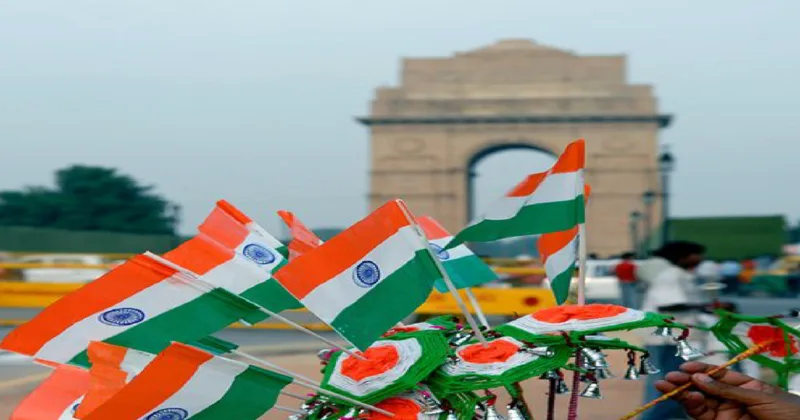
The history of the Tricolour is itself symbolic of India’s pluralistic yet rooted nationalism. Accounts suggest that Suraiya Tyabji finalized its design, and Hansa Mehta led the women members of the Constituent Assembly to hand it over to Dr. Rajendra Prasad as the midnight hour of freedom struck. The first official hoisting was on Parliament House on August 15, 1947, when the Union Jack was finally lowered. Later that day, a public ceremony at India Gate turned into a massive outpouring of patriotic fervor. The tradition of the prime minister hoisting the flag from the Red Fort began the following day with Jawaharlal Nehru’s address. Since then, that moment has become the most iconic symbol of Independence Day a direct reminder that political freedom must always be accompanied by cultural self-confidence.

But for the leaders of our freedom struggle, independence was never about a mere transfer of power. It was not about white rulers replaced by brown rulers. It was about swatantrata self-rule in the truest sense not just swaraj. Mahatma Gandhi’s dream of Ram Rajya was a moral vision where truth, justice, and dharma guided governance. He did not see democracy as a blind imitation of Western systems but as rooted in India’s own civilizational ethos. Rabindranath Tagore’s immortal words “Where the mind is without fear” reflected the aspiration for a society guided by reason and not fragmented by narrow divisions.

Sardar Patel, the Iron Man of India, exhorted citizens to remain united and to uphold truth and dharma, for only unity could raise India to greatness. Sri Aurobindo, whose birthday coincided with August 15, saw the date as divine sanction. He believed India was destined to play a spiritual role in the world, offering not consumerism and materialism but the eternal wisdom of Sanatan civilization.

Even Nehru, in his “tryst with destiny” address, acknowledged India’s unending quest since the dawn of history, asking whether the nation would be brave and wise enough to accept the challenge of the future. But the tragedy was that he himself abandoned the very ideals he invoked. His vision was of a “nation in the making,” a civilizational amnesia in which Western models were imported wholesale, while indigenous thought was derided as “backward.” Instead of Bharatiyata cultural nationalism India was shackled with Eurocentric socialism and centralized planning. Gandhi was reduced to a statue outside Parliament, while inside Nehru’s Westernized governance dominated.

The Rashtriya Swayamsevak Sangh (RSS), founded in 1925 by Dr KB Hedgewar, had already understood that freedom without cultural regeneration would be hollow. Hedgewar, inspired by the vision of a strong and united Hindu society, believed that true swatantrata meant not only political liberation but also the revival of India’s dharmic identity. His successor, M.S. Golwalkar, repeatedly emphasized that the nation was not just a territory but a living cultural entity rooted in Sanatan civilization. The RSS quietly nurtured this spirit of nationalism during and after the freedom struggle, reminding generations that independence was not the end goal but the beginning of a larger journey.

This is why, despite decades of Nehruvian socialism, India’s soul refused to die. Cultural nationalism continued to thrive in temples, villages, and grassroots movements. When Deendayal Upadhyaya articulated his philosophy of Integral Humanism in the 1960s, it offered an authentic Indian framework of development neither Marxist nor capitalist, but rooted in dharma and harmony. Sadly, the Congress elite dismissed such visions, preferring to remain a pale imitation of Western states.

Yet, Bharat endured. And as the decades passed, the failures of Nehruvian policies became evident. License-permit raj choked enterprise, socialism bred inefficiency, and imported models alienated people from their cultural roots. It was only in recent years, particularly under Narendra Modi’s leadership, that the call for true swatantrata has found political expression. His vision of Atmanirbhar Bharat is not just an economic slogan; it is a civilizational reawakening. It tells Indians to have faith in their own capabilities, their traditions, and their knowledge systems.

Under Modi, forgotten heroes of the freedom struggle from Rani Gaidinliu in the Northeast to Subhas Chandra Bose have been restored to national memory. The flag has been carried with unprecedented pride through initiatives like the Har Ghar Tiranga campaign, which transformed Independence Day into a household festival. For the first time, the Tricolour is not just a state symbol but truly a people’s symbol, embraced in every home.

This ideological shift is crucial. Independence Day must not be remembered as a date when India merely changed rulers. It must be remembered as the day Bharat began her civilizational renaissance. Gandhi’s Ram Rajya, Tagore’s fearless mind, Patel’s unity, Aurobindo’s divine mission, and Upadhyaya’s Integral Humanism all converge into one truth: India’s destiny is to stand tall as a self-confident, self-reliant, dharmic nation.

Seventy-nine years on, the journey is still unfolding. Elephants, as the saying goes, do not turn suddenly they take their time. So too does a civilization of India’s magnitude. But the turning is underway. The Tiranga that waves proudly today is more than cloth it is the embodiment of our freedom struggle, our civilizational pride, and our promise to future generations. Independence Day is therefore not just a celebration; it is a reaffirmation that Bharat will no longer live as an imitator but as the torchbearer of Sanatan wisdom for the world.

In this lies the true meaning of freedom. Political liberation was achieved in 1947. Civilizational liberation is the task of our own times. The Tiranga reminds us of both of the sacrifices of our forefathers and of the responsibility we hold today to fulfill the dream of a resurgent Bharat.

Topics: RSSAtmanirbhar BharatTirangaIndependence Day
Dr Prosenjit Nath
Dr Prosenjit Nath
The writer is a technocrat, political analyst, and author. [Read more]
Share
Tweet
SendShareSend
✮ Subscribe Organiser YouTube Channel. ✮
✮ Join Organiser's WhatsApp channel for Nationalist views beyond the news. ✮
Previous News

Book Review: Reconnecting with the frontier

Next News

‘A Liar’: BJP hits back after Gurkirat Singh Dang rejects ‘Vote chori’ allegations by Rahul Gandhi

Related News

RSS Sarsanghchalak Dr Mohan Bhagwat

Diversity is Natural, Unity is Truth| Key Highlights of RSS Sarsanghchalak Dr Bhagwat’s address in New York Event

RSS Sarsanghchalak Dr Mohan Bhagwat addressing the gathering at Madison Square in New York

‘Unity of Existence — That Is Our Truth’: RSS Sarsanghachalak Dr Mohan Bhagwat at Madison Square Garden

RSS Sarsanghchalak Dr Mohan Bhagwat

‘Bharat’s destiny is to share the message of oneness and dharma with the World’: Dr Mohan Bhagwat in New York

RSS Sarsanghchalak Dr Mohan Bhagwat addressing the gathering at Madison Square in New York

Unity in diversity is in Bharat’s DNA: Dr Mohan Bhagwat at Universal Oneness Celebration

RSS Sarsanghchalak Dr Mohan Bhagwat

One World, One Humanity Faith Leaders’ Summit: Key highlights from RSS Sarsanghchalak Dr Mohan Bhagwat’s address

RSS Sarsanghchalak Dr Mohan Bhgawat

Guess Who Came to Dinner in New York? The brilliant Mohan Bhagwat of India — With a Message for America

Load More

Latest News

Scientists have found possible evidence of microbial life dating back nearly 3.5 billion years in a rock from Jharkhand’s Singhbhum region

Oldest Evidence of Life on Earth? 3.5-billion-year-old Jharkhand rock reveals ancient microbial clues

Ghaziabad: Shivam Beaten for Being With Muslim Woman, UP Police Probe

UP: Hindu youth assaulted for being with Muslim woman in hijab; Ghaziabad Police probe viral video

Kollakkayil Devaki Amma turned adversity into a green legacy by creating a 4.5-acre forest with over 3,000 trees in Kerala

Kollakkayil Devaki Amma: The Kerala woman who turned her backyard into a 4.5-acre forest with 3,000+ trees

Chinese artist Gao Zhen

China sentences artist Gao Zhen to three years over decades-old artwork as CCP criminalises criticism of its leaders

Karnataka: HC slams dark field policing; Questions detention of Hindu activist over social media post on Kunal Kamra

PM Modi conferred highest state honour of Uzbekistan

PM Modi recieves Uzbekistan’s highest state honour “Oliy Darajali Dustlik”; Vows to strive for Global South prosperity

Mundeshwari Mandir

Mundeshwari Mandir: Exploring India’s 1,900-year-old Hindu shrine and its ancient legacy in Bihar

Prime Minister Narendra Modi & Uzbekistan President Shavkat Mirziyoyev

India-Uzbekistan upgrade ties to comprehensive strategic partnership; Foreign Ministers Council to seek bilateral goals

India airlifts 4th tranche of relief aid to Nepal along with a forensic team

Nepal Floods: 734 dead, 2419 missing; India airlifts 4th tranche of relief aid, deploys forensic team for DNA analysis

Bilaspur Violence: Over 50 Injured After Communal Clashes in Chhattisgarh

Chhattisgarh: Sohail Khan’s derogatory social media post sparks tension, stone-pelting and vandalism; Over 50 injured 

Load More
  • Privacy
  • Terms
  • Cookie Policy
  • Refund and Cancellation
  • Delivery and Shipping

© Bharat Prakashan (Delhi) Limited.
Tech-enabled by Ananthapuri Technologies

  • Home
  • Search Organiser
  • Bharat
    • Assam
    • Bihar
    • Chhattisgarh
    • Jharkhand
    • Maharashtra
    • View All States
  • World
    • Asia
    • Africa
    • North America
    • South America
    • Europe
    • Australia
  • Editorial
  • Operation Sindoor
  • Opinion
  • Analysis
  • Defence
  • Culture
  • Sports
  • Business
  • RSS @ 100
  • Entertainment
  • More ..
    • Sci & Tech
    • Vocal4Local
    • Special Report
    • Education
    • Employment
    • Books
    • Interviews
    • Travel
    • Health
    • Politics
    • Law
    • Economy
    • Obituary
  • Subscribe Magazine
  • Read Ecopy
  • Advertise
  • Circulation
  • Careers
  • About Us
  • Contact Us
  • Policies & Terms
    • Privacy Policy
    • Cookie Policy
    • Refund and Cancellation
    • Terms of Use

© Bharat Prakashan (Delhi) Limited.
Tech-enabled by Ananthapuri Technologies