The Chakma community’s dilemma in Mizoram
June 17, 2026
  • Read Ecopy
  • Circulation
  • Advertise
  • Careers
  • About Us
  • Contact Us
Android AppiPhone AppArattai
Organiser
  • ‌
  • Bharat
    • Assam
    • Bihar
    • Chhattisgarh
    • Jharkhand
    • Maharashtra
    • View All States
  • World
    • Asia
    • Europe
    • North America
    • South America
    • Africa
    • Australia
  • Editorial
  • International
  • Opinion
  • RSS @ 100
  • More
    • Op Sindoor
    • Analysis
    • Sports
    • Defence
    • Politics
    • Business
    • Economy
    • Culture
    • Special Report
    • Sci & Tech
    • Entertainment
    • G20
    • Azadi Ka Amrit Mahotsav
    • Vocal4Local
    • Web Stories
    • Education
    • Employment
    • Books
    • Interviews
    • Travel
    • Law
    • Health
    • Obituary
  • Subscribe
    • Subscribe Print Edition
    • Subscribe Ecopy
    • Read Ecopy
  • ‌
  • Bharat
    • Assam
    • Bihar
    • Chhattisgarh
    • Jharkhand
    • Maharashtra
    • View All States
  • World
    • Asia
    • Europe
    • North America
    • South America
    • Africa
    • Australia
  • Editorial
  • International
  • Opinion
  • RSS @ 100
  • More
    • Op Sindoor
    • Analysis
    • Sports
    • Defence
    • Politics
    • Business
    • Economy
    • Culture
    • Special Report
    • Sci & Tech
    • Entertainment
    • G20
    • Azadi Ka Amrit Mahotsav
    • Vocal4Local
    • Web Stories
    • Education
    • Employment
    • Books
    • Interviews
    • Travel
    • Law
    • Health
    • Obituary
  • Subscribe
    • Subscribe Print Edition
    • Subscribe Ecopy
    • Read Ecopy
Organiser
  • Home
  • Bharat
  • World
  • Operation Sindoor
  • Editorial
  • Analysis
  • Opinion
  • Culture
  • Defence
  • International Edition
  • RSS @ 100
  • Magazine
  • Read Ecopy
Home Bharat

Chakmas in Mizoram caught in a web of neglect, despair, and quiet conversions

The Chakma indigenous people in Mizoram continue to face systemic neglect and remain one of the most deprived tribal communities in India. Despite being recognized under the Sixth Schedule of the Indian Constitution and having their own Autonomous District Council the Chakma Autonomous District Council (CADC) the Chakmas still suffer from inequality, lack of proper infrastructure in education and healthcare, minimal access to sustainable development, and poor implementation of welfare schemes

Ahimsak ChakmaAhimsak Chakma
Jul 29, 2025, 08:00 am IST
in Bharat, Mizoram
Follow on Google News
Representative Image

Representative Image

FacebookTwitterWhatsAppTelegramEmail

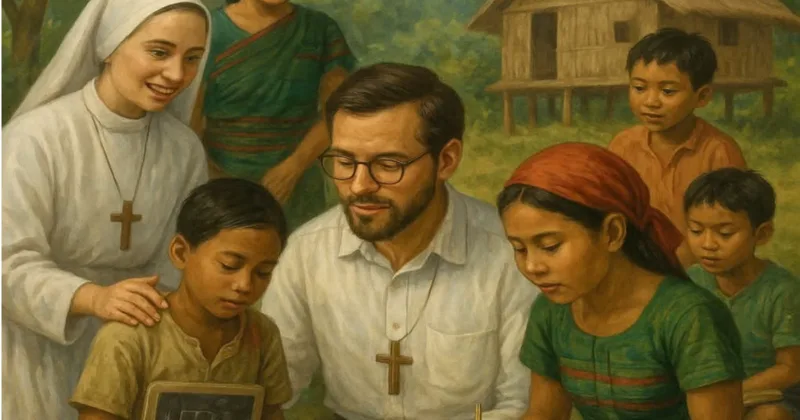
In Mizoram, a silent yet deeply concerning transformation is taking place, the steady decline of the Buddhist population, particularly among the Chakma community. Every year, more families are converting to Christianity. On the surface, it may appear as an act of free will, but the truth beneath reveals a painful reality rooted in deprivation, exclusion, and desperation.

Yes, we belong to one of the most marginalized sections of society. Our communities have long been neglected when it comes to access to quality education, medical facilities, clean water, housing, and sustainable livelihood opportunities. The deprivation is not just economic but also systemic. In such a scenario, faith becomes secondary to survival. People are not converting out of deep theological conviction but simply to escape poverty, neglect, and social isolation.

A Buddhist monk will never go door to door seeking converts. They will not promise material aid in exchange for religious allegiance. Buddhism is about inner transformation, mindfulness, and liberation through understanding, not a numbers game. It does not come with incentives, nor does it compete with others in material outreach. But in today’s world, where communities are struggling to make ends meet, the absence of institutional support makes Buddhism vulnerable, especially in regions where Christians have built strong social infrastructure.

Read More: Operation Sindoor Debate in Parliament: Amit Shah rebukes opposition, Jaishankar denies US role during military action

The Christian community in Mizoram has done what any strong institution should do, build schools, colleges, hospitals, and workplaces. These institutions serve both humanitarian and community purposes. And while no one is directly forced to convert, there is a very clear, undeniable pattern: if you convert, doors open. You gain easier access to hospitals, scholarships, hostel accommodations, jobs, and sometimes even social protection. These are lifesaving opportunities for poor families, and when you’re drowning, even a conditional lifeline seems better than none.

So, let’s be honest the pressure to convert is real, even if it is not violent. It comes silently, wrapped in the form of support, opportunity, and dignity. No one puts a gun to your head, but hunger, sickness, lack of schooling, and hopelessness do. We are not victims of forced conversion, but victims of circumstances where our own systems have failed to protect us, uplift us, and hold us together.

In a truly democratic and equal society, religion should be a matter of personal belief not a strategy for survival. The Indian Constitution guarantees us the Right to Freedom of Religion, but how meaningful is that right if you’re only free to choose between suffering and survival?

Our concern is not about any particular religion but about how poverty is weaponized intentionally or unintentionally to shift religious identity. The issue isn’t about Christianity or Buddhism, it’s about equity. When one community has hospitals and the other has none, conversions will continue not because one faith is superior, but because one system supports while the other remains absent.

We are not against development, nor do we oppose the services provided by any religious group. But it is time we ask: Where are the Buddhist institutions that support the poor, the sick, the uneducated among us? Where are the schools, hostels for our youth? If we continue to ignore this and believe that people will remain loyal to their faith even while starving, we are fooling ourselves.

To preserve our spiritual identity, we must first meet the basic needs of our people. Our monks, leaders, and organizations need to wake up. Spiritual teachings are powerful, but compassion must be backed by action food, education, and health. If we do not invest in our own communities, someone else will, and with that investment, they will naturally gain followers.

This is not a blame game. It is a wake up call. Either we build and uplift, or we continue to watch our numbers fade and our identity dissolve not by force, but by neglect.

Let’s ensure our people don’t have to choose between faith and survival.

The educational infrastructure in the Chakma areas is abysmal. Government schools often lack trained teachers, basic facilities like benches and toilets, or even classrooms in some villages. While other parts of Mizoram have seen notable improvements in literacy and educational standards, Chakma majority areas remain stagnated due to a lack of government attention and investment.

Healthcare, a fundamental human right, is a luxury for the Chakmas. Most villages depend on traditional medicine or untrained practitioners. The nearest Community Health Centre is often hours away. Maternal and child health, in particular, suffers due to the absence of facilities, or emergency transport.

One of the most painful aspects of this marginalization is the internal misgovernance within the Chakma Autonomous District Council itself. Though the Council was formed to provide self-governance and ensure development for the Chakmas, its leadership has failed to bring about real progress. Funds meant for development and welfare are often misused or unaccounted for. Corruption and nepotism have paralyzed governance, and the youth, educated and unemployed, feel betrayed by their own representatives.

There is hardly any mechanism for transparency or public accountability within the CADC. Revolutionary change is impossible when leaders prioritize personal gain over collective welfare. This failure has turned the council into a symbolic institution, existing more in name than in effective service to the people.

Mizoram has three Autonomous District Councils for the Lai, Mara, and Chakma communities. Out of these, the Chakma council consistently receives the lowest budget allocation. This reflects both state level discrimination and the inability of CADC leaders to negotiate or demand fair treatment. The lack of political representation at the state level further compounds the problem, leaving the Chakmas voiceless in crucial decisions.


Topics: MizoramChristiansBuddhistsChakmas
ShareTweetSendShareSend
✮ Subscribe Organiser YouTube Channel. ✮
✮ Join Organiser's WhatsApp channel for Nationalist views beyond the news. ✮
Previous News

Divya Drishti: AI, drones and sensors-to-shooters; Indian Army charts future warfare in Himalayas

Next News

How are the BBC & NYT feeding the world Hamas’s propaganda one lie at a time?

Related News

Representative Image

UN flags Pakistan’s playbook: Abduct Hindu, Christian minor girls; rape, convert to Islam & marry them to old Muslims

Residents stand near burned buildings after an attack by Islamic State-linked terrorists in Guyaku, Adamawa state, northeastern Nigeria, where at least 29 people were killed

Nigeria massacre: Islamic State West Africa Province claims responsibility for killing 25 Christians; Toll rises to 29

Mann Ki Baat: Prime Minister Modi praises the bamboo revolution of Northeast India

Legal Complaint Seeks Action Over Church-Linked Pamphlets Targeting BJP in Tamil Nadu

Tamil Nadu Poll Row Deepens: LRO flags ‘DMK–Church funding nexus’; Complaint filed to ECI over pamphlets targeting BJP

US naval vessels patrol strategic waters near the Strait of Hormuz as Washington enforces a blockade on Iran, heightening tensions and global trade concerns.

US President Donald Trump’s ‘Christ Image’ triggers outrage, cracks emerge in loyal support base

Constitutional Clarity vs. Ideological Noise: Supreme Court draws the line on scheduled caste status

Load More

Latest News

Prime Minister Narendra Modi

G7 Summit 2026: PM Modi says Global South wants partnership, not assistance

ED summons hoteliers in Gulmarg Land Scam

J&K: ED cracks down on Gulmarg land scam: 9 hoteliers including Mushtaq Chaya summoned in Roshni scheme probe

U.S. Consulate General Hyderabad Office
(Inside box- Telangana CM Revanth Reddy)

BJP Telangana questions Congress and CM Revanth Reddy over renaming a road in Hyderabad as ‘Donald Trump Avenue’

ABVP protests at Telangana School Education Directorate over closure of 24,000 government schools

Rabindranath Tagore

Rabindranath Tagore and the revival of Hindu civilisational pride

Representative Image

Viksit Bharat Shiksha Adhishthan Bill 2025: Mandate to promote Bharatiya ‘Gyan’ & ‘Bhasha’

Uttar Pradesh: Digital democracy dialogue ‘Triveni’ concludes; Focused on inclusive growth & cultural discourses

RSS Pune organises workshop on “Preparing for the AI Era”; Experts stress on AI literacy and Atmanirbharata in AI

Assam Governor Lakshman Prasad Acharya leads sacred Buddha relics mission to Mongolia

India- Mongolia Relations: Celebrating the spiritual neighbourhood

The AN-32: Service, sacrifice and the search for a successor

Load More
  • Privacy
  • Terms
  • Cookie Policy
  • Refund and Cancellation
  • Delivery and Shipping

© Bharat Prakashan (Delhi) Limited.
Tech-enabled by Ananthapuri Technologies

  • Home
  • Search Organiser
  • Bharat
    • Assam
    • Bihar
    • Chhattisgarh
    • Jharkhand
    • Maharashtra
    • View All States
  • World
    • Asia
    • Africa
    • North America
    • South America
    • Europe
    • Australia
  • Editorial
  • Operation Sindoor
  • Opinion
  • Analysis
  • Defence
  • Culture
  • Sports
  • Business
  • RSS @ 100
  • Entertainment
  • More ..
    • Sci & Tech
    • Vocal4Local
    • Special Report
    • Education
    • Employment
    • Books
    • Interviews
    • Travel
    • Health
    • Politics
    • Law
    • Economy
    • Obituary
  • Subscribe Magazine
  • Read Ecopy
  • Advertise
  • Circulation
  • Careers
  • About Us
  • Contact Us
  • Policies & Terms
    • Privacy Policy
    • Cookie Policy
    • Refund and Cancellation
    • Terms of Use

© Bharat Prakashan (Delhi) Limited.
Tech-enabled by Ananthapuri Technologies