Trump 2.0 spurs global shift to strategic autonomy
June 24, 2026
  • Read Ecopy
  • Circulation
  • Advertise
  • Careers
  • About Us
  • Contact Us
Android AppiPhone AppArattai
Organiser
  • ‌
  • Bharat
    • Assam
    • Bihar
    • Chhattisgarh
    • Jharkhand
    • Maharashtra
    • View All States
  • World
    • Asia
    • Europe
    • North America
    • South America
    • Africa
    • Australia
  • Editorial
  • International
  • Opinion
  • RSS @ 100
  • More
    • Op Sindoor
    • Analysis
    • Sports
    • Defence
    • Politics
    • Business
    • Economy
    • Culture
    • Special Report
    • Sci & Tech
    • Entertainment
    • G20
    • Azadi Ka Amrit Mahotsav
    • Vocal4Local
    • Web Stories
    • Education
    • Employment
    • Books
    • Interviews
    • Travel
    • Law
    • Health
    • Obituary
  • Subscribe
    • Subscribe Print Edition
    • Subscribe Ecopy
    • Read Ecopy
  • ‌
  • Bharat
    • Assam
    • Bihar
    • Chhattisgarh
    • Jharkhand
    • Maharashtra
    • View All States
  • World
    • Asia
    • Europe
    • North America
    • South America
    • Africa
    • Australia
  • Editorial
  • International
  • Opinion
  • RSS @ 100
  • More
    • Op Sindoor
    • Analysis
    • Sports
    • Defence
    • Politics
    • Business
    • Economy
    • Culture
    • Special Report
    • Sci & Tech
    • Entertainment
    • G20
    • Azadi Ka Amrit Mahotsav
    • Vocal4Local
    • Web Stories
    • Education
    • Employment
    • Books
    • Interviews
    • Travel
    • Law
    • Health
    • Obituary
  • Subscribe
    • Subscribe Print Edition
    • Subscribe Ecopy
    • Read Ecopy
Organiser
  • Home
  • Bharat
  • World
  • Operation Sindoor
  • Editorial
  • Analysis
  • Opinion
  • Culture
  • Defence
  • International Edition
  • RSS @ 100
  • Magazine
  • Read Ecopy
Home International Edition America USA

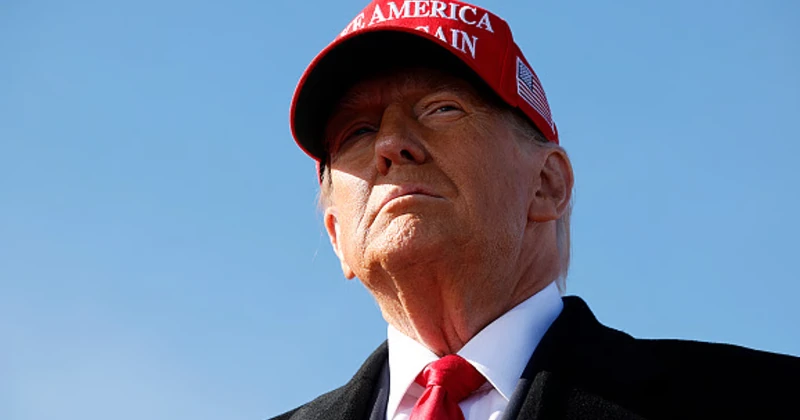
US President Donald Trump 2.0 spurs global shift to strategic autonomy

Trump’s second term is reshaping global alliances, pushing Europe and Asia to reduce dependence on the US and embrace strategic autonomy. As nations adapt to U.S. unpredictability, India’s balanced, self-reliant approach emerges as a model for navigating the new world order

Vedika ZnwarVedika Znwar
Jul 24, 2025, 09:00 am IST
in USA, World, International Edition
Follow on Google News
FacebookTwitterWhatsAppTelegramEmail

Donald Trump’s return to the White House is shaking up the global political scene. It is disrupting long-standing alliances and pushing countries to rethink their strategies. His straightforward, America-first approach has changed what is expected from even the most reliable allies. This shift has exposed the weakness of the international partnerships that were formed after World War II. These alliances, once based on shared commitments to working together and collective security, now face a crucial choice: change or break apart.

In Europe, Trump’s policies have created serious concern. During his second term, he imposed tariffs of 30 per cent on EU goods, damaging the notion of economic partnership on a continent that has long relied on US support. France and Britain, once comfortable depending on American backing, are striving to regain their independence. President Emmanuel Macron’s call for a unified Franco-British front, free from reliance on both the US and China, reflects a growing desire for self-sufficiency. Britain’s Labour leadership under Keir Starmer reflects this change as well, preferring stronger ties within Europe over traditional ties with the United States. These developments indicate that Europe might be entering a new period, where its future relies less on the goodwill of Washington and more on its own determination and unity.

In the Indo-Pacific, Trump’s America-first vision has also had a significant impact. Japan, a steadfast US ally, reacted negatively to the 25 per cent tariffs placed on its exports. Prime Minister Shigeru Ishiba stated that Tokyo needs to lessen its reliance on Washington. Similarly, Australia, viewed as a key part of regional security, is asserting its independence. Prime Minister Anthony Albanese stressed that being allies does not mean being subordinate, promoting an Australia-first stance even as Canberra strengthens its ties with China. Countries in Asia are thus trying to find a balance, maintaining a crucial security relationship with the US while building their independence in the face of unpredictable American policies.

India, while not a formal ally, stands out for its readiness. Having based its foreign policy on the idea of self-sufficiency for years, India has successfully navigated various global changes, from the 1962 Sino-Indian War to the US-China thaw in the 1970s, and from the fall of the Soviet Union to the rise of China-Russia cooperation. This resilience allows New Delhi to address the current turmoil with more flexibility. Although India has not yet faced Trump’s tariffs, it has started trade discussions with Washington, with a crucial deadline on August 1 looming. Delhi recognizes that failing to reach an agreement could prompt Trump to withdraw support.

The underlying theme across both continents is a growing strategic shift: alliances are no longer fixed but now require constant care and can change based on circumstances. Europe’s push for self-defence, spurred by talks of nuclear coordination and deeper military integration, is a direct response to US unpredictability.

In Asia, the relative underdevelopment of regional institutions complicates efforts to reduce risk, but the same principle applies: diversify partnerships, build local capabilities, and lessen dependence on sudden policy changes.

This major shift in global alignments reveals a key truth about international relations: interdependence does not guarantee stability. Nations and governments are increasingly aware that economic ties and defense agreements provide little security when domestic political landscapes change. Trump’s second term highlights this lesson. For the US, it may mean more control over its own future, but for its allies, it brings a time of significant uncertainty.

In response, Europe and Asia need to speed up their shift from dependence to empowerment. Europe is making progress toward a strategic revival by building stronger military structures, enhancing continental unity, and reducing ties to American support. Asia, which lags in integration, has to step up: it should strengthen regional organizations, invest in multilateral security discussions, and enhance cooperation through frameworks like ASEAN, the Quad, and EU partnerships. Both regions also need to diversify their economic connections, relying less on Washington and more on each other and trustworthy partners.

India’s role in this situation is unique, if not crucial. Its commitment to strategic autonomy aligns with broader global trends. Delhi has successfully balanced cautious engagement with Washington and outreach to an increasingly multi-polar world. Its trade discussions reflect this dual strategy: being open to interactions but never so open as to compromise its sovereignty. As US unpredictability becomes the norm, India’s ability to navigate uncertainty by forming flexible connections across strategic, economic, or technological lines serves as a model for others.

Ultimately, Trump’s second term is not just disrupting alliances; it is calling for a new world order. Strategic autonomy, once a minor goal, is now essential. Regional groups need to grow, defense commitments must strengthen, and economies must find balance within diverse supply chains. The era of alliances that can be abandoned has begun; it brings forth a world of redefined connections and intentional partnerships.

This ongoing change does not mean a break from cooperation, but a new way of looking at it. Nations are realizing that in a world where sudden withdrawal can happen, real security comes from within: from confidence, from shared strength, and from the ability to recover when things go wrong. In this global realignment, the key question is no longer “Who is our ally?” but rather, “How resilient are we, and how ready are we for when our alliances falter?”
 

Topics: World War IITrump 2.0EU goodsDonald TrumpUS- China
ShareTweetSendShareSend
✮ Subscribe Organiser YouTube Channel. ✮
✮ Join Organiser's WhatsApp channel for Nationalist views beyond the news. ✮
Previous News

Preaching Islam inside Hindu temple does not amount to conversion, rules Karnataka HC; Quashes FIR against 3 Islamists

Next News

PM Modi lands in UK to a warm welcome on fourth visit, as FTA push gains momentum

Related News

Prime Minister Narendra Modi with US President Donald Trump

A Handshake, Not a Hug: Why PM Modi must assert India’s strategic red lines in his crucial meeting with Trump

Prime Minister Narendra Modi with US President Donald Trump

Hormuz Disruptions: “Several Indian civilians lost lives,” says PM Modi & expresses concern in presence of Trump

U.S. Consulate General Hyderabad Office
(Inside box- Telangana CM Revanth Reddy)

BJP Telangana questions Congress and CM Revanth Reddy over renaming a road in Hyderabad as ‘Donald Trump Avenue’

Strait of Hormuz at the centre of global energy crisis as US-Iran tensions reshape West Asia

West Asia Crisis: Why opening the Strait of Hormuz could be the key to lasting peace between Iran & US

Trump administration praises New Delhi over Bengal election win while reviving fake mediation claim on Operation Sindoor

Trump’s Diplomatic Double Game: Congratulates PM Modi on Bengal, pushing Pakistan’s narrative on ‘Operation Sindoor’

US President Donald Trump, Iran's
Supreme Leader Mojtaba Khamenei,
Israeli Prime Minister Benjamin Netanyahu

US–Iran agree to two-week ceasefire amid rival victory claims; Israel backs pause, excludes Lebanon, tensions persist

Load More

Latest News

President Droupadi Murmu confers the Padma Shri on former civil servant R.V.S. Mani on June 23, 2026.

Former MHA official RVS Mani honoured with Padma Shri for contributions to internal security

Tamil Nadu: Temple funds only for temple property; TVK govt concedes before Madras High Court

Keralam’s former Industries Secretary, Mohammed Haneesh IAS (Right Side)

Keralam Cashew Scam: Former Industries Secretary Md Haneesh apologises before High Court after contempt proceedings

Tamil Nadu: Assembly Speaker directs all bureaucrats to strictly follow warrant of precedence after Mayor-MLA row

Kamakhya Mandir

Kamakhya Mandir’s Ambubachi Mela: The ancient tradition that honours the menstruation of mother Earth

Amazon in dock for mocking Hindu Gods

Amazon File: From Ganesha to Aryabhata – Has Amazon India become a platform for Anti-Hindu narratives?

The West Bengal Budget 2026–27 aims to drive growth through infrastructure, industry, innovation and welfare

Reimagining Bengal: How the West Bengal Budget 2026–27 seeks to balance growth, welfare & economic transformation

Pratiraksha is Gujarat Police's Aadhaar-based verification platform designed to identify illegal workers and prevent identity fraud in industrial sectors

Pratiraksha: How Gujarat police uses Aadhaar verification to secure industrial workforce against identity fraud

Israel-Iran crisis has highlighted not only shifting dynamics of West Asia but also growing confidence of India's foreign policy

India, Israel and the rise of strategic autonomy in an era of global geopolitical realignment

Saleem and Jaleel arrested in forced religious conversion case

Karnataka Conversion Case: Forced conversion of Hindu woman and minor son sparks outrage; Saleem and Jaleel arrested

Load More
  • Privacy
  • Terms
  • Cookie Policy
  • Refund and Cancellation
  • Delivery and Shipping

© Bharat Prakashan (Delhi) Limited.
Tech-enabled by Ananthapuri Technologies

  • Home
  • Search Organiser
  • Bharat
    • Assam
    • Bihar
    • Chhattisgarh
    • Jharkhand
    • Maharashtra
    • View All States
  • World
    • Asia
    • Africa
    • North America
    • South America
    • Europe
    • Australia
  • Editorial
  • Operation Sindoor
  • Opinion
  • Analysis
  • Defence
  • Culture
  • Sports
  • Business
  • RSS @ 100
  • Entertainment
  • More ..
    • Sci & Tech
    • Vocal4Local
    • Special Report
    • Education
    • Employment
    • Books
    • Interviews
    • Travel
    • Health
    • Politics
    • Law
    • Economy
    • Obituary
  • Subscribe Magazine
  • Read Ecopy
  • Advertise
  • Circulation
  • Careers
  • About Us
  • Contact Us
  • Policies & Terms
    • Privacy Policy
    • Cookie Policy
    • Refund and Cancellation
    • Terms of Use

© Bharat Prakashan (Delhi) Limited.
Tech-enabled by Ananthapuri Technologies