


Pakistan uses Ramyana to soften global image post Ops Sindoor
October 22, 2026
  • Read Ecopy
  • Circulation
  • Advertise
  • Careers
  • About Us
  • Contact Us
Android AppiPhone AppArattai
Organiser
  • ‌
  • Bharat
    • Assam
    • Bihar
    • Chhattisgarh
    • Jharkhand
    • Maharashtra
    • View All States
  • World
    • Asia
    • Europe
    • North America
    • South America
    • Africa
    • Australia
  • Editorial
  • International
  • Opinion
  • RSS @ 100
  • More
    • World Hindu Congress 2026
    • Op Sindoor
    • Analysis
    • Sports
    • Defence
    • Politics
    • Business
    • Economy
    • Culture
    • Special Report
    • Sci & Tech
    • Entertainment
    • G20
    • Azadi Ka Amrit Mahotsav
    • Vocal4Local
    • Web Stories
    • Education
    • Employment
    • Books
    • Interviews
    • Travel
    • Law
    • Health
    • Obituary
  • Subscribe
    • Subscribe Print Copy
    • Subscribe & Read Ecopy
Organiser
  • Home
  • Bharat
  • World
  • Operation Sindoor
  • Editorial
  • Analysis
  • Opinion
  • Culture
  • Defence
  • International Edition
  • RSS @ 100
  • Magazine
  • Read Ecopy
Home Bharat

Ramayana Diplomacy? Pakistan uses Hindu epic to soften global image after Ops Sindoor & Indus treaty fallout

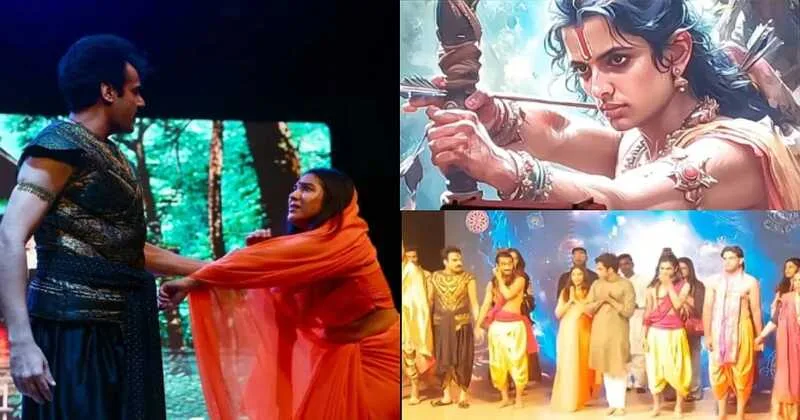
Pakistan’s staging of the Ramayana in Karachi comes amid mounting international pressure following India’s Operation Sindoor, the cancellation of the Indus Waters Treaty, and a global diplomatic offensive that exposed Islamabad’s terror links. The high-tech theatrical production is being viewed as a soft-power attempt to recast Pakistan’s image in the face of escalating scrutiny

Dr Vishnu AravindDr Vishnu Aravind
Jul 14, 2025, 04:45 pm IST
inBharat, World, Asia, International Edition
Representative Image

Representative Image

Facebook
Twitter
WhatsAppTelegramEmail

In what appears to be a carefully timed cultural outreach and diplomacy, Pakistan has staged a theatrical adaptation of the Ramayana in Karachi just weeks after India’s successful Operation Sindoor, the cancellation of the Indus Waters Treaty, and a high-level all-party diplomatic mission that exposed Pakistan-sponsored terrorism in multiple foreign capitals. The performance is being viewed as a soft-power manoeuvre aimed at mitigating international pressure and reshaping Pakistan’s image as it faces growing isolation over its links to cross-border extremism and its treatment of minorities.

The AI-enhanced production, directed by Yoheshwar Karera and performed by the drama group Mauj at the Karachi Arts Council, has drawn positive responses for its visual storytelling and fidelity to the ancient Hindu epic. The use of artificial intelligence tools, vibrant costumes, dynamic lighting, and live music added a contemporary layer to the narrative of good triumphing over evil. Karera described the project as an effort to foster understanding. “To me, bringing the Ramayana to life on stage is a visual treat and shows the Pakistani society is more tolerant than it is often given credit for,” he said, expressing confidence that the performance would not face backlash.

However, the broader context surrounding the production cannot be ignored. The play follows India’s launch of Operation Sindoor, a precise military strike targeting terror infrastructure inside Pakistan. The operation came in the wake of the Pahalgam terror attack, in which 26 Indian civilians were killed. India’s diplomatic response was swift and coordinated: a multi-nation all-party delegation, comprising senior ministers, opposition leaders, and career diplomats, visited several countries to present hard evidence of Pakistan’s ongoing support for jihadist groups operating across South Asia. The mission succeeded in rallying international opinion, increasing scrutiny of Pakistan’s actions on global platforms.

Performance of Ramayan in Karachi, Pakistan pic.twitter.com/6kciamWJap

— Sabahat Zakariya (@sabizak) July 13, 2025

In this climate of exposure and accountability, the staging of the Ramayana, a central text in Hindu tradition, by a Pakistani troupe has drawn attention for its symbolism. With growing demands for transparency on terror financing and minority rights violations, the performance is being interpreted as part of an effort to project religious harmony and inclusiveness to a global audience. Yet, this symbolic act stands in stark contrast to Pakistan’s documented record of persecution of religious minorities.

Over the years, Pakistan’s Hindu and Sikh communities have faced systemic discrimination, forced conversions, temple vandalism, and mob violence. Reports from human rights organisations and India have repeatedly flagged Pakistan for its failure to protect non-Muslim citizens. In such a context, the public staging of a revered Hindu epic, though culturally significant, raises concerns about selective tolerance and diplomatic theatrics.

While art critic Omair Alavi praised the production’s sincerity and creative vision, cultural initiatives alone cannot alter global perception. Islamabad’s challenge is not one of presentation but of policy. Following India’s decision to terminate the Indus Waters Treaty, a landmark agreement that had weathered decades of bilateral strain, Pakistan finds itself cornered diplomatically and economically.

Attempts to recast its image through performances and symbolic gestures are unlikely to succeed without concrete shifts on the ground. Religious harmony cannot be proclaimed from a stage while communities suffer offstage. Counterterrorism credibility cannot be built through soft power while terror infrastructure remains active. As India sharpens its strategic and diplomatic response, and as international partners demand accountability, one Ramayana on stage cannot erase the narrative written by decades of violence, denial, and duplicity.

Topics: Indus Water TreatyOperation Sindoor
Dr Vishnu Aravind
Dr Vishnu Aravind
Dr Vishnu Aravind is a researcher, political commentator and writer based in New Delhi, with a PhD from Jawaharlal Nehru University (JNU). His areas of interest include international politics, Indian foreign policy, electoral politics, election analysis, political developments, and cultural affairs. [Read more]
Share
Tweet
SendShareSend
✮ Subscribe Organiser YouTube Channel. ✮
✮ Join Organiser's WhatsApp channel for Nationalist views beyond the news. ✮
Previous News

UP: VHP demands action against Ejaz for posing as Hindu Azad Singh to marry woman & forced her and daughter to convert

Next News

Punjab: 4 men posing as Nihangs, including a gurdwara granthi arrested within 10 hrs for abducting & looting a woman

Related News

President Droupadi Murmu, Prime Minister Narendra Modi and Union Home Minister Amit Shah greeted air warriors on Indian Air Force Day

Indian Air Force Day: President Murmu, PM Modi & Amit Shah laud air warriors’ courage, professionalism and commitment

A decade after the Surgical Strikes, India’s counter-terror response has evolved from Uri and Balakot to Operation Sindoor

10 years of surgical strikes: From Uri to Balakot and Operation Sindoor, how India’s counter-terror response evolved

Suicide attack in Khyber Pakhtunkhwa leaves 16 killed and 30 injured

Khyber Pakhtunkhwa: 16 killed, 30 injured as suicide attacker rams against joint check post in Dera Ismail Khan

Pakistan PM Shehbaz Sharif

How Shehbaz Sharif peddled anti-India propaganda at UN? Terrorism, Kashmir & Indus Treaty—Exposing Pakistan’s theatrics

Operation Sindoor: Pakistan Repairs Sargodha Runway Again After 16 Months

Sixteen months after Operation Sindoor, Pakistan still repairs Sargodha Airbase runway: Reports

Army Chief General Dhiraj Seth

India-Russia defence ties get a major push as Army Chief General Dhiraj Seth heads to Moscow

Load More

Latest News

(Left) CJP leader Saurav Das (Right) Ashutosh Ranka (This is an AI generated image)

CJP leaders released after written undertaking not to call Jantar Mantar protests; Lawyer apologises to court

Representative Image (This is an AI generated image)

The Neha Bora Phenomenon: Student agitations, Maoist legacy, and the Urban Naxals

Schoolchildren walk outside an educational institution in Scotland amid heightened security concerns across the United Kingdom.

UK shuts 300 schools after ‘Allahu Akbar’ emails trigger panic amid Left-Islamist unrest rocking Europe

Tamil Nadu: Madras HC says using children in poll campaigns is in ‘bad taste’, calls for national debate

Hindu Americans contribute to US prosperity while preserving Sanatan Dharma through temples, culture and Seva

From Sanatan Dharma to Global Success: How Hindus are shaping America through enterprise, innovation and seva

CJP’s protests and Prashant Bhushan’s ‘regime change’ statement raise questions about the agitation’s broader political agenda

Conspiracy for ‘Regime Change’ in Bharat Exposed: CJP protests and left-wing mobilisation raise questions

75th Foundation Day of Bharatiya Jana Sangh: Dr Syama Prasad Mookerjee’s vision & journey from opposition to governance

Representative Image

Dussehra shocker by Congress govt of Karnataka: Power bills set to rise by 50 paise per unit; R Ashoka slams govt

The RSS path sanchalan at JNU highlighted national consciousness, discipline and cultural nationalism

RSS Completes a Century: JNU Vijayadashami Path Sanchalan highlights the ideals of organisation & national service

PoJK: The Homeland Left Behind

PoJK: The Homeland Left Behind

Load More
  • Privacy
  • Terms
  • Cookie Policy
  • Refund and Cancellation
  • Delivery and Shipping

© Bharat Prakashan (Delhi) Limited.
Tech-enabled by Ananthapuri Technologies

  • Home
  • Search Organiser
  • Bharat
    • Assam
    • Bihar
    • Chhattisgarh
    • Jharkhand
    • Maharashtra
    • View All States
  • World
    • Asia
    • Africa
    • North America
    • South America
    • Europe
    • Australia
  • Editorial
  • Operation Sindoor
  • Opinion
  • Analysis
  • Defence
  • Culture
  • Sports
  • Business
  • RSS @ 100
  • Entertainment
  • More ..
    • Sci & Tech
    • Vocal4Local
    • Special Report
    • Education
    • Employment
    • Books
    • Interviews
    • Travel
    • Health
    • Politics
    • Law
    • Economy
    • Obituary
  • Subscribe Magazine
  • Read Ecopy
  • Advertise
  • Circulation
  • Careers
  • About Us
  • Contact Us
  • Policies & Terms
    • Privacy Policy
    • Cookie Policy
    • Refund and Cancellation
    • Terms of Use

© Bharat Prakashan (Delhi) Limited.
Tech-enabled by Ananthapuri Technologies