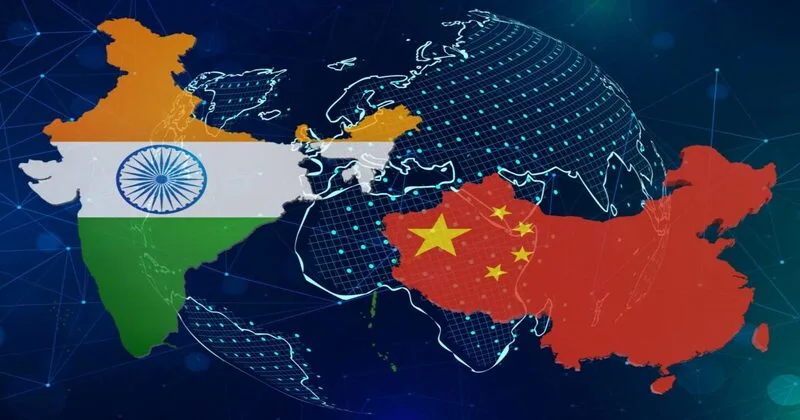
New Delhi’s resolute stance at the June 26, 2025, SCO Defence Ministers’ meeting in Qingdao, China, where Defence Minister Rajnath Singh firmly refused to endorse the joint statement, sends an unmistakable signal to the international community. This wasn’t merely a diplomatic disagreement; it was a powerful assertion of Bharat’s unwavering commitment to combating radical Islamic terrorism and a decisive pushback against attempts to dilute this critical global challenge.
Why this stand is crucial for Bharat
Calling out state-sponsored terrorism: India’s refusal was a direct condemnation of the insidious practice of state-sponsored terrorism. The omission of the horrific April 2025 Pahalgam attack, which tragically claimed 26 innocent lives, from the joint statement was a grave insult to the victims and a clear indication of a compromised agenda. The brazen attempt to shift the narrative by including references to Balochistan, seemingly to appease Pakistan, was a red line for Bharat. It is imperative that international forums do not become platforms for whitewashing terror or legitimising narratives that undermine India’s territorial integrity and security.
Zero tolerance for double standards: Defence Minister Singh’s statement, “those who perpetrate, organise, finance, and sponsor heinous acts of terrorism, including cross-border terrorism must be held accountable and brought to justice,” is not just rhetoric. It reflects Bharat’s consistent demand for global accountability. This refusal highlights China’s troubling pattern of shielding Pakistan, a known hub of terror, from international scrutiny. For too long, some nations have played a dangerous game of selective outrage against terrorism, and India’s refusal demonstrates that Bharat will not be a silent spectator to such hypocrisy.
Safeguarding national interest: The Pahalgam attack was a stark reminder of the persistent cross-border terror threat India faces. For India, acknowledging such acts in multilateral documents is not a trivial matter but a vital step in building a united front against this menace. By rejecting a diluted statement, India ensured that its security concerns and territorial sensitivities, especially concerning Pakistan-backed terror groups, were not compromised on an international platform.
This strong stand is not an isolated incident but part of a consistent and principled foreign policy under the current Indian leadership. India has repeatedly demonstrated its willingness to stand firm, even against major powers like China, when its core interests and values are at stake. This report outlines at least ten more instances between 2016 and 2025 where India either refused, boycotted, or strongly opposed proposals backed by China in multilateral forums, showcasing a clear trajectory of asserting its strategic autonomy.
India’s unwavering stance: Rejecting SCO statement on Israel-Iran conflict
On June 14, 2025, India once again demonstrated its independent foreign policy by refusing to associate itself with a statement issued by the Shanghai Co-operation Organisation. The statement, spearheaded by China, strongly condemned Israel’s military strikes on Iran, labelling them as “aggressive actions against civilian targets… a gross violation of international law and the UN Charter.”
Bharat’s decision to distance itself from this joint declaration marks a continued show of solidarity with Israel. This comes shortly after Bharat abstained from voting on a UN resolution calling for a ceasefire in Gaza, underscoring a consistent approach to the complex West Asian geopolitical landscape. This move by New Delhi signals its reluctance to be drawn into bloc-based condemnations that may not align with its nuanced diplomatic positions or national interests.
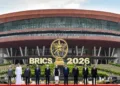
India calls out China’s double standards on terrorism at BRICS Summit
At the BRICS Summit in Johannesburg on October 23, 2024, Prime Minister Narendra Modi delivered a powerful message against the selective approach to counter-terrorism, indirectly but unequivocally pointing at China.
In his address, Prime Minister Modi emphasised that there can be “no place for double standards” in the global fight against terrorism. He specifically called out nations that differentiate between “good terrorists” and “bad terrorists” based on political convenience. This statement was a clear critique of countries that, despite professing to combat terrorism, often protect or enable certain terrorist groups or individuals due to strategic or political alignments. While not explicitly naming China, the remarks were widely understood as a direct challenge to Beijing’s long-standing practice of blocking international efforts to designate Pakistan-based terrorists.
India slams China’s double standards on terrorism at SCO Summit
At the virtual Shanghai Co-operation Organisation (SCO) Summit on July 4, 2023, chaired by India, Prime Minister Narendra Modi took a firm stand against terrorism, using the platform to deliver an indirect yet unmistakable message to China. This critique centred on Beijing’s persistent shielding of Pakistan-based terror networks, a long-standing point of contention for New Delhi.
Despite the summit’s outcome, which included the adoption of the ‘New Delhi Declaration’ and joint counter-radicalisation pledges, Bharat’s underlying criticism of China’s support for Pakistan remained a key undertone of the summit. This demonstrated India’s resolve to highlight the hypocrisy of some member states, even within a co-operative framework.
India slams China at UN for shielding 26/11 terrorist Sajid Mir
Bharat strongly condemned China’s move on June 20, 2023, to block a UN proposal, co-sponsored by India and the US, to blacklist Sajid Mir, a key handler of the horrific 2008 Mumbai attacks. This obstruction by China at the UN exposed its double standards on terrorism.
In a powerful response at the UN, Indian diplomat Prakash Gupta didn’t mince words. He famously played audio clips from the 26/11 attacks, a stark reminder of the brutality India endured, and directly accused China of “double standards” in the global fight against terrorism. Gupta sharply criticised the use of “petty geopolitical interests” to shield Pakistan-based terrorists, unequivocally declaring that such actions show a blatant “lack of genuine political will” to combat terror.
India slams China for blocking UN terror listing of Masood Azhar
On March 13, 2019, at the UN Security Council, Bharat, along with key allies the US, UK, and France, proposed to list Jaish-e-Mohammed chief Masood Azhar as a global terrorist. However, China once again obstructed this crucial move by placing a “technical hold” on the proposal.
Bharat vehemently expressed its disappointment, stating that such actions effectively protect terrorists and severely weaken global efforts against terrorism. Despite China’s repeated roadblocks, Bharat made it unequivocally clear that it would continue pushing for justice and would not back down from its commitment to holding terror masterminds accountable.
India rejects BRICS currency proposal, counters China’s Yuan Push
On February 4, 2025, India delivered a decisive blow to China’s ambitions of an alternative global currency by firmly rejecting the notion of a shared BRICS currency. This move conspicuously distanced New Delhi from Beijing’s aggressive push to internationalise the yuan and establish a non-dollar financial system. Bharat’s stance was rooted in deep-seated concerns over potential Chinese dominance within such a currency framework and a palpable lack of economic alignment among the diverse BRICS nations.
Union Commerce Minister Piyush Goyal, in a categorical statement, emphasised, “We are on record: we don’t support any BRICS currency. Imagine us having a currency shared with China. We have no plans. It is impossible to think of a BRICS currency.” This clear declaration underscored India’s resolve to maintain its financial sovereignty and avoid entanglement in schemes that could potentially serve another nation’s strategic economic agenda.
Bharat stays out as China-led RCEP bloc takes shape
On November 22, 2020, while 15 countries, including China, formally signed the Regional Comprehensive Economic Partnership (RCEP) to create the world’s largest free trade bloc, India notably chose to remain outside. This critical decision was driven by serious concerns over potential trade imbalances and the overwhelming possibility of China dominating the agreement, which could have severely impacted India’s domestic industries and agricultural sector.
The RCEP agreement, comprising 10 ASEAN nations along with China, Japan, South Korea, Australia, and New Zealand, represented a formidable economic grouping by population and GDP share. However, India prioritised the protection of its national economic interests and the livelihoods of its millions of small businesses and farmers over the allure of large-scale trade integration under terms perceived as unfavourable.
India terminates bilateral investment treaty with China amid strategic investment concerns
On October 3, 2018, India took a significant step by terminating its Bilateral Investment Treaty (BIT) with China, as part of a broader strategic move to end 58 such outdated treaties. This decision was largely propelled by New Delhi’s growing concerns over international arbitration risks and a clear desire to limit its exposure to broad investor protections that could be exploited against its national interests.
Bharat viewed the 2006 BIT with China as outdated and no longer fit for purpose in the contemporary geopolitical and economic landscape. After adopting a stricter Model BIT in 2015, India aimed to renegotiate these treaties on more favourable and precise terms, particularly with strategically significant countries like China. This move reflected India’s resolve to assert greater control over foreign investments and protect its regulatory space from undue external pressures.
India stands alone at SCO 2018, refuses to back China’s Belt and Road Initiative
At the Shanghai Co-operation Organisation (SCO) summit on June 10, 2018, India emerged as the sole dissenter, steadfastly refusing to endorse China’s ambitious Belt and Road Initiative (BRI). This was a significant diplomatic stand, given that Beijing had already secured agreements for the BRI with nearly 80 countries and international organisations.
While all other member states – Russia, Pakistan, Kazakhstan, Kyrgyzstan, Uzbekistan, and Tajikistan, alongside China, backed the initiative, Bharat’s Prime Minister articulated a clear objection by emphasising the critical need to “respect sovereignty” when dealing with infrastructure projects. This statement directly highlighted India’s long-standing concerns, particularly regarding the China-Pakistan Economic Corridor (CPEC), a key component of the BRI, which passes through Indian territory illegally occupied by Pakistan. India’s refusal underscored its unwavering commitment to its territorial integrity and its unwillingness to legitimise projects that infringe upon its sovereign rights.
Bharat refuses to sign the NPT over China’s nuclear status and strategic concerns
On July 21, 2016, Bharat reiterated its unwavering policy of refusing to sign the Nuclear Non-Proliferation Treaty (NPT). A key reason for this persistent stance was China’s inclusion as a recognised nuclear weapon state under the treaty. For Bharat, China’s nuclear status, despite being a regional rival and a significant source of security concern, highlights the discriminatory nature of the NPT.
The NPT, which allows only five countries to officially possess nuclear weapons (including China, which conducted its first nuclear test in 1964), has always been viewed by Bharat as fundamentally inequitable. New Delhi has consistently argued that the treaty legitimises the nuclear arsenals of certain nations while simultaneously denying the same right to others, like Bharat, who have developed nuclear capabilities for their national security. In 2016, the government explicitly informed the Lok Sabha that it would never accede to the treaty, echoing the long-held national consensus that the NPT is “discriminatory.” This firm decision reflects Bharat’s strategic autonomy and its refusal to compromise on its security interests based on a treaty it considers inherently biased.
New Delhi is increasingly embracing an assertive and independent diplomatic stance, especially when dealing with China and its positions in multilateral forums.
From consistently calling out China’s double standards on terrorism at various global platforms like the UN, BRICS, and SCO, to firmly rejecting economic proposals like the BRICS currency and RCEP, and even taking strategic actions like the termination of the Bilateral Investment Treaty, Bharat has demonstrated its unwavering commitment to its national interests and sovereign principles. The repeated refusal to endorse China’s Belt and Road Initiative and its long-standing opposition to the discriminatory Nuclear Non-Proliferation Treaty further underscore this resolve.
This pattern suggests that Bharat is no longer content with being a silent participant or merely seeking consensus at any cost. Instead, it is actively shaping the discourse, challenging narratives that are detrimental to its security or economic well-being, and standing firm on issues like cross-border terrorism and territorial integrity. This approach reflects a confident and self-assured Bharat, ready to stand alone if necessary, to uphold its values and safeguard its strategic autonomy on the global stage.