India's Ascendancy: Navigating a new regional order after the Pahalgam attack
July 15, 2026
  • Read Ecopy
  • Circulation
  • Advertise
  • Careers
  • About Us
  • Contact Us
Android AppiPhone AppArattai
Organiser
  • ‌
  • Bharat
    • Assam
    • Bihar
    • Chhattisgarh
    • Jharkhand
    • Maharashtra
    • View All States
  • World
    • Asia
    • Europe
    • North America
    • South America
    • Africa
    • Australia
  • Editorial
  • International
  • Opinion
  • RSS @ 100
  • More
    • Op Sindoor
    • Analysis
    • Sports
    • Defence
    • Politics
    • Business
    • Economy
    • Culture
    • Special Report
    • Sci & Tech
    • Entertainment
    • G20
    • Azadi Ka Amrit Mahotsav
    • Vocal4Local
    • Web Stories
    • Education
    • Employment
    • Books
    • Interviews
    • Travel
    • Law
    • Health
    • Obituary
  • Subscribe
    • Subscribe Print Edition
    • Subscribe Ecopy
    • Read Ecopy
  • ‌
  • Bharat
    • Assam
    • Bihar
    • Chhattisgarh
    • Jharkhand
    • Maharashtra
    • View All States
  • World
    • Asia
    • Europe
    • North America
    • South America
    • Africa
    • Australia
  • Editorial
  • International
  • Opinion
  • RSS @ 100
  • More
    • Op Sindoor
    • Analysis
    • Sports
    • Defence
    • Politics
    • Business
    • Economy
    • Culture
    • Special Report
    • Sci & Tech
    • Entertainment
    • G20
    • Azadi Ka Amrit Mahotsav
    • Vocal4Local
    • Web Stories
    • Education
    • Employment
    • Books
    • Interviews
    • Travel
    • Law
    • Health
    • Obituary
  • Subscribe
    • Subscribe Print Edition
    • Subscribe Ecopy
    • Read Ecopy
Organiser
  • Home
  • Bharat
  • World
  • Operation Sindoor
  • Editorial
  • Analysis
  • Opinion
  • Culture
  • Defence
  • International Edition
  • RSS @ 100
  • Magazine
  • Read Ecopy
Home Bharat

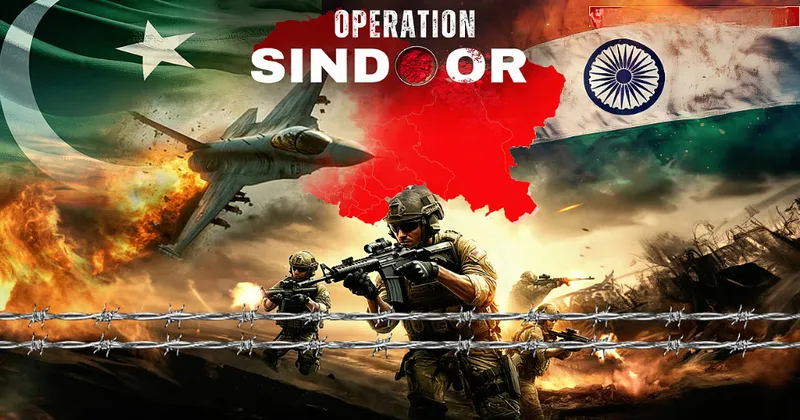
India’s Ascendancy: Navigating a new regional order after the Pahalgam attack

The aftermath of the Pahalgam terror attack has seemingly ushered in a new phase in India's regional strategy, one marked by a more assertive and proactive approach

Gopal GoswamiGopal Goswami
May 17, 2025, 08:10 pm IST
in Bharat, World, Asia
Follow on Google News
FacebookTwitterWhatsAppTelegramEmail

The reverberations of the horrific Pahalgam terror attack continue to reshape the geopolitical landscape of South Asia. In its aftermath, India’s decisive and unprecedented actions against terror camps across Pakistan-occupied Jammu and Kashmir (POJK) and within mainland Pakistan have not only served as a powerful retaliatory measure but have also heralded India’s emergence as a formidable and assertive power in the region. Prime Minister Narendra Modi’s resolute leadership during this crisis has solidified his image as a strong and responsible statesman on the global stage.

The widely reported, though unconfirmed, strike by India’s BrahMos missile on the Dera Noorkhan airbase, allegedly housing Pakistan’s nuclear weaponry, sent shockwaves across the region. The seismic tremors felt deep within Pakistan, akin to an earthquake, underscored the potency and reach of India’s strategic arsenal. While Islamabad vehemently denied any such strike or damage to its nuclear assets, the very speculation has fundamentally altered the strategic calculus, exposing vulnerabilities previously considered untouchable.

Compounding Pakistan’s woes, the internal dynamics within its borders are undergoing a dramatic shift. The long-simmering Baloch nationalist movement has seemingly reached a boiling point, with reports suggesting a significant escalation in their struggle for independence. Simultaneously, the people of POK have taken to the streets in large numbers, their cries for liberation from Pakistani rule echoing across the valleys. These widespread and sustained protests are a stark indicator of the deep-seated resentment against Islamabad’s administration and a yearning for self-determination.

Read More: India goes for diplomatic push against Pakistan; A multi-party delegation led by Shashi Tharoor to brief global leaders

Furthermore, the Pashtun population along the Afghanistan-Pakistan borderlands also exhibits growing discontent with Pakistan’s policies, adding another layer of instability to the already fragile nation. Adding to Pakistan’s isolation, the Taliban regime in Afghanistan, once considered an ally, has turned hostile, particularly after Pakistan’s recent expulsion orders targeting Afghan nationals. This dramatic downturn in relations has deprived Pakistan of a crucial strategic depth and further emboldened its adversaries.

In this dramatically altered regional scenario, India finds itself in an unprecedented position of strength. The decisive military response, coupled with the internal turmoil within Pakistan, has significantly enhanced India’s strategic leverage. This commanding position presents a unique opportunity for New Delhi to recalibrate its foreign policy and address long-standing geopolitical challenges.

One of the most significant opportunities lies in India’s engagement with China. The ambitious One Belt One Road (OBOR) initiative, Beijing’s flagship connectivity project, has faced considerable headwinds, particularly due to its contentious China-Pakistan Economic Corridor (CPEC) component that traverses through POK, an Indian territory occupied by Pakistan and Baluchistan. With Baluchistan’s potential separation from Pakistan and India’s enhanced control over POK, the strategic map for OBOR in this crucial region could be redrawn.

India should seize this moment to initiate negotiations with China, offering assurances of safety and cooperation for OBOR projects within Gilgit Baltistan (POK) if it’s integrated to Indian territories in exchange for areas occupied by China in Ladakh region and access to tangible benefits for its northern states through OROB. This could include enhanced connectivity, infrastructure development, and trade opportunities. Given the current complexities in US-China relations, Beijing can ill-afford to ignore India, its largest neighbour and a significant global market. New Delhi should strategically leverage these global dynamics to advance its regional interests and ensure its security and well-being.

Moreover, India can also benefit from China’s experience in dealing with radical Islamist elements. While India’s approach to its Muslim minority has historically been one of integration and inclusivity, understanding the nuances of managing radical ideologies is crucial in the current volatile regional environment. Engaging in dialogue with China on this front, could provide valuable insights into countering cross-border terrorism and maintaining internal security.

However, India must tread cautiously. While the current situation presents opportunities, it also carries inherent risks. A weakened and internally fractured Pakistan could become even more unpredictable, potentially leading to desperate measures. India must maintain a robust security posture and remain vigilant to any potential escalation.

Furthermore, engaging with China requires a nuanced and strategic approach. While cooperation on OBOR projects within India’s territory could be mutually beneficial, New Delhi must remain firm on its sovereignty concerns and ensure that any engagement does not compromise its strategic autonomy or long-term interests. Balancing economic opportunities with security imperatives will be key to navigating this complex relationship.

The emergence of a potentially independent Baluchistan also presents a complex set of considerations. While India has historically supported the Baloch people’s aspirations for self-determination, it must carefully consider the implications of a new nation on its western border. Ensuring stability and fostering positive relations with a future Baloch state will be crucial for regional security and economic connectivity. Baluchistan could be a boon for north Indian landlock states through OROB project, as it will be accessible from Ports on its coast.

Similarly, though the POK issue is long pending and warrants immediate solution in the wake of recent developments, the evolving situation in POK demands a calibrated approach. While the protests reflect the local population’s desire for liberation from Pakistan, India must carefully consider the political and security implications of any potential shift in the region’s status, especially with Pakistan’s nukes.

In conclusion, the post-Pahalgam attack scenario has propelled India into a position of unprecedented regional influence. Prime Minister Modi’s decisive leadership has been instrumental in this transformation. However, this newfound strength comes with significant responsibilities. India will now have to navigate a complex and rapidly evolving regional order with more wisdom, strategic foresight, and a commitment to long-term peace and stability. Engaging with China on OBOR, addressing internal dynamics within Pakistan and POK, and fostering positive relationships with emerging entities like Baluchistan will be crucial in shaping a secure and prosperous future for the region, with India at its helm as a responsible and powerful leader on the world stage. The path ahead requires a delicate balance of assertiveness and diplomacy, ensuring that India’s rise benefits not only itself but also contributes to the collective well-being of South Asia.

Topics: Pahalgam Terrorist attackIndiaChinaPoJK
Gopal Goswami
Gopal Goswami
Gopal Goswami, Columnist and founder, Surat Lit Fest Gopal Goswami stands at the intersection of intellectual depth, grassroots experience, and an unwavering commitment to nation-building. He has done his Ph. D from Sardar Vallabhbhai National Institute of Technology (SVNIT), Surat, Goswami brings to the contemporary discourse a rare blend of academic precision and lived reality. With a postgraduate degree in Public Administration and a doctorate in Business Management, his work transcends theoretical inquiry to engage directly with India’s socio-economic challenges. Rooted in the remote Himalayan village of Bageshwar, Uttarakhand, Goswami's early life, shaped by a disciplined army father and a resilient farmer mother, offers a firsthand perspective on the aspirations and struggles of rural India. These formative years, spent in government schools and colleges, laid the foundation for his lifelong empathy for the common citizen. His activism during the Mandal Commission agitation and the Uttarakhand statehood movement further cemented his commitment to social equity and justice. Goswami’s three-decade-long career in the construction sector, including leadership roles in projects of national importance and his current stewardship of the GAP Group in the ambitious Dholera SIR, has equipped him with a practical understanding of development and policy implementation. His association with the Rashtriya Swayamsevak Sangh (RSS) and his humanitarian efforts during the COVID-19 crisis highlight his deep engagement with societal welfare. As the founder of the Surat Literature Festival and a columnist for leading national dailies, Goswami also plays a pivotal role in shaping public thought. His upcoming book on India’s social welfare schemes, especially the Pradhan Mantri Awas Yojana in Surat, reflects his nuanced understanding of public policy and its impact on everyday lives. Through this work, Gopal Goswami emerges not only as a scholar but also as a vital voice in India's journey toward an inclusive and empowered future. www.gopalgoswami.com He is Chairman of www.gapgroup.in , www.jkprojectsindia.com www.greenmentors.in , www.srtlitfest.com [Read more]
ShareTweetSendShareSend
✮ Subscribe Organiser YouTube Channel. ✮
✮ Join Organiser's WhatsApp channel for Nationalist views beyond the news. ✮
Previous News

Politics can exist when there is nation: Shashi Tharoor responds to govt invitation to lead MP delegation

Next News

Operation Sindoor: New benchmark against terrorism from shakti to shanti

Related News

“Reuters-You can do better”: US Envoy Sergio Gor slams British news agency over fake narrative on India-US trade deal

External Affairs Minister Dr. S. Jaishankar launched India's campaign for the UNSC chair

India unveils campaign for UNSC seat; EAM Jaishankar outlines SHANTI vision for secure, peaceful & just world order

People gather in large numbers during an anti-Pakistan protest, in Muzaffarabad, Pakistan-occupied Jammu and Kashmir

POJK: Tumbling template of terroristan

Representative Image

PoJK protests hit White House as Kashmiri diaspora shouts anti-Pakistan slogans; Muzaffarabad rises against abuse

Commerce and Industry Minister Piyush Goyal

Fact Check: Piyush Goyal rejects Reuters report on India-US trade deal as “false & misleading”; Reaffirms balanced pact

Great Nicobar is emerging as a strategic gateway that strengthens India's maritime reach while increasing pressure on China's Malacca Dilemma

Great Nicobar Project to boost India’s Indo-Pacific leverage, deepen China’s Malacca Dilemma: Report

Load More

Latest News

Indian Railways is facing a growing encroachment challenge, with over 1,068 hectares of land under encroachment

RTI Exposes Massive Rail Land Grab: Over 1,068 hectares of Indian Railways land encroached

Madhya Pradesh's Uniform Civil Code draft proposes mandatory registration of live-in relationships

Madhya Pradesh: UCC draft proposes mandatory registration of live-in relationships, divorce & inheritance laws

Devotees gather in large numbers in Puri for Mahaprabhu Jagannath's Nabajaubana Darshan

Odisha: Mahaprabhu Jagannath appears in divine Nabajaubana form after 15-day anasara, thousands gather in Puri

India's Udyam Registration and Udyam Assist platforms are formalising MSMEs and driving inclusive entrepreneurial growth

How Udyam Registration and Udyam Assist are transforming India’s MSME and entrepreneurial ecosystem

Maoist Ravindra Ganjhu (Source: OpIndia)

Jharkhand: Maoist commander Ravindra Ganjhu with bounty of Rs 20 lakh arrested after 16 years

Gyanvapi Complex

Gyanvapi Row: Hindu side demands Mosque premises be vacated, Muslim side rejects mediation; Both seek court verdict

Union Minister Piyush Goyal (Left) and European Commissioner for Agriculture and Food, Christophe Hansen (Right)

India-EU FTA legal scrubbing nears completion; Trade pact set to become operational in early 2027

World Youth Skills Day 2026

World Youth Skills Day 2026: Equipping young people for a shared future in an AI-driven world

Kalyan Banerjee Blames Abhishek Banerjee’s ‘Camac Street Ecosystem’, I-PAC for TMC’s 2026 Poll Defeat

‘Camac street finished TMC’: Kalyan Banerjee blames Abhishek Banerjee, I-PAC for Bengal poll debacle and party split

Air India Crash: Final report to be out soon

Air India AI-171 crash probe enters final phase; Draft investigation report likely by October, AAIB tells Supreme Court

Load More
  • Privacy
  • Terms
  • Cookie Policy
  • Refund and Cancellation
  • Delivery and Shipping

© Bharat Prakashan (Delhi) Limited.
Tech-enabled by Ananthapuri Technologies

  • Home
  • Search Organiser
  • Bharat
    • Assam
    • Bihar
    • Chhattisgarh
    • Jharkhand
    • Maharashtra
    • View All States
  • World
    • Asia
    • Africa
    • North America
    • South America
    • Europe
    • Australia
  • Editorial
  • Operation Sindoor
  • Opinion
  • Analysis
  • Defence
  • Culture
  • Sports
  • Business
  • RSS @ 100
  • Entertainment
  • More ..
    • Sci & Tech
    • Vocal4Local
    • Special Report
    • Education
    • Employment
    • Books
    • Interviews
    • Travel
    • Health
    • Politics
    • Law
    • Economy
    • Obituary
  • Subscribe Magazine
  • Read Ecopy
  • Advertise
  • Circulation
  • Careers
  • About Us
  • Contact Us
  • Policies & Terms
    • Privacy Policy
    • Cookie Policy
    • Refund and Cancellation
    • Terms of Use

© Bharat Prakashan (Delhi) Limited.
Tech-enabled by Ananthapuri Technologies