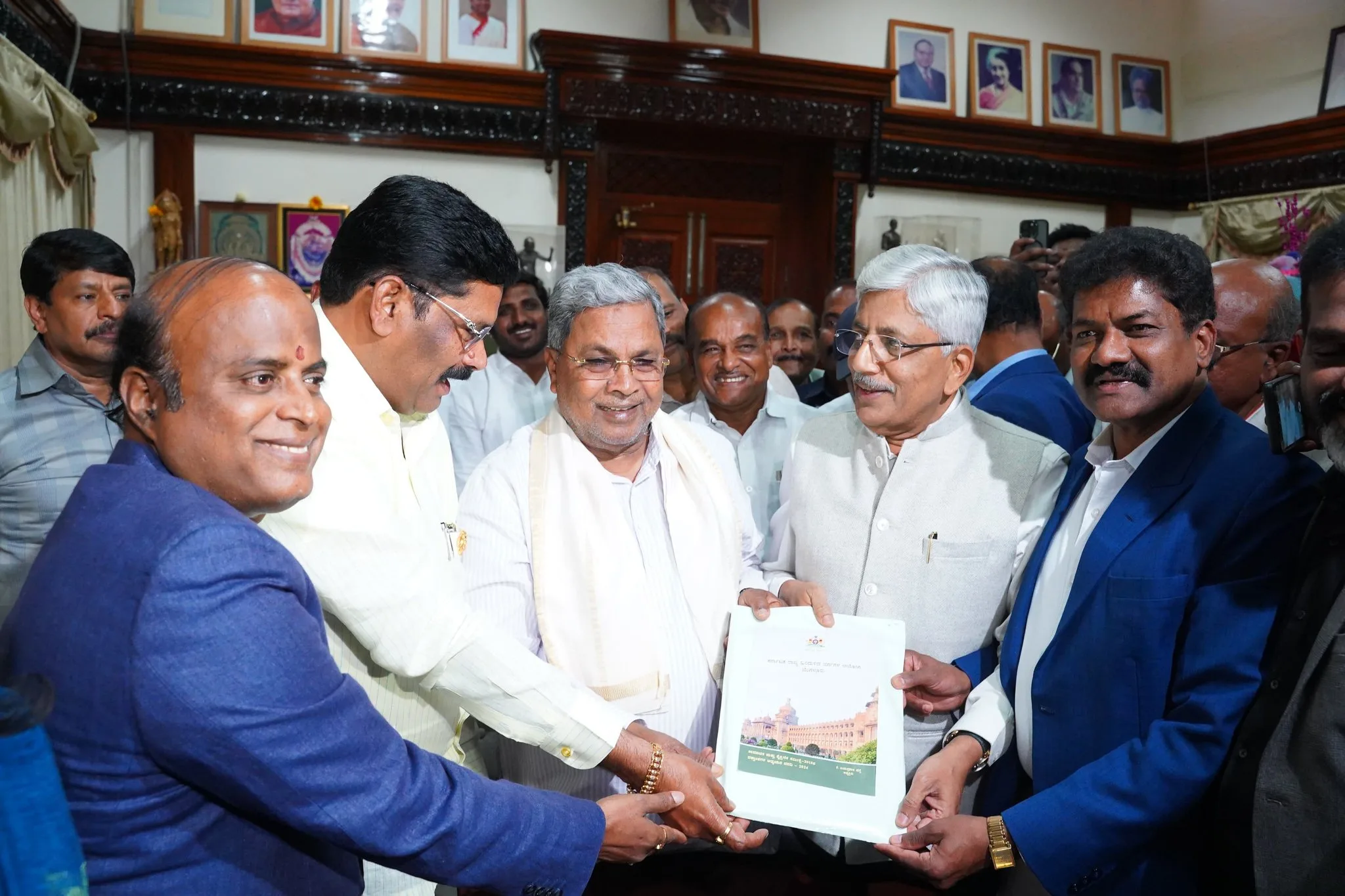
Karnataka’s Census model - Break Hindus into smaller sects
June 9, 2026
  • Read Ecopy
  • Circulation
  • Advertise
  • Careers
  • About Us
  • Contact Us
Android AppiPhone AppArattai
Organiser
  • ‌
  • Bharat
    • Assam
    • Bihar
    • Chhattisgarh
    • Jharkhand
    • Maharashtra
    • View All States
  • World
    • Asia
    • Europe
    • North America
    • South America
    • Africa
    • Australia
  • Editorial
  • International
  • Opinion
  • RSS @ 100
  • More
    • Op Sindoor
    • Analysis
    • Sports
    • Defence
    • Politics
    • Business
    • Economy
    • Culture
    • Special Report
    • Sci & Tech
    • Entertainment
    • G20
    • Azadi Ka Amrit Mahotsav
    • Vocal4Local
    • Web Stories
    • Education
    • Employment
    • Books
    • Interviews
    • Travel
    • Law
    • Health
    • Obituary
  • Subscribe
    • Subscribe Print Edition
    • Subscribe Ecopy
    • Read Ecopy
  • ‌
  • Bharat
    • Assam
    • Bihar
    • Chhattisgarh
    • Jharkhand
    • Maharashtra
    • View All States
  • World
    • Asia
    • Europe
    • North America
    • South America
    • Africa
    • Australia
  • Editorial
  • International
  • Opinion
  • RSS @ 100
  • More
    • Op Sindoor
    • Analysis
    • Sports
    • Defence
    • Politics
    • Business
    • Economy
    • Culture
    • Special Report
    • Sci & Tech
    • Entertainment
    • G20
    • Azadi Ka Amrit Mahotsav
    • Vocal4Local
    • Web Stories
    • Education
    • Employment
    • Books
    • Interviews
    • Travel
    • Law
    • Health
    • Obituary
  • Subscribe
    • Subscribe Print Edition
    • Subscribe Ecopy
    • Read Ecopy
Organiser
  • Home
  • Bharat
  • World
  • Operation Sindoor
  • Editorial
  • Analysis
  • Opinion
  • Culture
  • Defence
  • International Edition
  • RSS @ 100
  • Magazine
  • Read Ecopy
Home Bharat

Karnataka’s Census model – Break Hindus into smaller sects while consolidate Muslims into unified bloc for reservations

The Congress is known to act under pressure from the Muslim lobby. To secure long-term political dominance in Karnataka, it has introduced the caste census — but the hidden agenda is clear: to award constitutional reservations to Muslims, despite it being unconstitutional. This is part of a larger political cycle where Muslims remain permanent supporters of Congress, whether in power or not. When in power, Congress pushes unlawful appeasement policies; when out of power, they showcase these moves as past achievements — all at the cost of Hindu unity and votes.

Dr Niranjan B PoojarDr Niranjan B Poojar
May 5, 2025, 06:30 pm IST
in Bharat, Opinion
Follow on Google News
FacebookTwitterWhatsAppTelegramEmail

The recent revival of the nearly decade-old caste census in Karnataka has not only triggered a political storm but also revealed the divisive agenda of the Congress-led government. The manner in which the Siddaramaiah government has approached the caste census reflects a deliberate attempt to fracture Hindu society, consolidate minority vote banks, and bypass constitutional norms in the garb of social justice.

1. Selective Categorisation: Division Among Hindus, Unity for Minorities

The most glaring flaw in the caste census report is its treatment of religious communities. While Hindu castes and sub-castes have been broken down into hundreds of segments — often pitting one against another — the Muslim population has been lumped together as a single bloc, estimated at 75.25 lakhs or 12.58% of the state’s population. This monolithic classification masks the diversity and internal caste-like structures within the Muslim community, such as Pinjari, Darji, and Syed, among others.

Interestingly, over 72 sub-castes within the Muslim community are covered under the backward classes list, but the survey avoids disaggregating them. This asymmetric treatment reinforces the perception that the Congress government is actively seeking to divide Hindus while uniting minorities under a single political and policy umbrella.

2. Religious Reservations: An Unconstitutional Overreach

Even more controversial is the government’s move to increase the overall reservation for Other Backward Classes (OBCs) from 32 per cent to 51 per cent, in addition to the existing 24 per cent for SC/STs and 10 per cent for the Economically Weaker Section (EWS) — taking the total to an alarming 85 per cent. This proposed hike is not only a breach of the Supreme Court’s 50 per cent ceiling on reservations (Indra Sawhney case, 1992) but also raises serious constitutional questions if reservations are granted on religious lines.

The intent appears to include Muslim groups more prominently under the ‘most backward’ category — a clear case of religious appeasement. Article 15(1) and Article 16(1) of the Constitution prohibit the State from discriminating on grounds of religion alone. Granting reservation to Muslims as a religious bloc — without adequate socio-educational data for each sub-group — is not only flawed but constitutionally indefensible.

3. Reclassification: Political Engineering in the Name of Social Justice

The reclassification of Hindu caste the community from “more backward” to “most backward” is being seen as a strategic move to secure political dominance under the guise of backwardness. The government seeks to push them into a more backward bracket to ensure continued electoral consolidation.

This shift, however, has raised eyebrows among legal and academic circles, particularly since the survey does not substantiate these reclassifications with detailed socio-economic data or indicators of under-representation in education and employment, as mandated by judicial precedents.

4. Exaggeration and Exclusion: Politically Motivated Data Manipulation

The dominant Hindu communities — Vokkaligas and Veerashaiva-Lingayats — have outrightly rejected the survey data, claiming gross underreporting of their numbers. While past estimates placed the Veerashaiva-Lingayats between 17 per cent and 22 per cent, the survey pegs them at just 11 per cent. Vokkaligas too are shown at only 10.29 per cent, whereas historical estimates suggest 12 per cent–14 per cent. Allegations of selective enumeration, data tampering, and misclassification of sub-castes point to an engineered narrative aimed at weakening these politically significant Hindu groups.

Meanwhile, complaints from Brahmins, Christians, Yadavas/Gollas, and others about underreported population figures add to the growing perception of bias.

5. Electoral Calculations and Power Play

The caste census has become a weapon for political consolidation leading to Internal tussles within the Congress party, especially between CM Siddaramaiah and DyCM D.K. Shivakumar. Party insiders suggest that raising the backwardness rhetoric is Siddaramaiah’s strategy to assert his backward-class leadership and checkmate his Vokkaliga rival.

The report’s selective release — showing only population data and classification recommendations, while withholding socio-economic details — further reinforces the charge that the exercise is more about optics than genuine upliftment.

6. Legal and Social Fallout: A Crisis in the Making

Legal experts warn that implementing the commission’s recommendations could lead to judicial intervention, especially due to the breach of the 50 per cent reservation ceiling and the introduction of religion-based quotas. Socially, this move may deepen caste fissures within Hindu society, erode national unity, and embolden calls for further religious and linguistic appeasement.

The Karnataka caste survey saga is a cautionary tale of how data, if manipulated or selectively interpreted, can be used to serve partisan political ends. By treating Hindus as fragmented vote banks and presenting minorities as cohesive entities deserving special treatment, the current dispensation risks not just constitutional violations but also long-term social disintegration.

A nationalist and constitutionalist approach demands that any policy of affirmative action be based on verifiable backwardness, not religious identity or political expediency. The time has come to resist divisive politics masquerading as social justice.

Topics: Muslim appeasementKarnataka Caste Census report
ShareTweetSendShareSend
✮ Subscribe Organiser YouTube Channel. ✮
✮ Join Organiser's WhatsApp channel for Nationalist views beyond the news. ✮
Previous News

Missionary conversion racket busted on UP-Uttarakhand border after Sikh family pressures son-in-law to become Christian

Next News

Murshidabad: Family of Haragobindo Das, lynched by Islamist mob, allege threats from TMC goons; Seek Governor’s help

Related News

Tamil Nadu Chief Minister MK Stalin

Tamil Nadu: MK Stalin’s minority appeasement at IUML meet sparks row

West Bengal Chief Minister Mamata Banerjee

West Bengal: Sacrificing Sanatan for Votes? How TMC’s Muslim vote-bank appeasement repeatedly chains Durga Puja

Nehru Bowed to Muslim League on Vande Mataram: PM Modi

150 Years of Vande Mataram: PM Modi accuses Nehru of truncating ‘Vande Mataram’ to appease the Muslims

Karnataka Anganwadi Recruitment Row: Urdu mandate fuels allegations of Muslim appeasement and ‘Language Biasness’

Karnataka: Caste census sparks row over 94 per cent rise in Muslim population & reservation reshuffle

Senior BJP leader Suvendu Adhikari (Left) and West Bengal Chief Minister Mamata Banerjee (Right)

BJP Exposes Mamata’s Alleged Muslim Appeasement in Bengal: TMC accused of removing Hindu voters from electoral rolls

Load More

Latest News

Union Defence Minister Rajnath Singh

Uttar Pradesh: Defence land goes green; Rajnath Singh clears 250 MW solar project in Sitapur

Afghanistan Foreign Minister Amir Khan Muttaqi and External Affairs Minister Dr. S. Jaishankar(File Photo)

India extends gratis long-term business visas to Afghan traders; Slams Pakistan for “trade & transit terrorism”

How Modi's Zero-tolerance doctrine reshaped India's anti-terror policy (This is an AI generated image)

Twelve Years of Modi Government and the rise of India’s zero-tolerance doctrine against terrorism

Press Conference organised by Janjati Suraksha Manch at the Press Club, Ranchi, National Convener Dr Raj Kishore Hansda

Success of Janjati Sanskritik Samagam symbolises unity and cultural pride: Dr Raj Kishore Hansda

India delivered a historic performance at the inaugural World Yogasana Championships, finishing at the top of the medal tally with an astounding 114 medals, including 102 golds

World Yogasana Championships: India scripts historic triumph with 114 medals and 102 gold medal wins

Protest erupts in POJK

Why is PoJK protesting? JAAC ban, anti-Pakistan slogans and public anger against Pakistan Army — Read here

India slams Pakistan over its Fatna al Hindustan narrative

India tears Pakistan at UN over ‘Fitna al Hindustan’ narrative; Exposes Islamabad as an ‘organised factory of hate’

India's Permanent Representative to United Nations Ambassador Harish Parvathaneni

India & Afghanistan are “civilisational states”: Indian Envoy at UN reaffirms health, education & humanitarian aid

Bulldozer action on houses linked to drug traffickers in Rourkela's Meenapada area

Odisha: Major crackdown on drug traffickers in Rourkela; Bulldozers demolish houses of Farida, Imran & other accused

Prime Minister Narendra Modi with Agri Minister Shivraj Singh Chouhan

India’s Agricultural Revolution: Rising output, record procurement and expanding farmer support since 2014

Load More
  • Privacy
  • Terms
  • Cookie Policy
  • Refund and Cancellation
  • Delivery and Shipping

© Bharat Prakashan (Delhi) Limited.
Tech-enabled by Ananthapuri Technologies

  • Home
  • Search Organiser
  • Bharat
    • Assam
    • Bihar
    • Chhattisgarh
    • Jharkhand
    • Maharashtra
    • View All States
  • World
    • Asia
    • Africa
    • North America
    • South America
    • Europe
    • Australia
  • Editorial
  • Operation Sindoor
  • Opinion
  • Analysis
  • Defence
  • Culture
  • Sports
  • Business
  • RSS @ 100
  • Entertainment
  • More ..
    • Sci & Tech
    • Vocal4Local
    • Special Report
    • Education
    • Employment
    • Books
    • Interviews
    • Travel
    • Health
    • Politics
    • Law
    • Economy
    • Obituary
  • Subscribe Magazine
  • Read Ecopy
  • Advertise
  • Circulation
  • Careers
  • About Us
  • Contact Us
  • Policies & Terms
    • Privacy Policy
    • Cookie Policy
    • Refund and Cancellation
    • Terms of Use

© Bharat Prakashan (Delhi) Limited.
Tech-enabled by Ananthapuri Technologies