

Decoding the Bengal pattern: In the name of Waqf
August 22, 2026
  • Read Ecopy
  • Circulation
  • Advertise
  • Careers
  • About Us
  • Contact Us
Android AppiPhone AppArattai
Organiser
  • ‌
  • Bharat
    • Assam
    • Bihar
    • Chhattisgarh
    • Jharkhand
    • Maharashtra
    • View All States
  • World
    • Asia
    • Europe
    • North America
    • South America
    • Africa
    • Australia
  • Editorial
  • International
  • Opinion
  • RSS @ 100
  • More
    • Op Sindoor
    • Analysis
    • Sports
    • Defence
    • Politics
    • Business
    • Economy
    • Culture
    • Special Report
    • Sci & Tech
    • Entertainment
    • G20
    • Azadi Ka Amrit Mahotsav
    • Vocal4Local
    • Web Stories
    • Education
    • Employment
    • Books
    • Interviews
    • Travel
    • Law
    • Health
    • Obituary
  • Subscribe
    • Subscribe Print Edition
    • Subscribe Ecopy
    • Read Ecopy
  • ‌
  • Bharat
    • Assam
    • Bihar
    • Chhattisgarh
    • Jharkhand
    • Maharashtra
    • View All States
  • World
    • Asia
    • Europe
    • North America
    • South America
    • Africa
    • Australia
  • Editorial
  • International
  • Opinion
  • RSS @ 100
  • More
    • Op Sindoor
    • Analysis
    • Sports
    • Defence
    • Politics
    • Business
    • Economy
    • Culture
    • Special Report
    • Sci & Tech
    • Entertainment
    • G20
    • Azadi Ka Amrit Mahotsav
    • Vocal4Local
    • Web Stories
    • Education
    • Employment
    • Books
    • Interviews
    • Travel
    • Law
    • Health
    • Obituary
  • Subscribe
    • Subscribe Print Edition
    • Subscribe Ecopy
    • Read Ecopy
Organiser
  • Home
  • Bharat
  • World
  • Operation Sindoor
  • Editorial
  • Analysis
  • Opinion
  • Culture
  • Defence
  • International Edition
  • RSS @ 100
  • Magazine
  • Read Ecopy
Home Politics

Decoding the Bengal pattern: In the name of Waqf

Prafulla KetkarPrafulla Ketkar
Apr 19, 2025, 01:00 pm IST
inPolitics, Bharat, Editorial
Follow on Google News
Facebook
Twitter
WhatsAppTelegramEmail

“Let me say at once the Bengal problem is not a provincial one. It raises issues of an all-India character and on its proper solution will depend the peace and prosperity, both economic and political, of the entire nation”— Dr Syama Prasad Mookerjee, Parliamentary Debates, April 19, 1950

When the entire nation has been discussing the arguments on Waqf petitions in the Supreme Court and unfounded equivalence between the Waqf Board and Hindu temples in the courtroom, West Bengal is burning, yet again. Since 1937, both sides of Bengal have been burning not with communal violence but sheer mobocracy of Islamists to evict Hindus from various parts of united Bengal forcefully, then in East Bengal and now in West Bengal. The reasons changed, but the modus operandi remained the same. This time the excuse was the anti-Waqf Act protest.

After the wider consultation with stakeholders by the Joint Parliamentary Committee (JPC), the Parliament amended the discriminatory and arbitrary provisions and introduced a new “Unified Waqf Management, Empowerment, Efficiency, and Development (UMEED)” Act. The primary objective is this new Act is to remove the arbitrariness and bring transparency and accountability in the Waqf administration. Even before the bill was introduced, the objections raised by the ‘secular’ gang aiming for Islamist mobilisation started the usual instigation. The primary issues raised by the opponents of the amendments are the abolition of “Waqf by user,” and the inclusion of non-Muslims in Waqf Boards. Waqf by user is the most draconian provision affecting non-Muslims that needs immediate attention. Unfortunately, courts have also considered it a matter of contention. The issue of representing various Muslim sects, as expressed by minorities within the second largest majority, has been played as the minority rights issue, even though courts have earlier considered Waqf Boards as non-religious entities. Neither temples nor Churches are out of judicial purview, Waqf lands are. There are no separate semi-judicial authorities like Waqf Boards and tribunals for managing properties of any other religion. Waqf properties are misused and misappropriated by the boards, and many Muslims have complained about the same.

Even if genuine grievances exist beyond this, we have mechanisms to protest and courts to appeal constitutionally. In the last few years, we have seen the ‘grammar of anarchy’, as Dr BR Ambedkar called it. Whether anti-CAA protests, anti-Farm Bill protests, and now anti-Waqf Act protests, it has a pattern – street power of Islamists, Secularists led by the Congress in the courts and backed by the urban naxals on the television channels . In West Bengal, the pattern is all the more worrisome. At least three people were killed, and hundreds were rendered homeless in a one-sided anti-Hindu violence in parts of Murshidabad, mainly Suti, Samserganj, Dhulian and Jangipur. Even though the Act was passed on April 4, the protest erupted on April 11, when post the provocative sermons, fully charged Friday frenzy mobs, started vandalising Hindu houses, business establishments and temples. Women are the favourite and soft targets of the Islamist mobs. The statements like whether Parliament belongs to someone’s father, we will not follow the Act, and we will use violence to undo the Act – all these are nothing but manifestations of a mindset which puts Sharia above the Constitution and violence above democracy. Encouraging such an uncivil way of protest for petty political gains is like playing with the fire

It is not that protests and provocations did not take place in other States like Assam and Tripura, where borders are sensitive, and Islamists from Bangladesh have infiltrated for years. The mob could not resort to violence wherever the governments were alert and committed to maintaining law and order. Courts must address the pattern in West Bengal, where every few months, State-sponsored violence against Hindus and whitewashing of heinous crimes is a pattern. During the cases related to the post-poll violence, where in the name of supporting the Bharatiya Janata Party (BJP), women were raped, people were killed, and thousands were forced to leave their homes, two Supreme Court judges recused themselves from hearing cases related to West Bengal, and later many cases were settled out of court. Beyond Murshidabad, the Bengal pattern casts aspersions on our democracy and criminal justice system. Even before giving urgent hearings to Waqf-related cases, there is a need to deal with the violence happening in the name of Waqf to save the Constitutional democracy from the Sharia apologists who hide behind the burqa of secularism.


 

Topics: West BengalWaqf BoardJoint Parliamentary Committeeanti-CAA protestsWaqf Act protest
Prafulla Ketkar
Prafulla Ketkar
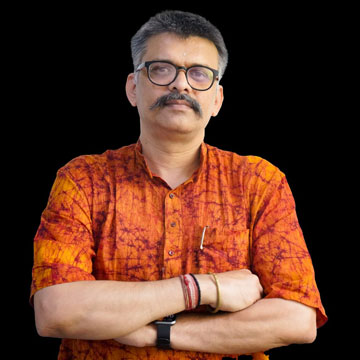
Prafulla Ketkar, is the Editor, Organiser (Weekly) since 2013. He has a experience of over 20 years in the fields of research, media and academics. He is also Advisory Committee School of Journalism, Delhi University. He has been writing on issues related to International politics and foreign policy, with special reference to China and Democracy, Hindutva, and Bharatiya Civilisation. He was also a member of the Editorial team of the recently published Complete Works of Pt Deendayal Ji in 15 Volumes. He has 2 books, 29 academic articles, 2 entries in Encyclopedia of India and numerous articles to his credit. [Read more]
Share
Tweet
SendShareSend
✮ Subscribe Organiser YouTube Channel. ✮
✮ Join Organiser's WhatsApp channel for Nationalist views beyond the news. ✮
Previous News

No unity in INDI Alliance: Congress breaks ranks with AAP in Gujarat bypolls, rift with Kejriwal out in open

Next News

Karnataka CM Siddaramaiah denies rift over caste survey, says cabinet discussion “incomplete”

Related News

Asphulla Mallik created his AI image and projected himself as a Mujahideen on social media

Karnataka: Suspected TTP operative Asphulla Mallik arrested in Bengaluru; Police probe reveal terror links

National Women Commission Conclave in West Bengal: Women could be key entrepreneurs in pharma sector

Taslima Nasrin returns to Kolkata

The Return of Taslima Nasrin to Kolkata: The story of exile and belonging

Muslim League anchored planned atrocities against Hindus on Direct Action Day in Calcutta

Decoding the horrors of Direct Action Day; Revisiting the forgotten lessons from the streets of Calcutta

Two decades after Mamata Banerjee drove Tata out of Singur, Bengal is now seeking the industrial giant's return. (AI-generated Image)

From ‘Tata go back’ to ‘Tata come back’: Bengal begins undoing Mamata’s Singur disaster

Exiled Bangladeshi writer Taslima Nasrin speaks during a citizens felicitation programme titled 'Returning to a Free West Bengal After 19 Years'

‘One of the longest nights of my life’: Taslima Nasreen recalls forced exit from Kolkata after 2007 protests

Load More

Latest News

PM Modi’s Free Online Coaching Mission: A tool for digital inclusion and social mobility

Karnataka: Textbook crisis deepens as private school students forced to depend on photocopies months into academic year

Assam Cybercrime Shock: Rafiqul Alam, Chinese hacker nexus looted Rs 1,071 cr; Rs 16 crore routed to China via crypto

YogiConnectsUPJapanGenZ: Vasudhaiva Kutumbakam for a Selfie-Age Generation

CM Yogi Meets Gen Z: How an ascetic-politician is bridging Lucknow and Japan’s Yamanashi

Jadavpur University: When politics collides with a nationalist legacy

Ghar Wapsi in Bastar

Ghar Wapsi in Bastar: Yadav family returns to Sanatan faith after 10 years; Expresses contentment and spiritual peace

NTA to conduct AIAPGET 2026 re-exam in Jaipur after power disruption in the centre; Check date & key details here

Canada Prime Minister Mark Carney and US President Donald Trump

US-Canada Trade Talks Collapse: PM Carney recalls negotiators & President Trump imposes 50 per cent tariffs on Ottawa

Delhi University PhD Admission 2026 (AI- generated Image)

Delhi University PhD Admission 2026: FYUP students can apply without master’s degree this year

PM Modi unveils 23-point roadmap for Viksit Bharat

PM Modi’s 23-point Viksit Bharat Blueprint: Sports, skilling, agriculture, governance reforms form key pillars

Load More
  • Privacy
  • Terms
  • Cookie Policy
  • Refund and Cancellation
  • Delivery and Shipping

© Bharat Prakashan (Delhi) Limited.
Tech-enabled by Ananthapuri Technologies

  • Home
  • Search Organiser
  • Bharat
    • Assam
    • Bihar
    • Chhattisgarh
    • Jharkhand
    • Maharashtra
    • View All States
  • World
    • Asia
    • Africa
    • North America
    • South America
    • Europe
    • Australia
  • Editorial
  • Operation Sindoor
  • Opinion
  • Analysis
  • Defence
  • Culture
  • Sports
  • Business
  • RSS @ 100
  • Entertainment
  • More ..
    • Sci & Tech
    • Vocal4Local
    • Special Report
    • Education
    • Employment
    • Books
    • Interviews
    • Travel
    • Health
    • Politics
    • Law
    • Economy
    • Obituary
  • Subscribe Magazine
  • Read Ecopy
  • Advertise
  • Circulation
  • Careers
  • About Us
  • Contact Us
  • Policies & Terms
    • Privacy Policy
    • Cookie Policy
    • Refund and Cancellation
    • Terms of Use

© Bharat Prakashan (Delhi) Limited.
Tech-enabled by Ananthapuri Technologies