5,000-year-old Shiva Linga: Harappa discovery challenges colonial narratives on Indus Valley's Hindu roots
June 8, 2026
  • Read Ecopy
  • Circulation
  • Advertise
  • Careers
  • About Us
  • Contact Us
Android AppiPhone AppArattai
Organiser
  • ‌
  • Bharat
    • Assam
    • Bihar
    • Chhattisgarh
    • Jharkhand
    • Maharashtra
    • View All States
  • World
    • Asia
    • Europe
    • North America
    • South America
    • Africa
    • Australia
  • Editorial
  • International
  • Opinion
  • RSS @ 100
  • More
    • Op Sindoor
    • Analysis
    • Sports
    • Defence
    • Politics
    • Business
    • Economy
    • Culture
    • Special Report
    • Sci & Tech
    • Entertainment
    • G20
    • Azadi Ka Amrit Mahotsav
    • Vocal4Local
    • Web Stories
    • Education
    • Employment
    • Books
    • Interviews
    • Travel
    • Law
    • Health
    • Obituary
  • Subscribe
    • Subscribe Print Edition
    • Subscribe Ecopy
    • Read Ecopy
  • ‌
  • Bharat
    • Assam
    • Bihar
    • Chhattisgarh
    • Jharkhand
    • Maharashtra
    • View All States
  • World
    • Asia
    • Europe
    • North America
    • South America
    • Africa
    • Australia
  • Editorial
  • International
  • Opinion
  • RSS @ 100
  • More
    • Op Sindoor
    • Analysis
    • Sports
    • Defence
    • Politics
    • Business
    • Economy
    • Culture
    • Special Report
    • Sci & Tech
    • Entertainment
    • G20
    • Azadi Ka Amrit Mahotsav
    • Vocal4Local
    • Web Stories
    • Education
    • Employment
    • Books
    • Interviews
    • Travel
    • Law
    • Health
    • Obituary
  • Subscribe
    • Subscribe Print Edition
    • Subscribe Ecopy
    • Read Ecopy
Organiser
  • Home
  • Bharat
  • World
  • Operation Sindoor
  • Editorial
  • Analysis
  • Opinion
  • Culture
  • Defence
  • International Edition
  • RSS @ 100
  • Magazine
  • Read Ecopy
Home Bharat

5,000-year-old Shiva Linga: Harappa discovery challenges colonial narratives on Indus Valley’s Hindu roots

Archaeologist MS Vats unearthed a stone structure resembling a Shiva Linga at Harappa in 1940, sparking debates on the Indus Valley Civilisation’s connection to Sanatan Dharma. Similar findings at Kalibangan and other sites suggest that Shiva worship and ritualistic practices may have existed over 5,000 years ago

WEBDESKWEBDESK
Mar 27, 2025, 09:00 am IST
in Bharat, Culture
Follow on Google News
FacebookTwitterWhatsAppTelegramEmail

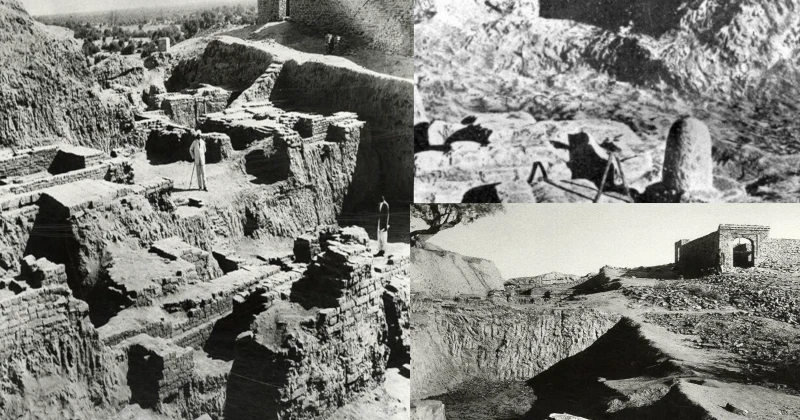
Archaeologist MS Vats unearthed three enigmatic stone structures resembling Shiva Lingas at the Harappa excavation site in 1940. These artefacts, potentially dating back over 5,000 years, raise serious questions about the deeply rooted spiritual traditions of the civilisation and their connection to Sanatan Dharma.

The Harappa site, located on the now-dry banks of the Ravi River in eastern Punjab, Pakistan, has been one of the most significant excavation sites of the Indus Valley Civilisation (IVC). Since the first systematic excavations were initiated by British archaeologist Sir John Hubert Marshall in 1921, findings at Harappa and its twin city Mohenjo-daro have revealed an advanced urban civilisation complete with sophisticated drainage systems, well-planned city grids, and monumental structures indicating a highly organised administrative system. However, the discovery of what appears to be a Shiva Linga at Harappa—along with similar findings in Kalibangan and other IVC sites—suggests that religious and spiritual elements within the civilisation were far more pronounced than previously acknowledged.

The 1940 Discovery: A Shiva Linga in Trench Ai?

The most intriguing find came in 1940 when archaeologist M.S. Vats uncovered a striking stone structure in Trench Ai, buried 5 feet 6 inches below the surface. According to his official excavation report (Excavation at Harappa, Vol. 2), the artifact measured 11 inches in height and 7 inches in diameter, resembling a traditional Shiva Linga—a symbol of Bhagwan Shiva worshipped in Sanatan Dharma since time immemorial.

Despite its clear physical resemblance to a Linga, scholars have hesitated to categorise it definitively as an object of worship. Was it merely a random stone artifact, or does its discovery signify a long-standing tradition of Shiva worship dating back to the Indus Valley Civilisation? If the latter is true, this would fundamentally reshape our understanding of the region’s religious history, directly linking it to the present-day Hindu civilisation that continues to revere the Shiva Linga as a sacred symbol.

The discovery at Harappa is not an isolated incident. Similar findings at Kalibangan, an important IVC site located in present-day Rajasthan, India, lend further credence to this theory. Noted archaeologist B.B. Lal discovered a terracotta representation that bears a striking resemblance to a Shiva Linga, dating back to approximately 2500-1900 BCE.

Other archaeological finds, including fire altars, water purification structures, and seals depicting horned deities resembling Pashupati (an early form of Shiva), suggest that ritualistic and religious practices were an integral part of Indus Valley society. Given the clear symbolic connections to later Vedic and Hindu traditions, dismissing these findings as mere coincidences raises more questions than answers.

For decades, mainstream academic discourse—heavily influenced by colonial-era biases—has sought to separate the Indus Valley Civilisation from later Hindu traditions. Western scholars and even some Indian historians have resisted acknowledging the direct link between the Indus Valley Civilisation and Sanatan Dharma, often arguing that the civilisation had no tangible religious structures or scriptural connections.

But with mounting evidence of Shiva Lingas, fire altars, ritualistic water tanks, and Pashupati-like seals, the claim that Hindu traditions evolved separately from the IVC becomes increasingly untenable. If the Indus people indeed worshipped Bhagwan Shiva in some form, it would mean that Hindu spiritual beliefs are not only among the oldest in the world but that they have survived virtually unchanged for over 5,000 years.

This has profound implications. It challenges the artificially imposed divide between the Indus Valley Civilisation and later Vedic traditions, reinforcing the idea that Sanatan Dharma is not just a religion but an ancient, unbroken cultural continuum that dates back to the dawn of civilisation itself.


Topics: HinduismIndus Valley CivilisationSanatan DharmaartefactsShiva LingaShiva Linga Harappa discovery
ShareTweetSendShareSend
✮ Subscribe Organiser YouTube Channel. ✮
✮ Join Organiser's WhatsApp channel for Nationalist views beyond the news. ✮
Previous News

Maharaja Chhatrasal: The hero who defeated Aurangzeb and established Bundelkhand’s Hindu state

Next News

Minority status doesn’t exempt Jains, Buddhists, Sikhs from Hindu Marriage Act: MP High Court

Related News

Sanatan Dharma teaches that spiritual growth is built through simple daily actions performed with sincerity, discipline, and devotion

Living Sanatan Dharma Every Day: 24 traditional habits that inspire a meaningful and virtuous life    

The Vedic age saw remarkable women sages, known as Rishikas, who composed hymns and shaped India's spiritual and philosophical heritage

Rishikas of Vedic Age: How Gargi, Maitreyi & other women shaped ancient India’s spiritual and philosophical tradition

The terracotta dice that challenges historical assumptions and highlights India's millennia-old civilisational heritage

How a 4,500-year-old terracotta dice is reviving the debate on India’s civilisational continuity & Vedic heritage

Udhayanidhi Stalin, Leader of Opposition & DMK MLA, while speaking in Tamil Nadu Assembly on May 12

Sanatan Dharma and Politics: Understand before attacking

A huge crowd of Sanatanis, along with the Hindu Munnani Karyakartas, gathered to
protest near Coimbatore Power House in Sivananda Colony on May 15

Sanatan Dharma and Politics in Tamil Nadu: Eradicating the eternal

The Pashupati Seal of the indus valley civilisation and the continuity of India’s shaivite spiritual traditions

Pashupati Seal of Mohenjo-daro: The 4,300-year-old symbol of India’s unbroken spiritual & civilisational continuity

Load More

Latest News

Retired Bombay High Court Judge GS Patel

2024 Dawoodi Bohra verdict: Retired Bombay High Court judge GS Patel & family receive life threats in London

No bail for Taukeer Raja in the Bareilly violence case, said Allahabad High Court (Photo: Hindu Post)

“Sar Tan Se Juda slogans challenge India’s sovereignty”: Allahabad HC denies bail to Bareilly riot accused Tauqeer Raja

CAG flags massive financial lapses and project deviations in Karnataka

Karnataka: CAG exposes construction of Mosque prayer hall in place of Yatri Nivas

A representative image generated using AI

Viksit Bharat through sustainability: Inside India’s environmental transformation over the last decade

Chief Minister of West Bengal Suvendu Adhikari

West Bengal has deported 4,800 Bangladeshi infiltrators, 836 more await repatriation: CM Suvendu Adhikari

Over the last 12 years, seven ASI-protected sites have been inscribed on the UNESCO World Heritage List, showcasing India's rich cultural

From Nalanda to Maratha Forts: The seven Indian heritage sites that earned UNESCO recognition in the last 12 years

Demolition of the illegal mosque in Sambhal

Sambhal: Eight booked after ‘I Love Muhammad’ posters, Pakistan-like flags found during demolition of illegal mosque

A representative image

India’s Agricultural Transformation: How India’s Agri sector transformed over the last decade

Ken-Betwa link project: balancing development, water security and ecological responsibility (This is an AI generated Image)

Beyond Bundelkhand: Why the success of the Ken-Betwa link matters for India’s water future

Chandni Qureshi (centre) and Ayush Malik before his conversion; the image on the left purportedly shows Ayush, now known as Mohammad Ali, offering namaz

Exclusive | Chandni Qureshi, Pakistani cleric & secret nikah: Inside Shamli conversion case that triggered an SIT probe

Load More
  • Privacy
  • Terms
  • Cookie Policy
  • Refund and Cancellation
  • Delivery and Shipping

© Bharat Prakashan (Delhi) Limited.
Tech-enabled by Ananthapuri Technologies

  • Home
  • Search Organiser
  • Bharat
    • Assam
    • Bihar
    • Chhattisgarh
    • Jharkhand
    • Maharashtra
    • View All States
  • World
    • Asia
    • Africa
    • North America
    • South America
    • Europe
    • Australia
  • Editorial
  • Operation Sindoor
  • Opinion
  • Analysis
  • Defence
  • Culture
  • Sports
  • Business
  • RSS @ 100
  • Entertainment
  • More ..
    • Sci & Tech
    • Vocal4Local
    • Special Report
    • Education
    • Employment
    • Books
    • Interviews
    • Travel
    • Health
    • Politics
    • Law
    • Economy
    • Obituary
  • Subscribe Magazine
  • Read Ecopy
  • Advertise
  • Circulation
  • Careers
  • About Us
  • Contact Us
  • Policies & Terms
    • Privacy Policy
    • Cookie Policy
    • Refund and Cancellation
    • Terms of Use

© Bharat Prakashan (Delhi) Limited.
Tech-enabled by Ananthapuri Technologies