The Traitor’s Fate: Why a Sikh tradition condemns this Islamist spy even in death
June 24, 2026
  • Read Ecopy
  • Circulation
  • Advertise
  • Careers
  • About Us
  • Contact Us
Android AppiPhone AppArattai
Organiser
  • ‌
  • Bharat
    • Assam
    • Bihar
    • Chhattisgarh
    • Jharkhand
    • Maharashtra
    • View All States
  • World
    • Asia
    • Europe
    • North America
    • South America
    • Africa
    • Australia
  • Editorial
  • International
  • Opinion
  • RSS @ 100
  • More
    • Op Sindoor
    • Analysis
    • Sports
    • Defence
    • Politics
    • Business
    • Economy
    • Culture
    • Special Report
    • Sci & Tech
    • Entertainment
    • G20
    • Azadi Ka Amrit Mahotsav
    • Vocal4Local
    • Web Stories
    • Education
    • Employment
    • Books
    • Interviews
    • Travel
    • Law
    • Health
    • Obituary
  • Subscribe
    • Subscribe Print Edition
    • Subscribe Ecopy
    • Read Ecopy
  • ‌
  • Bharat
    • Assam
    • Bihar
    • Chhattisgarh
    • Jharkhand
    • Maharashtra
    • View All States
  • World
    • Asia
    • Europe
    • North America
    • South America
    • Africa
    • Australia
  • Editorial
  • International
  • Opinion
  • RSS @ 100
  • More
    • Op Sindoor
    • Analysis
    • Sports
    • Defence
    • Politics
    • Business
    • Economy
    • Culture
    • Special Report
    • Sci & Tech
    • Entertainment
    • G20
    • Azadi Ka Amrit Mahotsav
    • Vocal4Local
    • Web Stories
    • Education
    • Employment
    • Books
    • Interviews
    • Travel
    • Law
    • Health
    • Obituary
  • Subscribe
    • Subscribe Print Edition
    • Subscribe Ecopy
    • Read Ecopy
Organiser
  • Home
  • Bharat
  • World
  • Operation Sindoor
  • Editorial
  • Analysis
  • Opinion
  • Culture
  • Defence
  • International Edition
  • RSS @ 100
  • Magazine
  • Read Ecopy
Home Bharat

The Traitor’s Fate: Why a Sikh tradition condemns this Islamist spy even in death

Sri Muktsar Sahib, a historically significant city in Punjab, was once known as Khidrane Di Dhab. It holds an extraordinary place in Sikh history, not only for the valor of the Chali Mukte (Forty Liberated Ones) but also for a lesser-known yet remarkable tale of betrayal and redemption

Shashank Kumar DwivediShashank Kumar Dwivedi
Mar 23, 2025, 06:45 pm IST
in Bharat
Follow on Google News
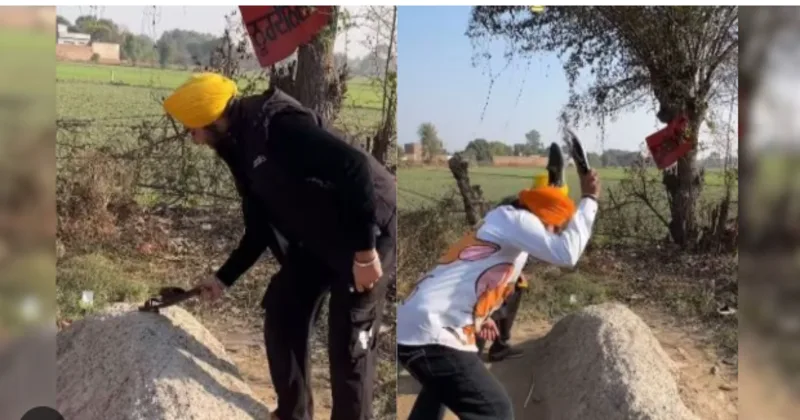
Noordin's grave is slapped by Sikhs for betraying them

Noordin's grave is slapped by Sikhs for betraying them

FacebookTwitterWhatsAppTelegramEmail

Sri Muktsar Sahib, Punjab, was earlier called Khidrane Di Dhab. There is a lesser-known but great tale of betrayal, courage, and a long tradition in Sikh history. It is the story of Noordin, a spy who infiltrated Guru Gobind Singh’s camp surreptitiously, and the forty Sikh fighters who laid down their lives during the Battle of Muktsar in 1705. Their history is inextricably associated with the ‘Chali Mukte’ (Forty Liberated Ones) and is recalled at Gurdwara Sri Dattansar Sahib, where a practice of slapping Noordin’s grave is still prevalent.

The Betrayal of Noordin

In one of the turbulent periods in Sikh history, Guru Gobind Singh, the tenth Sikh Guru and his people were subjected to constant persecution by the Mughal empire. After the siege of Anandpur Sahib, the Guru and his fellow men were led to perpetual clashes. Among them was a person named Noordin, who was sent by Wazir Khan, the Mughal governor of Sirhind. He went undercover as a devoted Sikh soldier.

In historical and oral tradition, Noordin was ordered by the authorities to kill Guru Gobind Singh at a strategic moment. At an early hour of the day, when the Guru was carrying out his normal morning routine of brushing his teeth with a ‘dattan’ (toothbrush in the form of a twig), Noordin attacked him from the back. The Guru, famous for his skill and martial qualities, quickly came to his defense and retaliated. Noordin received a mortal blow.

As he lay dying, Noordin pleaded with the Guru to grant him ‘Mukti’ (liberation). But Guru Gobind Singh, recognising his act as one of cowardice and deceit, refused his plea. Instead, he declared that Noordin’s betrayal would be remembered forever: “Anyone who visits this place in the future shall slap your grave five times with their shoe.” This proclamation established a tradition that continues to this day.

The Forty Martyrs and the Battle of Muktsar

In December 1704, after a prolonged siege at Anandpur Sahib, Guru Gobind Singh and 400 Sikhs left the fortress under a sworn promise of safe passage by Mughal and Rajput forces. However, this promise was soon broken, leading to a fierce battle in which many Sikhs were martyred, and the Guru’s family was tragically separated. His mother and four sons were later tortured and executed by Mughal authorities.

Seeking a defensible position, Guru Gobind Singh, guided by a Brar chief, reached Khidrane Di Dhab. Meanwhile, a contingent of forty Sikhs, who had earlier deserted him due to hardships, were inspired by the fearless warrior woman, Mai Bhago, to return to the Guru’s service.

When Mughal forces, numbering over 10,000 under Wazir Khan, pursued Guru Gobind Singh, these forty warriors engaged them at Khidrane Di Dhab. Guru Gobind Singh strategically positioned his forces near the reservoir, denying the enemy access to water. Fighting with unparalleled bravery, the Sikhs inflicted heavy casualties, forcing the Mughals into retreat. Though victorious, all forty warriors attained martyrdom.

When the Guru surveyed the battlefield, he found one warrior, Bhai Maha Singh, still alive. In his final moments, Maha Singh pleaded for forgiveness and requested the annulment of the ‘bedawa’ (renunciation letter) that he and his companions had signed earlier. Tearing up the document, Guru Gobind Singh declared them ‘Chali Mukte’ (Forty Liberated Ones). The battlefield became known as Muktsar, meaning ‘Pool of Liberation,’ in their honor.

Gurdwara Sri Dattansar Sahib: A Site of Historical Memory

In commemoration of these events, Gurdwara Sri Dattansar Sahib stands as a testament to Guru Gobind Singh’s journey and his encounter with Noordin. Pilgrims who visit the site continue to participate in the tradition of striking Noordin’s grave with their shoes, an act symbolising the rejection of treachery and betrayal.

The gurdwara is also deeply linked to the Guru’s daily practices. It is believed that Guru Gobind Singh used a particular tree branch from the site for his ‘dattan’ while cleansing himself. Today, visitors pay their respects to this sacred site, reinforcing their commitment to Sikh values of loyalty, truth, and righteousness.

Mai Bhago and Her Legacy

One of the most inspirational figures of this episode was Mai Bhago, a fearless woman, she chastised the Sikh men for abandoning their Guru and inspired them to stand up and fight for their faith. The Gurdwara Sri Mata Bhag Kaur is dedicated to Mai Bhago, who inspired forty Sikhs to re-join Sri Guru Gobind Singh Ji and led them during the Battle of Muktsar in 1705.

During the battle, Mai Bhago fought valiantly, wielding an 11-kilogram weapon and sustaining 22 wounds. After the battle, she recovered and remained in Guru Gobind Singh’s service as a bodyguard, protecting him through his travels. This shrine commemorates her bravery and unwavering faith, serving as a reminder of the role of women in Sikh history. Sikhs from around the world visit the gurdwara to pay homage to her courage and leadership.

A Tradition That Lives On

Noordin Mughal’s grave, near Sri Muktsar Sahib in Punjab, India, is unique in Sikh history. Located about two and a half kilometers from Sri Darbar Sahib, near Gurudwara Tibbi Sahib and Gurudwara Datansar, it’s known for the tradition where visitors kick their shoes against it.
The ritual of slapping Noordin’s grave has persisted for centuries, upheld by generations of Sikh devotees. It serves as a reminder of the consequences of deceit and the importance of loyalty in the Sikh faith. Meanwhile, the Battle of Muktsar and the story of the Chali Mukte continue to inspire Sikhs worldwide.

As history and tradition converge at Gurdwara Sri Dattansar Sahib, the past remains alive in the hearts of devotees, reminding them of the sacrifices made for faith, righteousness, and justice. The legacy of Guru Gobind Singh, the Chali Mukte, and Mai Bhago endures, ensuring that their stories are never forgotten.


Topics: Guru Gobind SinghSri Muktsar SahibNoordin MughalGurudwara Tibbi Sahib
Share11TweetSendShareSend
✮ Subscribe Organiser YouTube Channel. ✮
✮ Join Organiser's WhatsApp channel for Nationalist views beyond the news. ✮
Previous News

Bharatiyakaran – Decolonisation for Renationalisation – of The Legal System: Paradox of Law Degrees — From LL.B to LL.M

Next News

Balochistan: Fight for pride heritage

Related News

Banda Singh Bahadur

Banda Singh Bahadur Martyrdom Day: Betrayal of Guru Gobind Singh Ji by Mughals and the rise of Madho Das

Protest in Punjab for dragging Dalit youths to field over theft and parading them semi-naked

Punjab: Dalit men dragged through fields, paraded semi-naked over alleged phone theft in Muktsar Sahib

Representative Image

Veer Bal Diwas: An unforgettable chapter of valour and sacrifice

Veer Bal Diwas 2025: When Christmas celebration replaces remembrance: Punjab at a civilisational crossroads

How centuries of division pushed Sikhs away from their divine mission

Guru Tegh Bahadur chose sacrifice over miracles to save dharma – A universal message for today: Iqbal Singh Lalpura

Load More

Latest News

Cochin Shipyard (File Photo)

Keralam: ‘I Love Pakistan’ inscription found inside vessel at Cochin Shipyard; Central agencies launch probe

BJP national spokesperson Pradeep Bhandari

Karnataka: BJP accuses Kharge family of illegally acquiring government land worth over Rs 100 crore

Elomi Global Worship Centre in Omalloor, Pathanamthitta district ; Pastor Binu Vazhakkuttom (Left to Right)

Keralam: Child abuse allegations at Pentecostal worship centre in Pathanamthitta; locals demand Pastor Binu’s arrest

Modi Govt’s Tourism Revolution: 183 projects, Rs 9,225 crore investment & rise of India’s cultural & spiritual circuits

Padma Awards 2026: Tamil Nadu’s distinguished achievers receive national honours

India’s history is not merely a tale of foreign domination but also a remarkable story of resilience, resistance & civilisational continuity

Indian History: Not just foreign rule, but a timeless story of resistance, self-respect and civilisational resilience

From $10 Billion to $190 Billion: Indian Bioeconomy Touches New Heights in 12 Years

From $10 Billion to $190 Billion: India’s Bioeconomy leads a 12-Year science revolution

Nagpur | Acceptance of Bharatiya civilisational values is steadily increasing worldwide: Shanta Kumari

Representative Image

Passport Seva Divas: India issues 1.39 crore passports in 2025 as ‘Passport Seva Network’ expands to 545 Centres

Uttarakhand Government replaces Madrasa Board with Unified Minority Education framework

Uttarakhand Ends Madrasa Board Era: New Minority Education Authority to take over from July 1

Load More
  • Privacy
  • Terms
  • Cookie Policy
  • Refund and Cancellation
  • Delivery and Shipping

© Bharat Prakashan (Delhi) Limited.
Tech-enabled by Ananthapuri Technologies

  • Home
  • Search Organiser
  • Bharat
    • Assam
    • Bihar
    • Chhattisgarh
    • Jharkhand
    • Maharashtra
    • View All States
  • World
    • Asia
    • Africa
    • North America
    • South America
    • Europe
    • Australia
  • Editorial
  • Operation Sindoor
  • Opinion
  • Analysis
  • Defence
  • Culture
  • Sports
  • Business
  • RSS @ 100
  • Entertainment
  • More ..
    • Sci & Tech
    • Vocal4Local
    • Special Report
    • Education
    • Employment
    • Books
    • Interviews
    • Travel
    • Health
    • Politics
    • Law
    • Economy
    • Obituary
  • Subscribe Magazine
  • Read Ecopy
  • Advertise
  • Circulation
  • Careers
  • About Us
  • Contact Us
  • Policies & Terms
    • Privacy Policy
    • Cookie Policy
    • Refund and Cancellation
    • Terms of Use

© Bharat Prakashan (Delhi) Limited.
Tech-enabled by Ananthapuri Technologies